


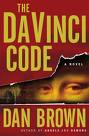
The film adaptation of the astonishingly popular novel The Da Vinci Code by Dan Brown, which stayed on best-seller lists for years after its publication in early 2003, opened in theaters May 19, 2006 and went on to gross more than $750 million worldwide. The film also brought renewed scrutiny of the book’s unorthodox view of Christian history and another round of debate about Hollywood’s handling of faith.
With more than 80 million books sold, this thriller novel asserts that Jesus and Mary Magdalene were married and had a child and that the Roman Catholic Church’s Opus Dei organization will murder people in order to keep this secret. The book has drawn critical praise, millions of readers in more than 40 languages, several dozen books about issues raised by the novel, and inevitable adaptations: a movie and a video game. The film from Sony Pictures is directed by Ron Howard and includes an international cast headed by Tom Hanks.
The Da Vinci Code is the second novel of his Robert Langdon series, following Angels and Demons and preceding The Lost Symbol. The most recent addition to this series is Inferno which is a mystery thriller infused with history, art, codes, and symbols. Sound familiar? Will Inferno cause the same amount of criticism about historical fact and fabricated fiction as The Da Vinci Code?
Background
Why it matters
The Da Vinci Code hit a theological and marketing nerve in the culture. Pop culture – through books, movies, television and theater – has shown great power to inspire interest and debate about religion. The resulting discussions have left people curious about religious history and Scripture and have drawn scholars into efforts to explain, debunk, argue and clarify what is authoritative. Why has a thriller novel sold millions and inspired a shelf of books debunking it, as well as commentary from so many religious leaders? What happens when America’s Dream Factory – Hollywood, with vast reach and resources – weighs in on such contentious issues?
Issues to explore
- Sony Pictures attempted to pre-empt potential religious critics of the film by giving them a public square. The now-dead website called “The Da Vinci Dialogue” included essays written by an A-list of Christian scholars, pastors and educators about the issues raised by Da Vinci and a forum for discussion. After Mel Gibson’s box-office success with, and the controversy over, The Passion of the Christ, what does this say about Hollywood’s relationship with its religious critics?
- Some Christian groups used anticipated interest in the Da Vinci film to evangelize. Tyndale House Publishers, for example, organized a “DaVinci didn’t convince me” marketing campaign that includes materials for churches. Dallas-based Josh McDowell Ministry organized a Beyond Belief campaign that included “DaVinci packs” for education. Yet other religious figures drew the line, saying they didn’t want to help Hollywood make money off heresy. Catholic author and blogger Amy Welborn said you don’t need to read the book or see the movie to criticize what it says about Catholicism and Jesus. What do religious leaders and people of faith in your community think? Did they organize anything around the film? Contact Tyndale, 630-784-5275; Beyond Belief, 330-328-5484; Welborn, [email protected].
- The Da Vinci Code explores ideas about the “sacred feminine” and gives the figure of Mary Magdalene significance for Christians. Author Brown asserts that “women in most cultures have been stripped of their spiritual power.” To what extent does the film raise questions about women and religion?
- Dan Brown said of books written to debunk his novel: “The dialogue is wonderful.” What do your local religious leaders and people of faith think about the use of novels and films to provoke debate about theological issues?
Questions for reporters
- Did people who read the book go to see the movie?
- Whenever a popular book is adapted for a film, the question invariably arises: Is the book or movie better?
- Since the novel was controversial among some people of faith, what did local religious educators and clergy say about the movie?
- What do religious leaders of different traditions say about how pop culture can engage people in theological questions or influence their beliefs?
- Some critics have called the book misleading because it purports on an introductory page to be based on facts and research, though the book is labeled a novel and clearly includes some interpretations that are not fact. What do those who have read or seen Da Vinci think about how much a work of fiction or a movie can draw on history without clarifying which is which?
More Background
-
“Catholic Group Says of ‘Da Vinci Code’ Film: It’s Just Fiction”
Read a Feb. 7, 2006, New York Times article about the Catholic organization Opus Dei, portrayed as villainous in the novel, mounting a public awareness campaign to counter any potential negative portrayal in the film.
-
“Defusing the Message of a Hollywood Blockbuster”
A Jan. 28, 2006, Orlando Sentinel article says that some Christians viewed the film as an opportunity to evangelize. It’s posted by the Washington Post.
-
“Breaking The Da Vinci Code”
Read a Aug. 8, 2008, Christianity Today article that breaks down and identifies fact from fiction in Dan Brown’s “The Da Vinci Code.”
-
“Sprinkling Holy Water on ‘The Da Vinci Code'”
The New York Times reported Aug. 6, 2005, that Sony Pictures asked those associated with the Da Vinci film to sign confidentiality agreements.
-
“Decoding ‘The Da Vinci Code'”
Stories in Newsweek‘s Dec. 8, 2003, issue explore new scholarship on the role of women in Scripture and discuss what is fact and what is fiction in The Da Vinci Code.
-
“The Gospel According to Mary Magdalene”
Read the text of the Gospel of Mary, posted by the Gnostic Society Library.
-
“The Da Vinci Code”
The evangelical magazine Christianity Today has compiled a number of articles it has run that are critical of The Da Vinci Code‘s portrayal of early Christianity.
-
“Mary Magdalene & the Feminine Divine”
Beliefnet’s package of stories summarizes contrasting views expressed by scholars Ben Witherington III and Karen King about the role of Mary Magdalene.
Scholars of early Christian history have been revising their understanding of the role of Mary Magdalene as a follower of Jesus and agree that she was not a prostitute but a disciple. There remains disagreement about her importance in early Christianity.
National sources
Gnosticism, Mary Magdalene and Early Christian History
-
Karen L. King
Karen L. King is the author of The Gospel of Mary of Magdala: Jesus and the First Woman Apostle (Polebridge Press, 2003). A scholar of gnosticism, the body of nonorthodox early Christian teachings, and a professor of ecclesiastical history, she appeared on a Nov. 3, 2003, ABC television special exploring the claims of the novel about Jesus and Mary Magdalene. In 2012, King discovered a fragment of papyrus that is said to provide evidence that Jesus referred to having a wife. She denied that the fragment provided direct evidence that Jesus was married. She writes and comments widely on the women of the New Testament and how they are viewed today.
-
Elaine Pagels
Elaine Pagels is the author of the best-selling Beyond Belief: The Secret Gospel of Thomas (Random House, 2003) and a professor of religion at Princeton University. She has written a number of well-received books on gnosticism, an early Christian movement considered heretical, and early Christianity. Additionally, she is the author of The Origin of Satan (1996).
-
Bart D. Ehrman
Bart D. Ehrman wrote Truth and Fiction in The Da Vinci Code : A Historian Reveals What We Really Know about Jesus, Mary Magdalene, and Constantine and teaches religious studies at University of North Carolina, Chapel Hill. Ehrman can place Mary of Nazareth in her historical and modern-day context.
-
“Secrets of the Code: The Unauthorized Guide to the Mysteries Behind The Da Vinci Code”
Secrets of the Code: The Unauthorized Guide to the Mysteries Behind The Da Vinci Code, edited by Connecticut-based journalist Daniel Burstein, compiles research on topics in Brown’s novel, made best-seller lists and has been translated into more than 20 languages.
-
“The Templar Revelation: Secret Guardians of the True Identity of Christ”
The Templar Revelation: Secret Guardians of the True Identity of Christ by Lynn Picknett and Clive Prince (Touchstone, 1998 first edition) is a book proposing the types of relationships had between Jesus, Mary Magdalene and John the Baptist. It was was reissued in 2004, as a result of interest in author Brown’s “The Da Vinci Code.” The British co-authors specialize in the occult and historical mysteries.
Catholics
-
Amy Welborn
Amy Welborn was a teacher of theology in Catholic high schools and is author of many books including De-coding Da Vinci: The Facts Behind the Fiction of The Da Vinci Code (Our Sunday Visitor, 2004), a Catholic response to the novel, and De-Coding Mary Magdalene: Truth, Legend and Lies (Our Sunday Visitor, 2006).
-
John Wauck
The Rev. John Wauck is a priest of the Prelature of Opus Dei. He lives in Rome, where he teaches literature and the Christian faith at the Pontifical University of the Holy Cross. Wauck has blogged about The Da Vinci Code.
-
“Cracking The Da Vinci Code”
Read a Catholic Answers post assessing what is fact and what is fiction in Dan Brown’s “The Da Vinci Code.”
-
“The Da Vinci Hoax: Exposing the Errors in The Da Vinci Code”
The Da Vinci Hoax: Exposing the Errors in The Da Vinci Code by Carl Olson and Sandra Miesel answers the questions of fact and fiction posed by readers of Dan Brown’s novel. This book received attention as a Catholic debunking.
-
“The Da Vinci Code, the Catholic Church and Opus Dei”
Some Catholics were angry about the portrayal of Catholicism in the book, finding it prejudiced. Linked to the novel’s villains, the organization Opus Dei rebuts at length the book’s characterization of the group and offers speakers about the organization.
-
Catholic Communication Campaign
The U.S. Conference of Catholic Bishops sponsors a multimedia campaign to counter “claims that appear in current popular media” about the life of Jesus and early Christianity called the Catholic Communication Campaign. This organization developed a website, a rebutting documentary for NBC-TV stations premiered on the same weekend as the movie, The Da Vinci Code, and a 16-page booklet on “The Authentic Jesus.”
Evangelical Christians
-
James Garlow
James Garlow is an author, historian, senior pastor of Skyline Wesleyan Church in San Diego, Calif., and a co-author of Cracking Da Vinci’s Code: You’ve Read the Fiction, Now Read the Facts (Victor Books, 2004), which has sold 300,000 copies.
-
Peter Jones
Peter Jones, adjunct professor of New Testament at Westminster Theological Seminary in Escondido, California, is co-author of Cracking DaVinci’s Code and author of Stolen Identity: The Conspiracy to Reinvent Jesus.
-
The Da Vinci Deception Experience
The Da Vinci Deception Experience is a new DVD from evangelical publisher Tyndale House based on the earlier book The Da Vinci Deception by Erwin Lutzer (Tyndale, 2004). Tyndale has also repackaged The Da Vinci Code : Fact or Fiction? by Hank Hanegraaff and Paul Maier.
-
Ben Witherington III
Ben Witherington III is a professor of New Testament at Asbury Theological Seminary in Wilmore, Kentucky. A prolific author and an ordained minister, Witherington can talk about the historical tensions between Christians and Jews and current cultural manifestations of those tensions. He is the author of Jesus and Money: A Guide for Times of Financial Crisis, an examination of “what Jesus has to say (and doesn’t say) concerning wealth and poverty, money and spending, debt and sacrificial giving.”
Ben Witherington III, a professor of New Testament at Asbury Theological Seminary in Wilmore, Ky., is author of The Gospel Code: Novel Claims About Jesus, Mary Magdalene, and Da Vinci (InterVarsity Press, 2004). He says that in a culture that is biblically illiterate, almost anything can pass itself off as historical information.
-
Darrell L. Bock
Darrell L. Bock is a well known author of over 30 books exploring biblical topics and earned international recognition as a Humboldt Scholar (Tübingen University in Germany), for his work in Luke-Acts, historical Jesus study, biblical theology, as well as with messianic Jewish ministries.
Darrell L. Bock wrote Breaking the DaVinci Code: Answers to the Questions Everyone’s Asking (Thomas Nelson, 2004), examining the historical issues the book raises. The book has sold 180,000 copies.
Faith, film and marketing
-
Grace Hill Media
The Studio City, California, consulting firm Grace Hill Media was founded by Jonathan Bock to bridge the gap between Hollywood and religion that causes so many debates. Grace Hill Media worked on the Lord of the Rings and The Chronicles of Narnia movies and The Da Vinci Code’s official website, among other projects.
-
Barbara Nicolosi
Barbara Nicolosi is an American screenwriter and founder/executive director of Act One, a firm that works with Christians in Hollywood.
Barbara Nicolosi was approached during the debate about the facts in the novel and film The Da Vinci Code.
International sources
-
Robin Griffith-Jones
Robin Griffith-Jones is the author of The Da Vinci Code and the Secrets of the Temple (Canterbury Press, 2006), a New Testament scholar and Master of the Temple Church, the medieval headquarters of the Knights of the Templar. He gives Da Vinci Code-based tours of the church.
-
N.T. Wright
N.T. Wright is a leading New Testament scholar and retired Anglican bishop. He is currently a professor of New Testament and early Christianity at the University of St. Andrews in Scotland.
N. T. Wright lectured at Seattle Pacific University in May 2005 on “Decoding The Da Vinci Code.” He says Brown’s book propagates a “myth of Christian origins” that he calls a postmodern fantasy.
Regional sources
In the Northeast
-
Philip Jenkins
Philip Jenkins is Edwin Erle Sparks Professor of Humanities at Pennsylvania State University. He also is a Distinguished Senior Fellow at Baylor University’s Institute for Studies of Religion and serves as co-director for the institute’s Initiative on Historical Studies of Religion. He is the author of Climate, Catastrophe and Faith: How Changes in Climate Drive Religious Upheaval and The Next Christendom: The Coming of Global Christianity, which includes extensive discussion of the global impact of Pentecostalism.
-
James H. Charlesworth
James H. Charlesworth is a professor of New Testament language and literature at Princeton Theological Seminary. He has written extensively about early Christian texts. Charlesworth is also the editor of an important volume of essays by a range of biblical scholars called Jesus and Archaeology.
-
Anne McGuire
Anne McGuire teaches religion at Haverford College. She specializes in research on the Nag Hammadi ancient Christian texts and has taught courses on gnosticism, women in early Christianity and Mary Magdalene.
-
Deirdre Good
Deirdre Good teaches at General Theological Seminary of the Episcopal Church in New York. She has written about early writing outside the accepted body of Christian texts. She writes and lectures widely on the role of women in historical Christianity and in the present.
-
Katherine L. Jansen
Katherine L. Jansen teaches history at the Catholic University of America in Washington, D.C. A specialist in Mary Magdalene, her publications include The Making of the Magdalen: Preaching and Popular Devotion in the Late Middle Ages (Princeton University Press, 2001).
-
Franco Mormando
Franco Mormando is professor and chairman of the department of Romance languages and literature at Boston College and has a master’s in divinity and church history and a doctorate in Italian literature. Art history is one of his specialties, and he has written about the historical use of Mary Magdalene’s image. He says there is much in church history omitted from the official record.
-
Ross S. Kraemer
Ross S. Kraemer teaches religious studies at Brown University in Providence, R.I., and specializes in women’s religions in antiquity.
-
Diane Apostolos-Cappadona
Diane Apostolos-Cappadona, professor of religious art and cultural history at Georgetown University, wrote about “re-viewing” Mel Gibson’s The Passion of the Christ and images of women in contemporary religious film.
Apostolos-Cappadona has been interviewed about The Da Vinci Code for a documentary and has written about it on Beliefnet.
-
Mark S. Burrows
Mark S. Burrows is a faculty member at the University of Applied Sciences in Bochum, Germany, having moved to Germany after a career of almost a quarter-century teaching at several graduate theological schools in the US and in Europe. He wrote “Gospel Fantasy: Dismantling The DaVinci Code” in the June 1, 2004, Christian Century magazine and is author and translator of multiple poem compilations.
Burrows says the novel, The Da Vinci Code, is based on “manifestly bad history.”
In the South
-
Greg Jones
Greg Jones is rector of St. Michael’s Episcopal Church in Raleigh, N.C., a regular contributor to news outlets and journals and author of Beyond Da Vinci (Seabury Books, 2004), a response the theological andhistorical inaccuracies he sees in “The Da Vinci Code.”
-
Susan J. White
Susan J. White is the Alberta H. and Harold L. Lunger Professor of Spiritual Resources and Disciplines at Brite Divinity School at Texas Christian University in Fort Worth, Texas. She is also author of A History of Women in Christian Worship (Pilgrim Press, 2003).
-
Dennis E. Smith
Dennis E. Smith teaches New Testament at Phillips Theological Seminary in Tulsa, Okla., and is a fellow of the Westar Institute, which studies Jesus and early Christianity. He can speak about the role of Mary in the New Testament from a Protestant perspective.
-
John Martin
John Martin is a professor of history at Trinity University in San Antonio, Texas, professor-in-residence at Duke University and the representative for church history for the Renaissance Society of America.
Martin said the book is entertaining but not historical.
-
Roy Heller
Roy Heller is a professor of Old Testament at Perkins School of Theology at Southern Methodist University in Dallas and focuses on the use of the Bible in ethics and theology.
Heller has spoken at Dallas churches about “The Da Vinci Code.” He said the religion elements are an interesting sidelight of the plot and its history a mix of accurate and inaccurate.
-
John Sewell
The Rev. John Sewell is rector of St. John’s Episcopal Church in Memphis, Tenn.
Hundreds of people showed up for discussions in 2003 of The Da Vinci Code at St. John’s Episcopal Church, Memphis. Church Rector John Sewell said that people’s interest in the book means they are asking what to believe.
-
Amy-Jill Levine
Amy-Jill Levine of Vanderbilt University’s Divinity School is a professor of New Testament studies and of Jewish studies and director of the Carpenter Program in Religion, Gender and Sexuality. She can comment on Christian-Jewish dynamics and representations of Jews by Christians throughout the centuries. She was co-editor of A Feminist Companion to Mariology. She is an expert on sexuality and the bible, religion and gender, Jewish-Christian relations and the historical Jesus.
Levine says The DaVinci Code is fiction and that is how it should be viewed, that Jesus was not married to Mary Magdalene or anyone and was most likely celibate.
-
Laura Hobgood-Oster
Laura Hobgood-Oster is a professor of religion at Southwestern University in Georgetown, Texas. Her areas of expertise include animals in the history of the Christian tradition and contemporary religious-ethical issues related to other-than-human animals. She is the author of Holy Dogs and Asses: Animals in the Christian Tradition (2008).
Hobgood-Oster says Dan Brown’s speculation in his novel “The Da Vinci Code” makes for good fiction and Magdalene’s significance has been underestimated, but no documentary evidence supports the idea Jesus and Mary were married.
-
Greg Jones
Greg Jones is rector of St. Michael’s Episcopal Church in Raleigh, N.C., a regular contributor to news outlets and journals and author of Beyond Da Vinci (Seabury Books, 2004), a response the theological andhistorical inaccuracies he sees in “The Da Vinci Code.”
Snyder says that Dan Brown’s book has serious historical difficulties and that Brown’s claim of accuracy invites challenge from anyone who cares about truth.
-
Leo Sandon
Leo Sandon is professor emeritus of religion and American studies at Florida State University and is a co-author of Religion in America (Prentice Hall, 1982).
Sandon says that Brown’s novel, which mixes fact and legend, allows readers to participate in debate about religious history.
In the Midwest
-
Joseph F. Kelly
Joseph F. Kelly is chairman of the department of religious studies at John Carroll University and is also active in the religious education apostolate of the Diocese of Cleveland. He is author of multiple religious books, including
Kelly has lectured to groups about the book and its claims. He says that Brown’s book, The Da Vinci Code, is a work of fiction that has been effective in raising interest in early Christianity, that it rightfully points to the significant role played by women at the time, and that the earliest existing sources of information about Mary Magdalene contain no information about marriage or children
-
Wes Bergen
Wes Bergen teaches religion at Wichita State University in Wichita, Kan., is the religion chairman for the Southwest/Texas Popular Culture Association and is also a pastor. He is currently working on a new book about ritual in Leviticus.
Bergen is familiar with Da Vinci.
-
Charles W. Hedrick
Charles W. Hedrick is an emeritus professor of religious studies at Missouri State University and has written extensively on early Christianity and ancient texts. His books include When History and Faith Collide: Studying Jesus (Hendrickson Publishers, 1999).
Hendrick has read The Da Vinci Code, and offers his perspective on the book in an interview.
-
Margaret M. Mitchell
Margaret M. Mitchell teaches New Testament and the history of early Christianity at the University of Chicago Divinity School. She is the author of four books, including The “Belly-Myther” of Endor: Interpretations of 1 Kingdoms 28 in the Early Church (with Rowan A. Greer, 2007), and a number of articles.
In an interview Mitchell called the novel a “good airplane book” that contains historical accuracies as well as falsehoods and misleading statements
-
Pamela Thimmes
Pamela Thimmes is an associate professor of religious studies at the University of Dayton and past chair of the Feminist Hermeneutics of the Bible section within the Society of Biblical Literature. She has written about trends in research on Mary Magdalene.
-
Mary Rose D’Angelo
Mary Rose D’Angelo teaches theology at the University of Notre Dame in South Bend, Ind. She has written extensively about early Christianity and women in Scripture and specifically about Mary Magdalene’s identity.
In the West
-
Margaret Starbird
Margaret Starbird has written extensively about Mary Magdalene and the sacred feminine, including The Woman With the Alabaster Jar: Mary Magdalen and the Holy Grail (Bear & Co., 1993), which is selling as a result of interest prompted by The Da Vinci Code. She has traveled widely in Europe, including pilgrimages to Black Madonna and Mary Magdalene shrines and Cathar citadels in Provençe.
-
Michael Allen Williams
Michael Allen Williams, an adjunct religions professor at the University of Washington in Seattle, has written on gnosticism, ancient texts and religious secrecy.
-
Karen Torjesen
Karen Torjesen, professor of Women’s Studies in Religion and early Christianity, is dean at the school of religion at Claremont Graduate University, Claremont, Calif.