


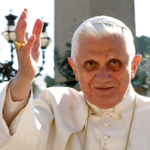
The fallout over Pope Benedict XVI’s comments on Islam and violence during a Sept. 12, 2006, lecture in Germany did serious damage to relations between the Catholic Church and global Islam, in addition to inflaming tensions between Muslims and Christians of every denomination. The story grew in the coming weeks because Benedict visited Turkey from Nov. 28-Dec. 1. The pope’s trip was principally an ecumenical visit to the Eastern Orthodox Patriarch of Constantinople, with a brief visit to the small community of Catholics in the region. Because the patriarch is based in the Turkish city now known as Istanbul, and because Benedict’s comments referred to a 14th-century episode during a war between Christians and Muslims over Constantinople, Turkey was a focus of the controversy.
Experts said there are many other aspects of the uproar, ranging from renewed questions over the “clash of civilizations” theory to concerns about relations between Christians and Muslims at the local level. As the controversy over the pope’s remarks grew, the nation’s leading Islamic rights group released a report claiming that incidents of discrimination against Muslims in the United States had spiked 30 percent in 2005.
Background
Experts also noted that the comments by Benedict – who is an academic theologian as well as a head of state — involve two separate, but often entwined issues. One is a theological discussion about violence and religion, including what sacred texts and traditions say in that regard. That issue tends to be the focus of interreligious dialogues. The other issue concerns efforts to halt violence committed by religious believers, which tends to involve questions of international politics, diplomacy and human rights.
Journalists will find many avenues for stories, including the importance of Christian-Muslim relations in local, national and global arenas; tensions within interfaith groups, many of which have become more active since the 2001 terrorist attacks; conflicting attitudes toward other faiths within both Christianity and Islam; and, of course, the effect on perceptions of Pope Benedict himself.
Why it matters
Catholics and Muslims constitute communities of more than 1 billion believers each, and relations between them are widely viewed as a critical bellwether for the state of religious dialogue. They also provide a crucial point of contact between the West and the Islamic world. Despite frequent restrictions and attacks against Christians in many Muslim countries, Catholics and Muslims have had a relatively constructive dialogue in recent years and have often found themselves as allies at international gatherings.
Chronology
The following is a brief chronology of the major events in the uproar over Pope Benedict’s remarks about Islam:
Tuesday, Sept. 12, 2006: During a homecoming visit to his native Bavaria, Benedict delivers a lecture at the University of Regensburg, where he once taught theology.
Thursday, Sept. 14: As Muslim protests increase, Vatican spokesman, the Rev. Federico Lombardi, issues a statement declaring that “It was certainly not the intention of the Holy Father to undertake a comprehensive study of the jihad and of Muslim ideas on the subject, still less to offend the sensibilities of Muslim faithful.”
Saturday, Sept. 16: Benedict’s newly appointed secretary of state, Italian Cardinal Tarcisio Bertone, issues another statement that attempts to clarify the pope’s remarks.
Sunday, Sept. 17: With Muslim anger still apparent and a number of violent attacks apparently linked to the pope’s comments, Benedict uses his noontime Angelus address at his summer villa at Castelgandolfo to apologize for “the reactions in some countries to a few passages of my address at the University of Regensburg, which were considered offensive to the sensibility of Muslims. These in fact were a quotation from a Medieval text, which do not in any way express my personal thought.” Debate continues over whether this expression of regret was sufficient.
Wednesday, Sept. 20: At his mid-week General Audience, open to the public, Benedict once again said that he believes his lecture was misunderstood and that in fact he has “profound respect” for Muslims.
Additional articles
-
“LA Muslims see hope for interfaith relations in the new Catholic Pope Francis”
Read a Southern California Public Radio story about how Los Angeles Muslims see potential for stronger interfaith relations with the Catholic Pope Francis.
-
“Interfaith Dialogue Resources”
Beliefnet posts a page about interfaith dialogue, which includes links to guidelines about dialogue, interfaith organizations, and essays about interfaith dialogue.
-
“Islam and the West”
The BBC posts a page on the relationship of Islam and the West.
-
“New Pope Approaches Islam with Caution”
Listen to an April 7, 2005, Morning Edition report from National Public Radio about how Pope Benedict takes a less conciliatory approach to Islam than did his predecessor.
Surveys and resources
-
“2006 Report on International Religious Freedom”
See the 2006 International Religious Freedom Report from the U.S. State Department.
-
“Islam and the West: A Conversation with Bernard Lewis”
Read the transcript of an April 27, 2006, Pew panel titled “Islam and the West: A Conversation with Bernard Lewis,” an interview with one of the leading scholars and critics of Islam.
-
“Islam and the West: How Great a Divide?”
Read the transcript of a July 10, 2006, Pew Forum panel exploring the results of an international survey “focusing on Muslim and Western perceptions of each other and on the Muslim experience in Europe.” The panel, titled “Islam and the West: How Great a Divide?” featured Amaney Jamal, assistant professor in the department of politics at Princeton University and a specialist in the study of Muslim public opinion.
National and international sources
U.S. Conference of Catholic Bishops resources
-
U.S. Conference of Catholic Bishops
The U.S. Conference of Catholic Bishops has raised concerns about a range of freedom of conscience questions related to protection of life issues and supports including conscience provisions in proposed funding bills.
Muslim-Christian academic centers
-
John Esposito
John Esposito is founding director of Georgetown University’s Center for Muslim-Christian Understanding and professor of religion and international affairs and of Islamic studies at Georgetown. He is an expert on global terrorism, Islam and democracy, and international interfaith relations. His publications include Islamaphobia: The Challenges of Pluralism in the 21st Century and Islam: The Straight Path; The Oxford Dictionary of Islam; Unholy War: Terror in the Name of Islam; What Everyone Needs to Know About Islam; Who Speaks for Islam?: What a Billion Muslims Really Think; and Women in Muslim Family Law.
-
Ingrid Mattson
Ingrid Mattson holds the London and Windsor Community Chair in Islamic Studies at Huron University College at Western University in London, Ontario, where she studies Islamic ethics, Muslim women and Christian-Muslim relations. She previously taught at Hartford Seminary in Connecticut, where she developed the first accredited graduate program for Muslim chaplains in the U.S.
-
Yahya Michot
Yahya Michot is Professor of Islamic Studies and Christian-Muslim Relations at the Macdonald Center for the Study of Islam and Christian-Muslim Relations at Hartford Seminary in Connecticut.
-
Michael T. Shelley
Michael T. Shelley is the director of the Lutheran School of Theology at Chicago’s Center of Christian-Muslim Engagement for Peace and Justice.
-
Scott Alexander
Scott Alexander is director of the Catholic-Muslim Program and associate professor of Islam at Catholic Theological Union in Chicago.
-
Sheila McLaughlin
Sheila McLaughlin is director of the Bernardin Center for Theology and Ministry at Catholic Theological Union in Chicago.
Interfaith organizations
-
Ron Young
Ron Young serves as staff consultant for the National Interreligious Leadership Initiative for Peace in the Middle East, a national organization of 2,500 American Jews, Christians and Muslims. The committee carries on programs nationwide on dialogue, education and advocacy in support of U.S. policies in the Middle East.
-
Shanta Premawardhana
The Rev. Shanta Premawardhana is president of SCUPE, based in Chicago. Previously, he served as associate general secretary for interfaith relations at the National Council of Churches. The NCC represents Protestant, Anglican, Orthodox, historic African-American and Peace churches and engages in interfaith dialogue.
-
The North American Interfaith Network
The North American Interfaith Network lists many local, regional and national groups and other interfaith databases.
-
Interfaith Alliance
The Interfaith Alliance is the national nonpartisan advocacy voice of the interfaith movement. Media inquiries can be submitted through a form on the alliance’s website.
-
The Interfaith Center of New York
The Interfaith Center of New York is an educational nonprofit dedicated to understanding and cooperation among faiths. The center works with a wide variety of religious leaders.
-
Council for a Parliament of the World’s Religions
The Council for a Parliament of the World’s Religions, based in Chicago, sponsors interfaith dialogue and encourages cooperation among religious and spiritual communities and institutions.
-
The United Religions Initiative
The United Religions Initiative, based in San Francisco, promotes interfaith cooperation and ending religiously motivated violence. It has “cooperation circles” around the globe.
Muslim sources
-
Amir Hussain
Amir Hussain is professor of theological studies at Loyola Marymount University in Los Angeles. He is a former editor of the Journal of the American Academy of Religion. His research focuses on Islam in North America, with additional expertise in religion and music, religion and literature, religion and film and Islam and Christian-Muslim relations.
-
Sayyid M. Syeed
Dr. Sayyid M. Syeed is National Director for Interfaith and Community Alliances at the Islamic Society of North America.
-
Minaret of Freedom Institute
The Minaret of Freedom Institute, based in Bethesda, Md., conducts independent scholarly research into issues involving Islam in the U.S. and policy issues affecting Muslim countries. The institute’s emphasis is on Islam, freedom and free markets, and the political and economic implications of Islamic law.
-
Center for the Study of Islam and Democracy
The Center for the Study of Islam and Democracy in Washington, D.C., aims to further Islamic discourse on a modern Islamic democracy. Contact its president, Radwan Masmoudi.
-
Nihad Awad
Nihad Awad is executive director of the Council on American-Islamic Relations.
-
Salam Al-Marayati
Salam Al-Marayati is president of the Muslim Public Affairs Council. The group condemned both the Danish cartoons and the violence they spawned.
Catholic sources
-
James A. Donahue
James A. Donahue is president of the Graduate Theological Union in Berkeley, Calif., and an expert on interfaith theological dialogue.
He has spoken in interviews about the crisis over the pope’s remarks.
-
Francis X. Clooney
The Rev. Francis X. Clooney is a Jesuit priest and the Parkman Professor of Divinity at Harvard University. His interest areas include theological commentarial writings in the Sanskrit and Tamil traditions of Hindu India, and the developing field of comparative theology, a discipline distinguished by attentiveness to the dynamics of theological learning deepened through the study of traditions other than one’s own.
He wrote an Oct. 21, 2005, article for Commonweal magazine about the pope’s approach to interfaith dialogue titled “Dialogue Not Monologue: Benedict XVI & Religious Pluralism.”
-
John Borelli
John Borelli is special assistant to the president for interreligious initiatives at Georgetown University. He has been a longtime leader in Catholic dialogue with other religions, especially Islam. For 16 years he was associate director of the Secretariat for Ecumenical and Interreligious Affairs at the U. S. Conference of Catholic Bishops.
-
Patrick J. Ryan
The Rev. Patrick J. Ryan is a Jesuit priest at Fordham University in New York, where he serves as McGinley Professor of Religion and Society. Ryan is an expert on Islam and the tensions with the West.
Other Christian leaders
-
Godfrey Yogarajah
Godfrey Yogarajah is executive director of the Religious Liberty Commission of the World Evangelical Alliance, a network of churches in 127 countries.
-
Steve Ridgway
Steve Ridgway is interim CEO of Open Doors USA, which supports persecuted Christians in 60 countries. It’s based in Santa Ana, Calif.
-
Greek Orthodox Archdiocese of America
The Greek Orthodox Archdioceses of America is the largest Orthodox denomination in America,with about 1.5 million members.
Regional sources
In the Northeast
-
Shireen T. Hunter
Shireen T. Hunter is director of the Carnegie Project on Reformist Islam at Georgetown University in Washington, D.C. She is also a distinguished scholar at the Center for Strategic and International Studies, where she directed the Islam Program from 1998 to 2005. She is author of Reformist Voices of Islam: Mediating Islam and Modernity (2008) and Iran Divided: The Historical Roots of Iranian Debates on Identity, Culture and Governance in the 21st Century (2015).
-
Diana Hayes
Diana Hayes is a retired professor of systematic theology at Georgetown University, gave an opening speech at Sisters, a conference on the role of women’s leadership in Catholicism and Islam, in 2003. The conference took place at the Catholic Theological Union. It began on the first day of the war in Iraq.
-
Omid Safi
Omid Safi is a professor of Asian and Middle Eastern studies at Duke University, where he also directs the Duke Islamic Studies Center. He edited Progressive Muslims: On Justice, Gender and Pluralism and is a sought after source on religion, culture and interfaith issues.
-
Christopher Bellitto
Christopher Bellitto is chair of the history department at Kean University in New Jersey, where he has taught a course on the papacy. He has also written many articles on Catholicism and is a regular television commentator on Vatican stories.
-
Yvonne Y. Haddad
Yvonne Y. Haddad is professor of the history of Islam and Muslim-Christian relations at Georgetown University in Washington, D.C. She co-authored Muslim Women in America: The Challenge of Islamic Identity Today and Educating the Muslims of America. Her scholarly interests include Muslims in the West, Islamic revolutionary movements, 20th-century Islam and the intellectual, social and political history of the Arab world.
-
Paul M. Cobb
Paul M. Cobb is an associate professor in the University of Pennsylvania’s Middle East Center. He is formerly an associate professor of Islamic history at the University of Notre Dame and fellow of the Medieval Institute and the Joan B. Kroc Institute for International Peace Studies.
In the South
-
J. Peter Pham
J. Peter Pham is former director of the William R. Nelson Institute for International and Public Affairs at James Madison University in Virginia. He is also a former Vatican diplomat who worked under John Paul II and is author of Heirs of the Fisherman: Behind the Scenes of Papal Death and Succession. Currently, he is the director of the Michael S. Ansari Africa Center. Pham is a frequent commentator on papal politics and processes.
-
Joseph Fessio
The Rev. Joseph Fessio is a close friend and former theology student of Cardinal Joseph Ratzinger, Pope Emeritus Benedict XVI. Fessio is widely considered one of the most influential conservative voices in the American church, and he is an outspoken opponent of allowing gay men into the priesthood. Fessio is the editor-in-chief of Ignatius Press in San Francisco, which was the English-language publisher for Benedict’s books. Fessio spends much of his time in Naples, Fla. Contact through Rose Trabbic, media representative for Ignatius Press.
-
Carl W. Ernst
Carl W. Ernst is a professor of Islamic studies at the University of North Carolina Chapel Hill. He wrote Following Muhammad: Rethinking Islam in the Contemporary World and edited Islamophobia in America: The Anatomy of Intolerance. He is affiliated with the Triangle Center on Terrorism and Homeland Security.
-
Roberta Avila
Roberta Avila is executive director of Steps Coalition and former executive director of the Interfaith Disaster Task Force of South Mississippi.
-
The Emory University Inter-Religious Council
The Inter-Religious Council at Emory University in Georgia organized the university’s first campus-wide interfaith service project, helping families affected by Hurricane Katrina.
In the Midwest
-
Geneive Abdo
Geneive Abdo is author of several books on the Middle East and the Islamic world. She was previously a senior fellow at the Atlantic Council, a nonresident fellow in the Brookings Institution at Brookings Institution and a fellow in the Middle East program at the Stimson Center think tank. She researches contemporary Iran and political Islam and has written about extremism in the Middle East.
-
Juan Cole
Juan Cole is a history professor at the University of Michigan in Ann Arbor, where he teaches a course on Islam in global politics. He is the author of a book on politics and religion in Iran and another on the politics and history of Shiite Islam. He is the author of Engaging the Muslim World.
-
Dennis Doyle
Dennis Doyle is a professor of religious studies at the University of Dayton and a frequent commentator and author on Catholic issues and the papacy.
In the West
-
Michael Kinnamon
The Rev. Michael Kinnamon is Spehar-Halligan Visiting Professor of Ecumenical Collaboration in Interreligious Dialogue at Seattle University. He is an expert on interfaith dialogue.
-
Thomas P. Rausch
The Rev. Thomas P. Rausch is a professor of theology at Loyola Marymount University in Los Angeles. A Catholic priest, Rausch is the author of Authority and Leadership in the Church: Past Directions and Future Possibilities.
-
Joel S. Fetzer
Joel S. Fetzer is a professor of political science at Seaver College at Pepperdine University in Malibu, Calif. He co-wrote Muslims and the State in Britain, France, and Germany (Cambridge University Press, 2004).