
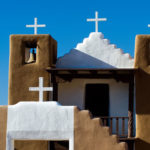
Hispanics, already the nation’s largest ethnic minority, are expected to double their U.S. population in less than 50 years. That will have profound effects on religion, many of which are already evident. ReligionLink offers an expansive guide to Hispanic religion, including scores of interview sources and links to organizations and surveys.
How to use this guide
This guide is organized into several topics. Scholars may be listed under more than one area, depending on their expertise. Click to jump to:
- Organizations
- National sources
- Clergy issues
- Cuba
- Culture and arts
- Immigration/migration
- Interfaith / ecumenism
- Hispanic theologies
- Islam
- Judaism
- Language and translations
- Liberation theology
- Multiculturalism
- Politics
- Popular religion and traditions
- Women’s issues and feminism
- Demographics / polls / surveys
- Background
Organizations
• Alianza de Ministerios Evangélicos Nacionales is a national Hispanic Protestant organization. Jesse Miranda, its founder and director, is a professor at Vanguard University in Costa Mesa, Calif., where he directs the Center for Urban Studies and Hispanic Leadership. He co-directs the Hispanic Churches in American Public Life research project. Contact 714-556-3610 ext. 254, jmiranda@vanguard.edu.
• La Communidad of Hispanic Scholars “serves scholars working on all facets Latino religion, spirituality, culture, and politics in the U.S., Mexico, and Puerto Rico.” It has over 250 Latino member scholars. Founded in 1989, it is the oldest Latino scholarly organization in the U.S. Contact the president of La Comunidad, Gaston Espinosa at 909-621-8395, gaston.espinosa@cmc.edu.
• The Academy of Catholic Hispanic Theologians of the United States promotes theological research and reflection. Its president is Miguel H. Díaz, who teaches theology at the College of St. Benedict/St. John’s University in Collegeville, Minn., and its vice president is Carmen M. Nanko-Fernández, an assistant professor of pastoral ministry and director of field education at Catholic Theological Union, Chicago. Contact Díaz at 320-363-2964, mdiaz@csbsju.edu, and Nanko-Fernández at 773-371-5533, cnanko@ctu.edu.
• The American Academy of Religion’s Latina/o Religion, Culture and Society Group ncludes scholars who study those topics. It presents panel discussions at AAR’s annual meeting. Co-chairs are Carmen M. Nanko-Fernández, an assistant professor of pastoral ministry and director of field education at Catholic Theological Union, Chicago, and Benjamin Valentin, who teaches theology and culture at Andover Newton Theological School in Newton Centre, Mass., where he directs Latino/a studies. Contact Nanko-Fernández at 773-371-5533, cnanko@ctu.edu. Contact Valentin at 617-964-1100 ext. 245, bvalentin@ants.edu.
• The Center for the Study of Latino/a Catholicism does research and studies the impact of Latino/a Catholicism on the U.S. Catholic Church. Contact director Orlando O. Espín, who teaches systematic theology at the University of San Diego, where the center is based. He is president-elect of the Academy of Catholic Hispanic Theologians of the United States. Contact 619-260-4087, espin@sandiego.edu.
• The Hispanic Theological Initiative is an ecumenical endeavor mentoring Hispanic students in doctoral work. It is on the campus of Princeton Theological Seminary. Contact director Joanne Rodríguez, 609-252-1721, joanne.rodriguez@ptsem.edu.
• The National Hispanic Christian Leadership Conference, based in Sacramento, Calif., represents Hispanic evangelicals in the U.S. Samuel Rodriguez is founder and president. Read a Sept. 1, 2006, Christianity Today story. Contact 916-919-7476, hispanicchurch@aol.com.
• The Latino American Dawah Organization began in 1997 to promote Islam among Hispanics. It posts contacts for every region of the U.S. See articles about Hispanics who convert to Islam.
• The National Association of Hispanic Priests of the USA is directed by the Rev. Andres Mendoza. Contact him at 806-763-0710 or through the Rev. Miguel Solórzano, the association’s communications director, 713-672-6141 ext. 12, miguel@solorzano.com.
• See FASTEN’s list of Hispanic church networks, many of them regional, throughout the United States.
National sources
• Edwin David Aponte is vice president of academic affairs and dean of Lancaster Theological Seminary in Lancaster, Pa., where he also teaches religion and culture. He co-edited Handbook of Latina/o Theologies (Chalice Press, 2006). Contact 717-290-8754, eaponte@lancasterseminary.edu.
• Efrain Agosto is a professor of New Testament and directs the Hispanic ministries program at Hartford Seminary. His expertise includes Bible scholarship and Hispanic theology across the U.S. Christian denominations. Contact 860-509-9515, eagosto@hartsem.edu.
• Monsignor Arturo J. Bañuelas is pastor of St. Pius X Catholic Church in El Paso, Texas. He founded and directs the Tepeyac Institute and is nationally known for his expertise on border issues and culture. Bañuelas edited Mestizo Christianity: Theology From the Latino Perspective (Wipf & Stock Publishers, 2004). Contact hopie12@msn.com.
• Peter Casarella is an associate professor of systematic theology at Catholic University of America in Washington, D.C. His specialties include Hispanic theology and the arts. His books include, as co-editor, El Cuerpo de Cristo: The Hispanic Presence in the U.S. Catholic Church (Crossroad, 1998). Contact 202-319-6517, casarelp@cua.edu.
• Gilberto Cavazos-González is an associate professor of spirituality at Catholic Theological Union, Chicago, where he directs the Hispanic ministry program. He specializes in contemporary Hispanic spirituality. Contact 773-753-7474, otrebligcg@ctu.edu.
• Elizabeth Conde-Frazier is an associate professor of religious education at Claremont School of Theology in Claremont, Calif. Her interests include immigration/migration and ecumenism. She wrote Hispanic Bible Institutes: A Community of Theological Construction (University of Scranton Press, 2005) and co-wrote A Many Colored Kingdom: Multicultural Dynamics for Spiritual Formation (Baker Academic, 2004). Contact 909-447-2530, ecfrazier@cst.edu.
• Miguel A. De La Torre teaches social ethics at Iliff School of Theology in Denver, where he directs the school’s Justice and Peace Institute. Issues he can discuss include religion’s effects on class/race/gender oppression, Santeria, Cuba and liberation theology. His numerous books include, as co-editor, Rethinking Latino(a) Religion and Identity (Pilgrim Press, 2006) and Handbook of Latina/o Theologies (Chalice Press, 2006). Contact 303-765-3133, mdelatorre@iliff.edu.
• Miguel H. Díaz, who teaches theology at the College of St. Benedict/St. John’s University in Collegeville, Minn., is president of the Academy of Catholic Hispanic Theologians of the United States. His specialties include Cuba, popular religion and U.S. Hispanic theologies. He wrote On Being Human: U.S. Hispanic and Rahnerian Perspectives (Orbis Books, 2001) and co-edited From the Heart of Our People: Latino/a Explorations in Catholic Systematic Theology (Orbis, 1999). Contact 320-363-2964, mdiaz@csbsju.edu.
• Gastón Espinosa is an assistant professor of religious studies at Claremont McKenna College in Claremont, Calif. He is an expert on U.S. Latino religions and politics, Latinos and the American presidency, demographic shifts in Latino religions, and evangelical and Pentecostal/Catholic Charismatic movements. His books include, as co-author, Mexican American Religions: Spirituality, Activism, and Culture, Rethinking Latino(a) Religion and Identity and Latino Religions and Civic Activism in the United States. Contact gaston.espinosa@cmc.edu.
• The Rev. Allan Figueroa Deck, a Jesuit priest, is president and executive director of the Loyola Institute for Spirituality in Orange, Calif. He can discuss Hispanic ministry issues and religion, culture and spirituality. Contact 714-997-9587, afdecksj@loyolainstitute.org.
• Orlando O. Espín teaches systematic theology at the University of San Diego, where he directs the Center for the Study of Latino/a Catholicism. He is president-elect of the Academy of Catholic Hispanic Theologians of the United States. Espín’s specialties include popular religion, and he recently opened a dialogue between Catholic theologians and followers of Lukumi (Santeria). Contact 619-260-4087, espin@sandiego.edu.
• Ada María Isasi-Díaz is a professor of ethics and theology at Drew University in Madison, N.J., and founder and co-director of the Hispanic Institute of Theology. Her interests include mujerista theology and Cuba. Contact 973-408-3269, aisasidi@drew.edu.
• Carmen M. Nanko-Fernández is assistant professor of pastoral ministry and director of field education at Catholic Theological Union, Chicago. She is vice president of the Academy of Catholic Hispanic Theologians of the United States and co-chairs the American Academy of Religion’s Latina/o Religion, Culture and Society Group. Her expertise includes pastoral theology, immigration/migration, public theology, language and popular culture. Contact 773-371-5533, cnanko@ctu.edu.
• Sister Ana María Pineda teaches Hispanic theology, spirituality and ministry at Santa Clara University in Santa Clara, Calif. Her interests include women’s issues and pastoral issues. She co-edited Dialogue Rejoined: Theology and Ministry in the U.S. Hispanic Reality (The Liturgical Press, 1995).Contact 408-554-6958, ampineda@scu.edu.
• Nancy Pineda-Madrid is an assistant professor of theology and U.S. Latino/a ministry at Boston College. Her interests include Hispanic theologies and feminism. Contact 617-552-2285, nancy.pineda-madrid@bc.edu.
• Michelle Gonzalez Maldonado is an assistant professor of religious studies at the University of Miami in Coral Gables, Fla. Her interests include Afro-Cuban studies, feminist theologies and Hispanic religiosity. She wrote Sor Juana: Beauty and Justice in the Americas (Orbis Books, 2003) and Afro-Cuban Theology: Religion, Race, Culture and Identity (University Press of Florida, 2006). Contact 305-284-9782, mmaldonado@miami.edu.
• José Irizarry is an associate professor of cultural studies in religion and education and dean of doctoral level programs at McCormick Theological Seminary in Chicago. He can discuss public theology, religious education, ecumenism, intercultural issues and the arts. Contact 773-947-6332, jirizarry@mccormick.edu.
• Daisy L. Machado is vice president of academic affairs and dean of Lexington Theological Seminary in Kentucky. She was the first U.S. Latina Protestant to complete a theology doctorate. She wrote Of Borders and Margins: Hispanic Disciples in Texas, 1888-1945 (Clarendon Press, 2006) and co-edited A Reader in Latina Feminist Theology: Religion and Justice (University of Texas Press, 2002). Her specialties include women’s issues. Contact 859-280-1256, dmachado@lextheo.edu.
• Otto Maduro teaches Latin American Christianity and world Christianity at Drew University in Madison, N.J. He directs the Hispanic Summer Program on religion and theology. Maduro is directing a research project on U.S. Latina/o Pentecostal churches in Newark, N.J. He also can discuss U.S. Latina/o religion, Latin American Christianity and liberation theology. Contact 973-408-3041, omaduro@drew.edu.
• Juan Martinez teaches Hispanic studies and pastoral leadership at Fuller Theological Seminary in Pasadena, Calif., where he is assistant dean for Hispanic church studies. He is a Mennonite whose expertise includes Hispanic Protestantism and immigration. Contact 626-584-5588, martinez@fuller.edu.
• Milagros Peña teaches sociology and directs women’s studies at the University of Florida, Gainesville. Her expertise includes women’s issues, border issues and Hispanic ministry in the United States. Her books include, as co-author, Emerging Voices, Urgent Choices: Essays on Latino/a Religious Leadership (Brill Academic Publishers, 2006). Contact 352-273-0387, mpena@soc.ufl.edu.
• The Rev. Gary Riebe-Estrella, who is a Catholic priest, is vice president, academic dean and associate professor of practical theology and Hispanic ministry at Catholic Theological Union, Chicago. He can discuss education and placement of clergy, congregational issues, U.S. Latino Catholics, and Mexican popular religion. He co-edited Horizons of the Sacred: Mexican Traditions in U.S. Catholicism (Cornell University Press, 2002). Contact 773-753-5306, griebe@ctu.edu.
• Luis Rivera is an associate professor of theology at McCormick Theological Center in Chicago, where he directs the Center for the Study of Latino/a Theology and Ministry. His expertise includes liberation theology and immigration/migration. Contact lrivera@mccormick.edu.
• José David Rodríguez holds the Augustana Heritage Chair of Global Mission and World Christianity at the Lutheran School of Theology at Chicago, where he also teaches systematic theology and directs advanced programs of study. His interests include Hispanic Christian theologies, Latino ministry, ethics, world Christianity and missions. Contact 773-256-0772, jrodrigu@lstc.edu.
• The Rev. Jean-Pierre Ruiz, a Catholic priest who teaches biblical studies and Hispanic theology at St. John’s University in New York, is editor in chief of the Journal of Hispanic/Latino Theology. Hispanic religious issues he can discuss include Bible translations, end-times perspectives, ecumenism, relations with Jews and Muslims, immigration and immigration, and clergy. Contact 718-990-6424, ruizj@stjohns.edu.
• The Rev. Raúl Gómez Ruiz, a Catholic priest who teaches at Sacred Heart School of Theology in Hales Corners, Wis., can talk about liturgy, worship, language, clergy and popular traditions. Contact 414-529-6977, rgomez@shst.edu.
• Fernando Segovia is Oberlin Graduate Professor of New Testament and Early Christianity at Vanderbilt University in Nashville, Tenn. His interests include biblical scholarship, conversations across ethnic and racial lines, culture studies, diaspora Cubans and Latin American theologies. Contact fernando.f.segovia@vanderbilt.edu.
• María Pilar Aquino Vargas is a professor of theology and religious studies at the University of San Diego. Her specialties include Latina feminism, both in the United States and in Latin America. She wrote Our Cry for Life: Feminist Theology From Latin America (English translation Wipf & Stock Publishers, 2002). Contact 619-260-4280, aquino@sandiego.edu.
• Religion sociologist Manuel A.Vásquez, who teaches at the University of Florida, Gainesville, is a prominent authority on Latino immigration/migration’s effects on the United States. He is co-directing a Ford Foundation-supported study of Mexicans, Guatemalans and Brazilians in Florida. His books include, as co-author, Globalizing the Sacred: Religion Across the Americas (Rutgers University Press, 2003) and, as co-editor, Christianity, Social Change and Globalization in the Americas (Rutgers, 2001.) Contact 352-392-1625, mvasquez@religion.ufl.edu.
• The Rev. Luis Vera, a member of the Order of St. Augustine, directs pre-novices and the prior at Augustinian College, which is the Province’s formation house in Washington, D.C. He has expertise on Hispanic ministry and on victims of torture. Contact veraosa@aol.com.
• Benjamin Valentin teaches theology and culture at Andover Newton Theological School in Newton Centre, Mass., where he directs Latino/a studies. He co-chairs the AAR Latina/o Religion, Culture and Society Group. His expertise includes the intersection between Latinos and African-Americans, liberation theology and Hispanic theology. Valentin authored Mapping Public Theology: Beyond Culture, Identity and Difference (Trinity Press International, 2002); edited New Horizons in Hispanic/Latino(a) Theology (Pilgrim Press, 2003);and co-edited The Ties That Bind: African-American and Hispanic-American/ Latino(a) Theologies in Dialogue (Continuum, 2001). Contact 617-964-1100 ext. 245, bvalentin@ants.edu.
• Arlene Sánchez Walsh teaches Latino church studies and chairs the ministry department at Azusa Pacific University in Azusa, Calif. She is researching the prosperity gospel’s influence among Hispanic evangelicals. She wrote Latino Pentecostal Identity: Evangelical Faith, Self and Society (Columbia University Press, 2003). Contact 626-815-5439, asanchez-walsh@apu.edu.
Clergy issues
• The Rev. Andres Mendoza directs the National Association of Hispanic Priests of the USA. Contact him at 806-763-0710 or through the Rev. Miguel Solórzano, the association’s communications director, 713-672-6141 ext. 12, miguel@solorzano.com.
• The Rev. Gary Riebe-Estrella, who is a Catholic priest, is vice president, academic dean and associate professor of practical theology and Hispanic ministry at Catholic Theological Union in Chicago. He can discuss education and placement of clergy, congregational issues, U.S. Latino Catholics and Mexican popular religion. He co-edited Horizons of the Sacred: Mexican Traditions in U.S. Catholicism (Cornell University Press, 2002). Contact773-753-5306, griebe@ctu.edu.
Cuba
• Miguel A. De La Torre teaches social ethics at Iliff School of Theology in Denver, where he directs the school’s Justice and Peace Institute. Issues he can discuss include religion’s effects on class/race/gender oppression, Santeria, Cuba and liberation theology. His numerous books include, as co-editor, Rethinking Latino(a) Religion And Identity (Pilgrim Press, 2006) and Handbook of Latina/o Theologies (Chalice Press, 2006). Contact 303-765-3133, mdelatorre@iliff.edu.
• Miguel H. Díaz, who teaches theology at the College of St. Benedict/St. John’s University in Collegeville, Minn., is president of the Academy of Catholic Hispanic Theologians of the United States. His specialties include Cuba, popular religion and U.S. Hispanic theologies. He wrote On Being Human: U.S. Hispanic and Rahnerian Perspectives (Orbis Books, 2001) and co-edited From the Heart of Our People: Latino /a Explorations in Catholic Systematic Theology (Orbis, 1999). Contact 320-363-2964, mdiaz@csbsju.edu.
• Fernando Segovia is Oberlin Graduate Professor of New Testament and Early Christianity at Vanderbilt University in Nashville, Tenn. His interests include biblical scholarship, conversations across ethnic and racial lines, culture studies, diaspora Cubans and Latin American theologies. Contact fernando.f.segovia@vanderbilt.edu.
Culture and arts
• Peter Casarella is associate professor of systematic theology at the Catholic University of America in Washington, D.C. His specialties include Hispanic theology and the arts. His books include, as co-editor, El Cuerpo de Cristo: The Hispanic Presence in the U.S. Catholic Church (Crossroad, 1998). Contact 202-319-6517, casarelp@cua.edu.
• Alejandro García-Rivera teaches systematic theology at Jesuit School of Theology at Berkeley in Berkeley, Calif. He can discuss Hispanic theologies, culture and the arts. Contact 510-549-5020, agarcia@jstb.edu.
• José Irizarry is associate professor of cultural studies in religion and education and dean of doctoral level programs at McCormick Theological Seminary in Chicago. He can discuss public theology, religious education, ecumenism, intercultural issues and the arts. Contact 773-947-6332, jirizarry@mccormick.edu.
• Jaime Lara chairs Yale Divinity School ’s religion and the arts program, and can discuss Hispanic theology and the arts. Contact 203-432-9752, jaime.lara@yale.edu.
• Francisco Lozada Jr. chairs religious studies at the University of the Incarnate Word in San Antonio. Issues he can discuss include Latino/a religion and culture. Contact 210-283-5051, lozada@uiwtx.edu.
• Carmen M. Nanko-Fernández is assistant professor of pastoral ministry and director of field education at Catholic Theological Union, Chicago. She is vice president of the Academy of Catholic Hispanic Theologians of the United States and co-chairs the American Academy of Religion’s Latina/o Religion, Culture and Society Group. Her expertise includes pastoral theology, immigration/migration, public theology, language and popular culture. Contact 773-371-5533, cnanko@ctu.edu.
• Fernando Segovia is Oberlin Graduate Professor of New Testament and Early Christianity at Vanderbilt University in Nashville, Tenn. His interests include biblical scholarship, conversations across ethnic and racial lines, culture studies, diaspora Cubans and Latin American theologies. Contact fernando.f.segovia@vanderbilt.edu.
Hispanic theologies
• Efrain Agosto is a professor of New Testament and directs the Hispanic ministries program at Hartford Seminary. His expertise includes Bible scholarship and Hispanic theology across the U.S. Christian denominations. Contact 860-509-9515, eagosto@hartsem.edu.
• Edwin David Aponte is vice president of academic affairs and dean of Lancaster Theological Seminary in Lancaster, Pa., where he also teaches religion and culture. He co-edited Handbook of Latina/o Theologies (Chalice Press, 2006). Contact 717-290-8754, eaponte@lancasterseminary.edu.
• Peter Casarella is associate professor of systematic theology at Catholic University of America in Washington, D.C. His specialties include Hispanic theology and the arts. His books include, as co-editor, El Cuerpo de Cristo: The Hispanic Presence in the U.S. Catholic Church (Crossroad, 1998). Contact 202-319-6517, casarelp@cua.edu.
• Miguel H. Díaz, who teaches theology at the College of St. Benedict/St. John’s University in Collegeville, Minn., is president of the Academy of Catholic Hispanic Theologians of the United States. His specialties include Cuba, popular religion and U.S. Hispanic theologies. He wrote On Being Human: U.S. Hispanic and Rahnerian Perspectives (Orbis Books, 2001) and co-edited From the Heart of Our People: Latino/a Explorations in Catholic Systematic Theology (Orbis, 1999). Contact 320-363-2964, mdiaz@csbsju.edu.
• Alejandro García-Rivera teaches systematic theology at Jesuit School of Theology at Berkeley in Berkeley, Calif. He can discuss Hispanic theologies, culture and the arts. Contact 510-549-5020, agarcia@jstb.edu.
• Albert Hernández teaches the history of Christianity at Iliff School of Theology in Denver. His interests include Latino/a theologies. Contact 303-765-3180.
• Jaime Lara chairs Yale Divinity School’s religion and the arts program, and can discuss Hispanic theology and the arts. Contact 203-432-9752, jaime.lara@yale.edu.
• Otto Maduro teaches Latin American Christianity and world Christianity at Drew University in Madison, N.J. He directs the Hispanic Summer Program on religion and theology. Maduro is directing a research project on U.S. Latina/o Pentecostal churches in Newark, N.J. He also can discuss U.S. Latina/o religion, Latin American Christianity and liberation theology. Contact 973-408-3041, omaduro@drew.edu.
• Juan Martinez teaches Hispanic studies and pastoral leadership at Fuller Theological Seminary in Pasadena, Calif., where he is assistant dean for Hispanic church studies. He is a Mennonite whose expertise includes Hispanic Protestantism and immigration. Contact 626-584-5588, martinez@fuller.edu.
• Hjamil Martínez-Vázquez is an assistant professor of religion at Texas Christian University in Fort Worth. His expertise includes Latino/a religions in the United States and Latin America, Latina feminist theory and Latino/a Muslims. Contact 817-257-6596 (cell), 817-733-8042, libertadsiempre1@hotmail.com or h.martinez-vazquez@tcu.edu.
• Carmen M. Nanko-Fernández is an assistant professor of pastoral ministry and director of field education at Catholic Theological Union, Chicago. She is vice president of the Academy of Catholic Hispanic Theologians of the United States and co-chairs the American Academy of Religion’s Latina/o Religion, Culture and Society Group. Her expertise includes pastoral theology, immigration/migration, public theology, language and popular culture. Contact 773-371-5533, cnanko@ctu.edu.
• Nancy Pineda-Madrid is an assistant professor of theology and U.S. Latino/a ministry at Boston College. Her interests include Hispanic theologies and feminism. Contact 617-552-2285, nancy.pineda-madrid@bc.edu.
• Daniel Ramirez teaches religions of the Southwest borderlands at Arizona State University. His expertise includes Latino religion and religion in the Americas. Contact 480-965-0103, Daniel.Ramirez@asu.edu.
• Harold Recinos is professor of church and society at Southern Methodist University in Dallas. His interests include popular religion, Latino theologies, Hispanic immigrants and refugees in the United States, and liberation theology. His books include Good News From the Barrio: Prophetic Witness for the Church (Westminster John Knox Press, 2005). Contact 214-768-1773, hrecinos@mail.smu.edu.
• José David Rodríguez holds the Augustana Heritage Chair of Global Mission and World Christianity at the Lutheran School of Theology at Chicago, where he also teaches systematic theology and directs advanced programs of study. His interests include Hispanic Christian theologies, Latino ministry, ethics, world Christianity and missions. Contact 773-256-0763, jrodrigu@lstc.edu.
• Benjamin Valentin teaches theology and culture at Andover Newton Theological School in Newton Centre, Mass., where he directs Latino/a studies. He co-chairs the AAR Latina/o Religion, Culture and Society Group. His expertise includes the intersection between Latinos and African-Americans, liberation theology and Hispanic theology. Valentin authored Mapping Public Theology: Beyond Culture, Identity and Difference (Trinity Press International, 2002); edited New Horizons in Hispanic/Latino(a) Theology (Pilgrim Press, 2003);and co-edited The Ties That Bind: African-American and Hispanic-American/ Latino(a) Theologies in Dialogue (Continuum, 2001). Contact 617-964-1100 ext. 245, bvalentin@ants.edu.
Immigration/migration
• See ReligionLink’s issue on immigration reform for background and more sources.
• David A. Badillo is associate director for research at The Bronx Institute of Lehman College. His books include, as author, Latinos and the New Immigrant Church (Johns Hopkins University Press, 2006). Contact 718-960-6767, David.Badillo@lehman.cuny.edu.
• Monsignor Arturo J. Bañuelas is pastor of St. Pius X Catholic Church in El Paso, Texas. He founded and directs the Tepeyac Institute and is nationally known for his expertise on border issues and culture. Bañuelas edited Mestizo Christianity: Theology From the Latino Perspective (Wipf & Stock Publishers, 2004). Contact hopie12@msn.com.
• Elizabeth Conde-Frazier is associate professor of religious education at Claremont School of Theology in Claremont, Calif. Her interests include immigration/migration and ecumenism. She wrote Hispanic Bible Institutes: A Community of Theological Construction (University of Scranton Press, 2005) and co-wrote A Many Colored Kingdom: Multicultural Dynamics for Spiritual Formation (Baker Academic, 2004). Contact 909-447-2530, ecfrazier@cst.edu.
• Juan Martinez teaches Hispanic studies and pastoral leadership at Fuller Theological Seminary in Pasadena, Calif., where expertise includes Hispanic Protestantism and immigration. Contact 626-584-5588, martinez@fuller.edu.
• Carmen M. Nanko-Fernández is an assistant professor of pastoral ministry and director of field education at Catholic Theological Union, Chicago. She is vice president of the Academy of Catholic Hispanic Theologians of the United States and co-chairs the American Academy of Religion’s Latina/o Religion, Culture and Society Group. Her expertise includes pastoral theology, immigration/migration, public theology, language and popular culture. Contact 773-371-5533, cnanko@ctu.edu.
• Milagros Peña teaches sociology and directs women’s studies at the University of Florida, Gainesville. Her expertise includes women’s issues, border issues and Hispanic ministry in the United States. Her books include, as co-author, Emerging Voices, Urgent Choices: Essays on Latino/a Religious Leadership (Brill Academic Publishers, 2006). Contact 352-273-0387, mpena@soc.ufl.edu.
• Harold Recinos is professor of church and society at Southern Methodist University in Dallas. His interests include popular religion, Latino theologies, Hispanic immigrants and refugees in the United States, and liberation theology. His books include Good News From the Barrio: Prophetic Witness for the Church (Westminster John Knox Press, 2005). Contact 214-768-1773, hrecinos@mail.smu.edu.
• Luis Rivera is an associate professor of theology at McCormick Theological Center, Chicago, where he directs the Center for the Study of Latino/a Theology and Ministry. His expertise includes liberation theology and immigration/migration. Contact lrivera@mccormick.edu.
• The Rev. Jean-Pierre Ruiz, a Catholic priest who teaches biblical studies and Hispanic theology at St. John’s University in New York, is editor in chief of the Journal of Hispanic/Latino Theology. Hispanic religious issues he can discuss include Bible translations, end-times perspectives, relations with Jews and Muslims, migration and immigration, and clergy. Contact 718-990-6424, ruizj@stjohns.edu.
• Religion sociologist Manuel A. Vásquez, who teaches at the University of Florida, Gainesville, is a prominent authority on Latino immigration/migration’s effects on the United States. He is co-directing a Ford Foundation-supported study of Mexicans, Guatemalans and Brazilians in Florida. His books include, as co-author, Globalizing the Sacred: Religion Across the Americas (Rutgers University Press, 2003) and, as co-editor, Christianity, Social Change and Globalization in the Americas (Rutgers, 2001.) Contact 352-392-1625, mvasquez@religion.ufl.edu.
• The Rev. Luis Vera, a member of the Order of St. Augustine, directs pre-novices and the prior at Augustinian College, which is the Province’s formation house in Washington, D.C. He has expertise on Hispanic ministry and on victims of torture. Contact veraosa@aol.com.
Interfaith / ecumenism
• Elizabeth Conde-Frazier is an associate professor of religious education at Claremont School of Theology in Claremont, Calif. Her interests include immigration/migration and ecumenism. She wrote Hispanic Bible Institutes: A Community of Theological Construction (University of Scranton Press, 2005) and co-wrote A Many Colored Kingdom: Multicultural Dynamics for Spiritual Formation (Baker Academic, 2004). Contact 909-447-2530, ecfrazier@cst.edu.
• Orlando O. Espín teaches systematic theology at the University of San Diego, where he directs the Center for the Study of Latino/a Catholicism. He is president-elect of the Academy of Catholic Hispanic Theologians of the United States. Espín’s specialties include popular religion, and he recently opened a dialogue between Catholic theologians and followers of Lukumi (Santeria). Contact 619-260-4087, espin@sandiego.edu.
• José Irizarry is an associate professor of cultural studies in religion and education and dean of doctoral level programs at McCormick Theological Seminary in Chicago. He can discuss public theology, religious education, ecumenism, intercultural issues and the arts. Contact 773-947-6332, jirizarry@mccormick.edu.
• Hjamil Martínez-Vázquez is an assistant professor of religion at Texas Christian University in Fort Worth. His expertise includes Latino/a religions in the United States and Latin America, Latina feminist theory and Latino/a Muslims. Contact 817-257-6596 (cell), 817-733-8042, libertadsiempre1@hotmail.com or h.martinez-vazquez@tcu.edu.
• Joanne Rodríguez directs the Hispanic Theological Initiative, which is an ecumenical endeavor mentoring Hispanic students in doctoral work. It is on the campus of Princeton Theological Seminary. Contact 609-252-1721, joanne.rodriguez@ptsem.edu.
• The Rev. Jean-Pierre Ruiz, a Catholic priest who teaches biblical studies and Hispanic theology at St. John’s University in New York, is editor in chief of the Journal of Hispanic/Latino Theology. Hispanic religious issues he can discuss include Bible translations, end-times perspectives, ecumenism, relations with Jews and Muslims, immigration and immigration, and clergy. Contact 718-990-6424, ruizj@stjohns.edu.
Islam
• Latino American Dawah Organization promotes Islam among Latinos. Contact Juan Galvan, LadoFL@yahoo.com.
• Chicago Association of Latino-American Muslims is developing its web site. Contact info@latinomuslims.com.
• PIEDAD is an organization of Muslim women who reach out to Spanish speakers in the U.S. Contact Khadija Rivera, vpiedad99@yahoo.com.
• Hjamil Martínez-Vázquez is an assistant professor of religion at Texas Christian University in Fort Worth. His expertise includes Latino/a religions in the United States and Latin America, Latina feminist theory and Latino/a Muslims. Contact 817-257-6596 (cell), 817-733-8042, libertadsiempre1@hotmail.com or h.martinez-vazquez@tcu.edu.
Judaism
• Abraham Lavender is president of the Navon Program for the Study of Sephardic and Oriental Jewry and professor of sociology at Florida International University in Miami, Fla. He is also president of the Society of Crypto-Judaic Studies. Contact lavender@fiu.edu.
• Arthur Benveniste, a retired history teacher, has written extensively on Sephardic and crypto Jews. Contact benven@earthlink.net.
• Gregory Lee Cuéllar is curator for rare books and manuscripts at Texas A&M University’s Cushing Library in College Station, Texas. He can discuss Mexican colonial history, the Mexican immigrant experience and crypto-Judaism (practicing Jews publicly passing as Catholic) in the New Spain. Contact 979-845-1951, gcuellar@lib-gw.tamu.edu.
• University of California at Irvine Center for Research on Latinos in a Global Society sponsored the January 2006 conference “Latinos and Jews: A Conference on Historical and Contemporary Connections.”
• Dina Siegel Vann is director of the American Jewish Committee’s Institute on Latino and Latin American Affairs in Washington, D.C. Contact 202-785-5492.
Language and translations
• Carmen M. Nanko-Fernández is assistant professor of pastoral ministry and director of field education at Catholic Theological Union, Chicago. She is vice president of the Academy of Catholic Hispanic Theologians of the United States and co-chairs the American Academy of Religion’s Latina/o Religion, Culture and Society Group. Her expertise includes pastoral theology, immigration/migration, public theology, language and popular culture. Contact 773-371-5533, cnanko@ctu.edu.
• The Rev. Jean-Pierre Ruiz, a Catholic priest who teaches biblical studies and Hispanic theology at St. John’s University in New York, is editor in chief of the Journal of Hispanic/Latino Theology. Hispanic religious issues he can discuss include Bible translations, end-times perspectives, ecumenism, relations with Jews and Muslims, immigration and immigration, and clergy. Contact 718-990-6424, ruizj@stjohns.edu.
Liberation theology
• See ReligionLink’s issue on liberation theology for background and more sources.
• Miguel A. De La Torre teaches social ethics at Iliff School of Theology in Denver, where he directs the school’s Justice and Peace Institute. Issues he can discuss include religion’s effects on class/race/gender oppression, Santeria, Cuba and liberation theology. His numerous books include, as co-editor, Rethinking Latino(a) Religion and Identity (Pilgrim Press, 2006) and Handbook of Latina/o Theologies (Chalice Press, 2006). Contact 303-765-3133, mdelatorre@iliff.edu.
• Otto Maduro teaches Latin American Christianity and world Christianity at Drew University in Madison, N.J. He directs the Hispanic Summer Program on religion and theology. Maduro is directing a research project on U.S. Latina/o Pentecostal churches in Newark, N.J. He also can discuss U.S. Latina/o religion, Latin American Christianity and liberation theology. Contact 973-408-3041, omaduro@drew.edu.
• Lara Medina is associate professor of Chicano and Chicana studies at California State University, Northridge. She specializes in Chicana spirituality, liberation theology and Chicano/a religious history. She wrote Las Hermanas: Chicana/Latina Religious-Political Activism in the U.S. Catholic Church (Temple University Press, 2004). Contact 818-677-6142, lara.medina@csun.edu.
• Luis Rivera is associate professor of theology at McCormick Theological Center in Chicago, where he directs the Center for the Study of Latino/a Theology and Ministry. His expertise includes liberation theology and immigration/migration. Contact lrivera@mccormick.edu.
• Harold Recinos http://www.smu.edu/theology/people/recinos.html is professor of church and society at Southern Methodist University in Dallas. His interests include popular religion, Latino theologies, Hispanic immigrants and refugees in the United States, and liberation theology. His books include Good News From the Barrio: Prophetic Witness for the Church (Westminster John Knox Press, 2005). Contact 214-768-1773, hrecinos@mail.smu.edu.
• Christopher Tirres is an assistant professor of religious studies at Harvey Mudd College in Claremont, Calif. His expertise includes Latin American liberation theology. Contact 909-607-0453, tirres@hmc.edu.
• Benjamin Valentin teaches theology and culture at Andover Newton Theological School in Newton Centre, Mass., where he directs Latino/a studies. He co-chairs the AAR Latina/o Religion, Culture and Society Group. His expertise includes the intersection between Latinos and African-Americans, liberation theology and Hispanic theology. Valentin authored Mapping Public Theology: Beyond Culture, Identity and Difference (Trinity Press International, 2002); edited New Horizons in Hispanic/Latino(a) Theology (Pilgrim Press, 2003);and co-edited The Ties That Bind: African-American and Hispanic-American/ Latino(a) Theologies in Dialogue (Continuum, 2001). Contact 617-964-1100 ext. 245, bvalentin@ants.edu.
Multiculturalism
• José Irizarry is an associate professor of cultural studies in religion and education and dean of doctoral level programs at McCormick Theological Seminary in Chicago. He can discuss public theology, religious education, ecumenism, intercultural issues and the arts. Contact 773-947-6332, jirizarry@mccormick.edu.
• Michelle Gonzalez Maldonado is an assistant professor of religious studies at the University of Miami in Coral Gables, Fla. Her interests include Afro-Cuban studies, feminist theologies and Hispanic religiosity. She wrote Sor Juana: Beauty and Justice in the Americas (Orbis Books, 2003) and Afro-Cuban Theology: Religion, Race, Culture, and Identity (University Press of Florida, 2006). Contact 305-284-9782, mmaldonado@miami.edu.
• Lydia Rivera Kalb directs the Multicultural Center at the Lutheran School of Theology at Chicago. In 1979, she became the first Hispanic Lutheran woman to be ordained. Read a Sept. 12, 2006, news release. Contact lkalb@lstc.edu.
• Fernando Segovia is Oberlin Graduate Professor of New Testament and Early Christianity at Vanderbilt University in Nashville, Tenn. His interests include biblical scholarship, conversations across ethnic and racial lines, culture studies, diaspora Cubans and Latin American theologies. Contact fernando.f.segovia@vanderbilt.edu.
• Benjamin Valentin teaches theology and culture at Andover Newton Theological School in Newton Centre, Mass., where he directs Latino/a studies. He co-chairs the AAR Latina/o Religion, Culture and Society Group. His expertise includes the intersection between Latinos and African-Americans, liberation theology and Hispanic theology. Valentin authored Mapping Public Theology: Beyond Culture, Identity and Difference (Trinity Press International, 2002); edited New Horizons in Hispanic/Latino(a) Theology (Pilgrim Press, 2003);and co-edited The Ties That Bind: African-American and Hispanic-American/ Latino(a) Theologies in Dialogue (Continuum, 2001). Contact 617-964-1100 ext. 245, bvalentin@ants.edu.
Politics
• John A. García teaches political science at the University of Arizona. He wrote Latino Politics in America: Community, Culture, and Interests (Rowman and Littlefield Press, 2003). Contact 520-621-7095, jag@email.arizona.edu.
• Gastón Espinosa is an assistant professor of religious studies at Claremont McKenna College in Claremont, Calif. He is an expert on U.S. Latino religions and politics, Latinos and the American presidency, demographic shifts in Latino religions, and evangelical and Pentecostal/Catholic Charismatic movements. His books include, as co-author, Mexican American Religions: Spirituality, Activism, and Culture, Rethinking Latino(a) Religion and Identity and Latino Religions and Civic Activism in the United States. Contact gaston.espinosa@cmc.edu.
• Lara Medina is associate professor of Chicano and Chicana studies at California State University, Northridge. She specializes in Chicana spirituality, liberation theology and Chicano/a religious history. She wrote Las Hermanas: Chicana/Latina Religious-Political Activism in the U.S. Catholic Church (Temple University Press, 2004). Contact 818-677-6142, lara.medina@csun.edu.
• Jorge Ramos, anchorman for Noticiero Univision and author of several books, wrote The Latino Wave: How Hispanics Are Transforming Politics in America (Rayo, 2005). Contact Michelle Dominguez, 212-207-7321, michelle.dominguez@harpercollins.com.
Popular religion and traditions
• Miguel H. Díaz, who teaches theology at the College of St. Benedict/St. John’s University in Collegeville, Minn., is president of the Academy of Catholic Hispanic Theologians of the United States. His specialties include Cuba, popular religion and U.S. Hispanic theologies. He wrote On Being Human: U.S. Hispanic and Rahnerian Perspectives (Orbis Books, 2001) and co-edited From the Heart of Our People: Latino/a Explorations in Catholic Systematic Theology (Orbis, 1999). Contact 320-363-2964, mdiaz@csbsju.edu.
• Orlando O. Espín teaches systematic theology at the University of San Diego, where he directs the Center for the Study of Latino/a Catholicism. He is president-elect of the Academy of Catholic Hispanic Theologians of the United States. Espín’s specialties include popular religion, and he recently opened a dialogue between Catholic theologians and followers of Lukumi (Santeria). Contact 619-260-4087, espin@sandiego.edu.
• The Rev. Raúl Gómez Ruiz, a Catholic priest who teaches at Sacred Heart School of Theology in Hales Corners, Wis., can talk about liturgy, worship, language, clergy and popular traditions. Contact 414-529-6977, rgomez@shst.edu.
• Harold Recinos is professor of church and society at Southern Methodist University in Dallas. His interests include popular religion, Latino theologies, Hispanic immigrants and refugees in the United States, and liberation theology. His books include Good News From the Barrio: Prophetic Witness for the Church (Westminster John Knox Press, 2005). Contact 214-768-1773, hrecinos@mail.smu.edu.
• The Rev. Gary Riebe-Estrella, who is a Catholic priest, is vice president, academic dean and associate professor of practical theology and Hispanic ministry at Catholic Theological Union, Chicago. He can discuss education and placement of clergy, congregational issues, U.S. Latino Catholics and Mexican popular religion. He co-edited Horizons of the Sacred: Mexican Traditions in U.S. Catholicism (Cornell University Press, 2002). Contact 773-753-5306, griebe@ctu.edu.
Women’s issues and feminism
• Nancy Pineda-Madrid is an assistant professor of theology and U.S. Latino/a ministry at Boston College. Her interests include Hispanic theologies and feminism. Contact 617-552-2285, nancy.pineda-madrid@bc.edu.
• Ada María Isasi-Díaz is a professor of ethics and theology at Drew University in Madison, N.J., and founder and co-director of the Hispanic Institute of Theology. Her interests include mujerista theology and Cuba. Contact 973-408-3269, aisasidi@drew.edu.
• Daisy L. Machado is vice president of academic affairs and dean of Lexington Theological Seminary in Kentucky. She was the first U.S. Latina Protestant to complete a theology doctorate. She wrote Of Borders and Margins: Hispanic Disciples in Texas, 1888-1945 (Clarendon Press, 2006) and co-edited A Reader in Latina Feminist Theology: Religion and Justice (University of Texas Press, 2002). Her specialties include women’s issues. Contact 859-280-1256, dmachado@lextheo.edu.
• Michelle Gonzalez Maldonado is an assistant professor of religious studies at the University of Miami in Coral Gables, Fla. Her interests include Afro-Cuban studies, feminist theologies and Hispanic religiosity. She wrote Sor Juana: Beauty and Justice in the Americas (Orbis Books, 2003) and Afro-Cuban Theology: Religion, Race, Culture and Identity (University Press of Florida, 2006). Contact 305-284-9782, mmaldonado@miami.edu.
• Hjamil Martínez-Vázquez is assistant professor of religion at Texas Christian University in Fort Worth. His expertise includes Latino/a religions in the United States and Latin America, Latina feminist theory, and Latino/a Muslims. Contact 817-257-6596 (cell), 817-733-8042, libertadsiempre1@hotmail.com or h.martinez-vazquez@tcu.edu.
• Lara Medina is associate professor of Chicano and Chicana studies at California State University, Northridge. She specializes in Chicana spirituality, liberation theology and Chicano/a religious history. She wrote Las Hermanas: Chicana/Latina Religious-Political Activism in the U.S. Catholic Church (Temple University Press, 2004). Contact 818-677-6142, lara.medina@csun.edu.
• Milagros Peña teaches sociology and directs women’s studies at the University of Florida, Gainesville. Her expertise includes women’s issues, border issues and Hispanic ministry in the United States. Her books include, as co-author, Emerging Voices, Urgent Choices: Essays on Latino/a Religious Leadership (Brill Academic Publishers, 2006). Contact 352-273-0387, mpena@soc.ufl.edu.
• Sister Ana María Pineda teaches Hispanic theology, spirituality and ministry at Santa Clara University in Santa Clara, Calif. Her interests include women’s issues and pastoral issues. She co-edited Dialogue Rejoined: Theology and Ministry in the U.S. Hispanic Reality (The Liturgical Press, 1995). Contact 408-554-6958, ampineda@scu.edu.
• María Pilar Aquino Vargas is a professor of theology and religious studies at the University of San Diego. Her specialties include Latina feminism, both in the United States and in Latin America. She wrote Our Cry for Life: Feminist Theology From Latin America (English translation Wipf & Stock Publishers, 2002). Contact 619-260-4280, aquino@sandiego.edu.
Demographics / polls / surveys
• The U.S. Census Bureau posts a page that links to surveys on the economic and social characteristics of Hispanics, as well as another page on the Hispanic population in the U.S. with links to a variety of surveys and documents. A Sept. 5, 2006, press release provides a useful roundup of Hispanic statistics.
• Read “Changing Faiths: Latinos and the Transformation of American Religion,” an April 2007 study by the Pew Forum on Religion & Public Life and the Pew Hispanic Center about the effects the booming Hispanic population is having on U.S. religious practices.
• “Hispanic Churches in American Public Life” is a 2003 report that includes findings about Hispanics, their churches, and their political life.
• The Office of Research for Religion in Society and Culture at Brooklyn College publishes The National Survey of Leadership in Latino Parishes and Congregations. Anthony M. Stevens-Arroyo directs RISC and edited the survey. Read an interview by Resources for American Christianity. Contact Stevens-Arroyo, 718-951-3121, astevens@brooklyn.cuny.edu.
• The Pew Hispanic Center does extensive studies on the U.S. Hispanic population and posts surveys on demographics, identity, politics and other areas of interest. Its annual National Survey of Latinos is a good starting point for stories. Robert Suro is director. Contact 202-419-3606, info@pewhispanic.org.
• The Woodrow Wilson Center’s Mexico Institute released a study in August 2006 that included findings that American churches play an essential role in integrating Mexican immigrants into U.S. society. Read an Aug. 21, 2006, Catholic News Service article. Contact Andrew Selee, Mexico Institute director, 202-691-4088, andrew.selee@wilsoncenter.org.
CATHOLICS
• The United States Conference of Catholic Bishops posts demographics on Hispanic Catholics. The dioceses of Los Angeles, Miami, New York, Galveston-Houston, San Bernardino, Chicago, Brooklyn, Fresno, San Antonio, and Orange have the largest Latino populations. Other statistics:
- 71 percent of the U.S. Catholic population growth since 1960 is due to Hispanics
- 39 percent of U.S. Catholics are Hispanic
- 72.6 percent of U.S. Latinos are Catholic
- 20.6 percent of U.S. Catholic parishes have a majority Latino population
- 6.3 percent of U.S. priests are Hispanic
- 25 of 281 active U.S. bishops are Hispanic
• The University of Notre Dame has two centers that conduct research on Latinos: the Center for the Study of Latino Religion and the Institute of Latino Studies. The Center for the Study of Latino Religion posts a page of surveys it has conducted. They include surveys on Hispanic clergy, the future of Hispanic religious leadership, Hispanic leadership in social issues, and Hispanic urban ministry. The Institute for Latino Studies at the University of Notre Dame also posts its research, which includes Hispanic housing in the United States, the future of Hispanic religious leadership, Hispanic access to health services, and Latino congregations’ civic/social involvement.
• The Center for Applied Research in the Apostolate (CARA) at Georgetown University does research on Catholics’ social and religious mission, including Hispanics. Its reports include “Ministry in a Church of Increasing Diversity: A Profile of Diocesan Hispanic/Latino Ministry,” and a report on “How Many Hispanics Are Catholic?” and more.
• Hispanics make up 50 percent of U.S. Catholics under age 10, 48 percent of those ages 20 to 29, and 44 percent of those ages 20 to 29, according to data posted by Instituto Fe y Vida, a Catholic non-profit serving young Hispanics.
Background
• See ReligionLink’s issue on developing Hispanic religious leadership.
• A gathering of top U.S. Hispanic business leaders in Allenspark, Colo., considered the spiritual, cultural and economic role of U.S. Hispanics, according to an Aug. 21, 2006, Catholic News Agency article.
• The University of San Diego Center for the Study of Latino/a Catholicism maintains an extensive list of Internet resources related to U.S. Hispanic and Latin American Catholicism.
• The Fall 2006 edition of the Nieman Reports, entitled Global Migration and Immigration, includes articles on Hispanic issues. One, by George Washington University sociologist Amitai Etzioni, says it makes more sense to refer to Hispanics – and all people – in terms of ethnicity, rather than as a racial category.
• Read an undated Beliefnet story about Hispanics as the fastest-growing group of U.S. Catholics. Read a report by the National Federation for Catholic Youth Ministry about the First National Hispanic Youth and Youth Adult Ministry Encounter, held in June 2006.
• Read an Oct. 5, 2006, Christian Science Monitor story about Hispanics embracing Islam. The Pluralism Project tracks news on Latin Muslims.
• Read an Oct. 6, 2006, report by Religion & Ethics Newsweekly about Hispanic voters.
Regional sources
IN THE NORTHEAST
• Efrain Agosto is a professor of New Testament and directs the Hispanic ministries program at Hartford Seminary in Connecticut. His expertise includes Bible scholarship and Hispanic theology across the U.S. Christian denominations. Contact 860-509-9515, eagosto@hartsem.edu.
• Jaime Lara chairs Yale Divinity School’s religion and the arts program, and can discuss Hispanic theology and the arts. Contact 203-432-9752, jaime.lara@yale.edu.
• Nancy Pineda-Madrid is an assistant professor of theology and U.S. Latino/a ministry at Boston College. Her interests include Hispanic theologies and feminism. Contact 617-552-2285, nancy.pineda-madrid@bc.edu.
• Benjamin Valentin teaches theology and culture at Andover Newton Theological School in Newton Centre, Mass., where he directs Latino/a studies. He co-chairs the AAR Latina/o Religion, Culture and Society Group. His expertise includes the intersection between Latinos and African-Americans, liberation theology and Hispanic theology. Valentin authored Mapping Public Theology: Beyond Culture, Identity and Difference (Trinity Press International, 2002); edited New Horizons in Hispanic/Latino(a) Theology (Pilgrim Press, 2003);and co-edited The Ties That Bind: African-American and Hispanic-American/ Latino(a) Theologies in Dialogue (Continuum, 2001). Contact 617-964-1100 ext. 245, bvalentin@ants.edu.
IN THE EAST
• Edwin David Aponte is vice president of academic affairs and dean of Lancaster Theological Seminary in Lancaster, Pa., where he also teaches religion and culture. He co-edited Handbook of Latina/o Theologies (Chalice Press, 2006). Contact 717-290-8754, eaponte@lancasterseminary.edu.
• David A. Badillo is associate director for research at The Bronx Institute of Lehman College. His books include, as author, Latinos and the New Immigrant Church (Johns Hopkins University Press, 2006). Contact 718-960-6767, David.Badillo@lehman.cuny.edu.
• Peter Casarella is an associate professor of systematic theology at Catholic University of America in Washington, D.C. His specialties include Hispanic theology and the arts. His books include, as co-editor, El Cuerpo de Cristo: The Hispanic Presence in the U.S. Catholic Church (Crossroad, 1998). Contact 202-319-6517, casarelp@cua.edu.
• Ada María Isasi-Díaz is a professor of ethics and theology at Drew University in Madison, N.J., and founder and co-director of the Hispanic Institute of Theology. Her interests include mujerista theology and Cuba. Contact 973-408-3269, aisasidi@drew.edu.
• Otto Maduro teaches Latin American Christianity and world Christianity at Drew University in Madison, N.J. He directs the Hispanic Summer Program on religion and theology. Maduro is directing a research project on U.S. Latina/o Pentecostal churches in Newark, N.J. He also can discuss U.S. Latina/o religion, Latin American Christianity and liberation theology. Contact 973-408-3041, omaduro@drew.edu.
• Segundo Pantoja directs the Center for Ethnic Studies at the Borough of Manhattan Community College. Pantoja wrote Religion and Education Among Latinos in New York City (Brill Academic, 2005). Contact spantoja@bmcc.cuny.edu.
• Joanne Rodríguez directs the Hispanic Theological Initiative, which is an ecumenical endeavor mentoring Hispanic students in doctoral work. It is on the campus of Princeton Theological Seminary. Contact 609-252-1721, joanne.rodriguez@ptsem.edu.
• The Rev. Jean-Pierre Ruiz, a Catholic priest who teaches biblical studies and Hispanic theology at St. John’s University in New York, is editor in chief of the Journal of Hispanic/Latino Theology. Hispanic religious issues he can discuss include Bible translations, end-times perspectives, ecumenism, relations with Jews and Muslims, immigration and immigration, and clergy. Contact 718-990-6424, ruizj@stjohns.edu.
• The Rev. Luis Vera, a member of the Order of St. Augustine, directs pre-novices and the prior at Augustinian College, which is the Province’s formation house in Washington, D.C. He has expertise on Hispanic ministry and on victims of torture. Contact veraosa@aol.com.
IN THE SOUTHEAST
• Michelle Gonzalez Maldonado is an assistant professor of religious studies at the University of Miami in Coral Gables, Fla. Her interests include Afro-Cuban studies, feminist theologies and Hispanic religiosity. She wrote Sor Juana: Beauty and Justice in the Americas (Orbis Books, 2003) and Afro-Cuban Theology: Religion, Race, Culture and Identity (University Press of Florida, 2006). Contact 305-284-9782, mmaldonado@miami.edu.
• Milagros Peña teaches sociology and directs women’s studies at the University of Florida, Gainesville. Her expertise includes women’s issues, border issues and Hispanic ministry in the United States. Her books include, as co-author, Emerging Voices, Urgent Choices: Essays on Latino/a Religious Leadership (Brill Academic Publishers, 2006). Contact 352-273-0387, mpena@soc.ufl.edu.
• Religion sociologist Manuel A. Vásquez, who teaches at the University of Florida, Gainesville, is a prominent authority on Latino immigration/migration’s effects on the United States. He is co-directing a Ford Foundation-supported study of Mexicans, Guatemalans and Brazilians in Florida. His books include, as co-author, Globalizing the Sacred: Religion Across the Americas (Rutgers University Press, 2003) and, as co-editor, Christianity, Social Change and Globalization in the Americas (Rutgers, 2001.) Contact 352-392-1625, mvasquez@religion.ufl.edu.
IN THE SOUTH
• Daisy L. Machado is vice president of academic affairs and dean of Lexington Theological Seminary in Kentucky. She was the first U.S. Latina Protestant to complete a theology doctorate. She wrote Of Borders and Margins: Hispanic Disciples in Texas, 1888-1945(Clarendon Press, 2006) and co-edited A Reader in Latina Feminist Theology: Religion and Justice (University of Texas Press, 2002). Her specialties include women’s issues. Contact 859-280-1256, dmachado@lextheo.edu.
• Fernando Segovia is Oberlin Graduate Professor of New Testament and Early Christianity at Vanderbilt University in Nashville, Tenn. His interests include biblical scholarship, conversations across ethnic and racial lines, culture studies, diaspora Cubans and Latin American theologies. Contact fernando.f.segovia@vanderbilt.edu.
IN THE MIDWEST
• Gilberto Cavazos-González is associate professor of spirituality at Catholic Theological Union in Chicago, where he directs the Hispanic ministry program. He specializes in contemporary Hispanic spirituality. Contact 773-753-7474, otrebligcg@ctu.edu.
• Miguel H. Díaz, who teaches theology at the College of St. Benedict/St. John’s University in Collegeville, Minn., is president of the Academy of Catholic Hispanic Theologians of the United States. His specialties include Cuba, popular religion and U.S. Hispanic theologies. He wrote On Being Human: U.S. Hispanic and Rahnerian Perspectives (Orbis Books, 2001) and co-edited From the Heart of Our People: Latino/a Explorations in Catholic Systematic Theology (Orbis, 1999). Contact 320-363-2964, mdiaz@csbsju.edu.
• José Irizarry is an associate professor of cultural studies in religion and education and dean of doctoral level programs at McCormick Theological Seminary in Chicago. He can discuss public theology, religious education, ecumenism, intercultural issues and the arts. Contact 773-947-6332, jirizarry@mccormick.edu.
• Lydia Rivera Kalb directs the Multicultural Center at the Lutheran School of Theology at ‘>Chicago. In 1979, she became the first Hispanic Lutheran woman to be ordained. Read a Sept. 12, 2006, news release. Contact lkalb@lstc.edu.
• Carmen M. Nanko-Fernández is assistant professor of pastoral ministry and director of field education at Catholic Theological Union, Chicago. She is vice president of the Academy of Catholic Hispanic Theologians of the United States and co-chairs the American Academy of Religion’s Latina/o Religion, Culture and Society Group. Her expertise includes pastoral theology, immigration/migration, public theology, language and popular culture. Contact 773-371-5533, cnanko@ctu.edu.
• The Rev. Gary Riebe-Estrella, who is a Catholic priest, is vice president, academic dean and associate professor of practical theology and Hispanic ministry at Catholic Theological Union, Chicago. He can discuss education and placement of clergy, congregational issues, U.S. Latino Catholics and Mexican popular religion. He co-edited Horizons of the Sacred: Mexican Traditions in U.S. Catholicism (Cornell University Press, 2002). Contact 773-753-5306, griebe@ctu.edu.
• Luis Rivera is an associate professor of theology at McCormick Theological Center in Chicago, where he directs the Center for the Study of Latino/a Theology and Ministry. His expertise includes liberation theology and immigration/migration. lrivera@mccormick.edu.
• José David Rodríguez holds the Augustana Heritage Chair of Global Mission and World Christianity at the Lutheran School of Theology at Chicago, where he also teaches systematic theology and directs advanced programs of study. His interests include Hispanic Christian theologies, Latino ministry, ethics, world Christianity and missions. Contact 773-256-0763, jrodrigu@lstc.edu.
• The Rev. Raúl Gómez Ruiz, a Catholic priest who teaches at Sacred Heart School of Theology in Hales Corners, Wis., can talk about liturgy, worship, language, clergy and popular traditions. Contact 414-529-6977, rgomez@shst.edu.
• Leopoldo Sánchez teaches systematic theology and directs the Center for Hispanic Studies at Concordia Seminary, St. Louis. Contact sanchezl@csl.edu.
• Theresa Torres is an assistant professor of anthropology at the University of Missouri, Kansas City. She studies U.S. Hispanic Catholics, Hispanic women’s religious and civic activism, and immigration/refugee issues. Contact 816-235-1492, torresth@umkc.edu.
IN THE SOUTHWEST
• Javier R. Alanis is an associate professor of theology, culture and mission at the Lutheran Seminary Program in the Southwest, Austin, Texas. He teaches courses in theology and ethics. Contact revjay3@juno.com.
• Monsignor Arturo J. Bañuelas is pastor of in El Paso, Texas. He founded and directs the Tepeyac Institute and is nationally known for his expertise on border issues and culture. Bañuelas edited Mestizo Christianity: Theology From the Latino Perspective (Wipf & Stock Publishers, 2004). Contact hopie12@msn.com.
• The Rev. Paul Barton teaches Hispanic church studies at Episcopal Theological Seminary of the Southwest, Austin, Texas. His expertise includes U.S. Hispanic Christianity, U.S. Hispanic Protestantism, and ministering to Hispanics. His books include, as author, Hispanic Methodists, Presbyterians and Baptists in Texas (University of Texas Press, 2006). Contact 512-439-0338, pbarton@etss.edu.
• Arturo Chávez directs programs at the Mexican American Cultural Center in San Antonio. He can talk about immigration, Hispanic youth and family ministry, Mexican-American religious and social history, and Hispanic ministry. Contact 210-732-2156, achavez@maccsa.org.
• Gregory Lee Cuéllar is curator for rare books and manuscripts at Texas A&M University’s Cushing Library in College Station, Texas. He can discuss Mexican colonial history, the Mexican immigrant experience and crypto-Judaism (practicing Jews publicly passing as Catholic) in the New Spain. Contact 979-845-1951, gcuellar@lib-gw.tamu.edu.
• Miguel A. De La Torre teaches social ethics at Iliff School of Theology in Denver, where he directs the school’s Justice and Peace Institute. Issues he can discuss include religion’s effects on class/race/gender oppression, Santeria, Cuba and liberation theology. His numerous books include, as co-editor, Rethinking Latino(a) Religion and Identity (Pilgrim Press, 2006) and Handbook of Latina/o Theologies (Chalice Press, 2006). Contact 303-765-3133, mdelatorre@iliff.edu.
• Albert Hernández teaches the history of Christianity at Iliff School of Theology in Denver. His interests include Latino/a theologies. Contact 303-765-3180.
• Francisco Lozada Jr. chairs religious studies at the University of the Incarnate Word in San Antonio. Issues he can discuss include Latino/a religion and culture. Contact 2100283-5051, lozada@uiwtx.edu.
• Hjamil Martínez-Vázquez is an assistant professor of religion at Texas Christian University in Fort Worth. His expertise includes Latino/a religions in the United States and Latin America, Latina feminist theory and Latino/a Muslims. Contact 817-257-6596 (cell), 817-733-8042, libertadsiempre1@hotmail.com or h.martinez-vazquez@tcu.edu.
• Daniel Ramirez teaches religions of the Southwest borderlands at Arizona State University. His expertise includes Latino religion and religion in the Americas. Contact 480-965-0103, Daniel.Ramirez@asu.edu.
• Harold Recinos is professor of church and society at Southern Methodist University in Dallas. His interests include popular religion, Latino theologies, Hispanic immigrants and refugees in the United States, and liberation theology. His books include Good News From the Barrio: Prophetic Witness for the Church (Westminster John Knox Press, 2005). Contact 214-768-1773, hrecinos@mail.smu.edu.
IN THE WEST/NORTHWEST
• Elizabeth Conde-Frazier is associate professor of religious education at Claremont School of Theology in Claremont, Calif. Her interests include immigration/migration and ecumenism. She wrote Hispanic Bible Institutes: A Community of Theological Construction (University of Scranton Press, 2005) and co-wrote A Many Colored Kingdom: Multicultural Dynamics for Spiritual Formation (Baker Academic, 2004). Contact 909-447-2530, ecfrazier@cst.edu.
• The Rev. Allan Figueroa Deck, a Jesuit priest, is president and executive director of the Loyola Institute for Spirituality in Orange, Calif. He can discuss Hispanic ministry issues and religion, culture and spirituality. Contact 714-997-9587, afdecksj@loyolainstitute.org.
• Orlando O. Espín teaches systematic theology at the University of San Diego, where he directs the Center for the Study of Latino/a Catholicism. He is president-elect of the Academy of Catholic Hispanic Theologians of the United States. Espín’s specialties include popular religion, and he recently opened a dialogue between Catholic theologians and followers of Lukumi (Santeria). Contact 619-260-4087, espin@sandiego.edu.
• Gastón Espinosa is an assistant professor of religious studies at Claremont McKenna College in Claremont, Calif. He is an expert on U.S. Latino religions and politics, Latinos and the American presidency, demographic shifts in Latino religions, and evangelical and Pentecostal/Catholic Charismatic movements. His books include, as co-author, Mexican American Religions: Spirituality, Activism, and Culture, Rethinking Latino(a) Religion and Identity and Latino Religions and Civic Activism in the United States. Contact gaston.espinosa@cmc.edu.
• Alejandro García-Rivera teaches systematic theology at Jesuit School of Theology at Berkeley in Berkeley, Calif. He can discuss Hispanic theologies, culture and the arts. Contact 510-549-5020, agarcia@jstb.edu.
• Juan Martinez teaches Hispanic studies and pastoral leadership at Fuller Theological Seminary in Pasadena, Calif., where he is assistant dean for Hispanic church studies. He is a Mennonite whose expertise includes Hispanic Protestantism and immigration. Contact 626-584-5588, martinez@fuller.edu.
• Sister Ana María Pineda teaches Hispanic theology, spirituality and ministry at Santa Clara University in Santa Clara, Calif. Her interests include women’s issues and pastoral issues. She co-edited Dialogue Rejoined: Theology and Ministry in the U.S. Hispanic Reality (The Liturgical Press, 1995). Contact 408-554-6958, ampineda@scu.edu.
• Lara Medina is an associate professor of Chicano and Chicana studies at California State University, Northridge. She specializes in Chicana spirituality, liberation theology and Chicano/a religious history. She wrote Las Hermanas: Chicana/Latina Religious-Political Activism in the U.S. Catholic Church (Temple University Press, 2004). Contact 818-677-6142, lara.medina@csun.edu.
• Christopher Tirres is assistant professor of religious studies at Harvey Mudd College in Claremont, Calif. His interests include U.S. Latino/a theology, Latino/a popular religion, Latin American liberation theology, and how U.S. pragmatism (in particular, John Dewey’s work) may foment a closer discussion between U.S. Latino/a theology and Latin American liberation theology. Contact 909-607-0453, tirres@hmc.edu.
• María Pilar Aquino Vargas is a professor of theology and religious studies at the University of San Diego. Her specialties include Latina feminism, both in the United States and in Latin America. She wrote Our Cry for Life: Feminist Theology from Latin America (English translation Wipf & Stock Publishers, 2002). Contact 619-260-4280, aquino@sandiego.edu.
• Arlene Sánchez Walsh teaches Latino church studies and chairs the ministry department at Azusa Pacific University in Azusa, Calif. She is researching the prosperity gospel’s influence among Hispanic evangelicals. She wrote Latino Pentecostal Identity: Evangelical Faith, Self and Society (Columbia University Press, 2003). Contact 626-815-5439, asanchez-walsh@apu.edu.


