


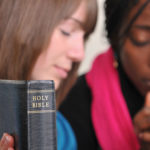
Despite a lot of rhetoric about diversity, racially segregated worship is still a reality in many congregations. One study found that 14 percent of Christian congregations in the U.S. are considered racially or ethnically “mixed,” meaning no one group makes up more than 80 percent of the congregation.
At the same time, multicultural congregations are growing in number and prominence, for several reasons. There is a growing trend toward planting new congregations that are intentionally diverse racially and culturally. Some existing congregations are working at diversifying their membership because they believe they should reflect their communities or because they are trying to survive and thrive, or both. And immigration has increased the percentage of ethnic minorities in this country and the number of areas where they live, from big cities to small towns and rural areas.
These multiethnic congregations are pioneering new ways of doing worship, fellowship and community outreach that reflect their diverse memberships.
Background
Why it matters
Young people today have grown up in a racially and ethnically diverse world. They expect their houses of worship to be as multihued as their schools, their workplaces, the coffee shops they visit. Families are changing too, through international adoptions and with relationships across racial and ethnic lines producing children who don’t clearly identify themselves as being of only one race. If racial reconciliation is possible within a congregation, some contend, that can be a sign to the world that divine reconciliation may be possible as well.
Articles
-
“‘Church Diversity’ Movement Aims to ‘Desegregate’ Houses of Worship”
Read a Jan. 16, 2012 Christian Post article about “Church Diversity Week” and the lack of diversity in most U.S. houses of worship.
-
“Racial Diversity Increasing In U.S. Congregations”
Read a March 24, 2013 Huffington Post article about studies tracking racial diversity, or its lack thereof, in houses of worship.
-
“The Religious Racial Integration of African Americans into Diverse Churches”
Read a 2010 essay by Gerardo Marti about the focus on integration of African Americans into houses of worship for cultural diversity.
-
“Most Churches in America Lack Diversity in Congregations”
Read a May 3, 2013 AllChristianNews.com article about the lack of racial diversity in U.S. churches, but the raised awareness about the issue around the nation.
-
“Congregations Struggle to Get and Keep Racially Diverse Members”
Read a Sept. 27, 2010 Baylor Media Communications article that finds that nine in ten congregations have a single racial group that accounts for more than 80 percent of their membership.
-
“Breaking down racial barriers”
Read a story from The Associated Press, published Feb. 24, 2007, in the Deseret News, about the efforts megachurches are making to become multiracial and multiethnic congregations.
Studies
-
“Ending Racial Segregation in the American Church by Promoting Diversity”
View a compilation of statistics on racial diversity in houses of worship; between 5 to 7.5 percent of churches are considered racially diverse.
-
“American Congregations Reach Out To Other Faith Traditions: A Decade of Change”
Read a 2010 Faith Communities Today study that brings together 26 individual surveys to assess racial diversity in churches in the U.S.
-
“Hues in the pews”
Read a Feb. 28, 2001, story from Christian Century outlining the findings of the Congregations Project at Rice University and other research studies on multiracial congregations. The article is posted by the Hartford Institute for Religion Research.
-
“Megachurches Today 2005”
Research at Hartford Seminary found significant racial diversity among American megachurches. Thumma found that 35 percent of megachurches studied claimed to have at least 20 percent of their membership from a nonmajority ethnic group, and more than half were making specific efforts – such as diversifying their staffs or holding worship services in a language other than English – to become more intentionally multiethnic.
-
“Panel Study of American Religion and Ethnicity”
Sociologist Michael Emerson and a team of researchers at Rice University conducted a national study on multiracial Protestant and Catholic denominations. They found that more than 9 in 10 U.S. churches remain segregated. They analyzed 20 multiracial congregations in the U.S. and identified seven models for how those ethnically diverse congregations came to be.
National sources
-
Scott L. Thumma
Scott L. Thumma is a sociology of religion professor at Hartford Seminary in Connecticut, where he also directs the Hartford Institute for Religion Research. He studies megachurches, nondenominational Christianity and congregational trends.
-
Michael O. Emerson
Michael O. Emerson is a professor of sociology at the University of Illinois at Chicago. He has written several books on race and religion, including People of the Dream: Multiracial Congregations in the United States and Divided by Faith: Evangelical Religion and the Problem of Race in America.
-
D. J. Chuang
D. J. Chuang is working with Leadership Network to assist churches that are trying creative approaches to reach Asian Americans. Leadership Network, based in Dallas, works to nurture innovative leadership and church growth by connecting and equipping church leaders.
-
Erwin Raphael McManus
Erwin Raphael McManus, a native of El Salvador, is lead pastor and cultural architect at Mosaic, a diverse Southern Baptist church in Los Angeles. Mosaic is packed with a multiethnic mix of artistic young adults; McManus describes Mosaic as a cosmopolitan congregation serving the post-modern, post-Western, post-Christian world. McManus is the author of An Unstoppable Force: Daring to Become the Church God Had in Mind and, most recently, Soul Cravings, which was published in 2006.
-
James W. Lewis
James W. Lewis was executive director of the Louisville Institute, a program for the study of American religion at Louisville Presbyterian Theological Seminary until 2011 when he retired. With funding from the Lilly Endowment, the Louisville Institute has sponsored research on multiethnic congregations. Lewis can connect reporters with scholars and pastors who’ve studied multiethnic congregations.
-
David A. Anderson
The Rev. David A. Anderson is senior pastor of Bridgeway Community Church, a nondenominational, intentionally multicultural church of more than 2,000 in Columbia, Md. Anderson also is president of BridgeLeader Network, a nonprofit group that trains congregations, colleges, companies and other groups in multicultural work.
-
George A. Yancey
George A. Yancey is an associate professor of sociology at the University of North Texas in Denton. He is the author of One Body, One Spirit: Principles of Successful Multiracial Churches.
-
Choyin Rangdrol
Choyin Rangdrol is a teacher in the Tibetan tradition of Buddhism and the founder of Rainbow Dharma, a Buddhist center in Oakland, Calif., and of the website RainbowDharma.com. The author of Black Buddha: Changing the Face of American Buddhism (published in 2006), Rangdrol has written about racial separation in American Buddhism.
-
Ihsan Bagby
Ihsan Bagby is an associate professor of Islamic studies at the University of Kentucky and an expert in Islam and its history and practice in North America. He is one of the authors of the research report “The American Mosque 2011.”
Faith groups
-
Gerald R. Barnes
Gerald R. Barnes is executive director of the U.S. Conference of Catholic Bishops’ Secretariat for Hispanic Affairs, whose mission is to assist the Catholic Church in its efforts to serve the large Hispanic population in the United States.
-
Holy Transformation Orthodox Church in New Haven
The Rev. Michael Westerberg is rector of Holy Transformation Orthodox Church in New Haven, Conn. Founded by immigrants from the Belarus area of Russia, the parish has become multiethnic and interracial. Email through the website.
-
Kathryn Kahn
Kathryn Kahn is director of outreach for the Union for Reform Judaism. She can speak about ethnic diversity and changing demographics within American Judaism.
-
Sherman Hicks
Sherman Hicks is executive director of multicultural ministries for the Evangelical Lutheran Church in America.
-
Randy Lee
Randy Lee is moderator of the Presbyterian Multicultural Church Network and associate general presbyter for new church development and redevelopment in Grace Presbytery in Texas.
-
Josue’ Del Risco
The Rev. Josue’ Del Risco is director of the International and Multiethnic Evangelism Team of the North American Mission Board of the Southern Baptist Convention.
-
Gary A. Tobin
Gary A. Tobin is president of the Institute for Jewish & Community Research, a nonprofit think tank in San Francisco. He formerly directed the Maurice and Marilyn Cohen Center for Modern Jewish Studies at Brandeis University and is the co-author of In Every Tongue: The Racial and Ethnic Diversity of the Jewish People.
Regional sources
In the Northeast
-
Steven Kushner
Rabbi Steven Kushner has chaired the kashrut (Jewish dietary laws) task force for the Central Conference of American Rabbis. He is the rabbi at Temple Ner Tamid in Bloomfield, N.J.
-
Hunting Ridge Presbyterian Church
The Rev. Anita Hendrix is pastor of Hunting Ridge Presbyterian Church, a multiethnic congregation in Baltimore affiliated with the Presbyterian Church (U.S.A.). Her congregation is about 60 percent Anglo, with others of African-American, Caribbean, Asian and African heritage.
-
Richard Alba
Richard Alba was a professor of race and ethnicity in the sociology department of the State University of New York at Albany. He is co-author of Remaking the American Mainstream: Assimilation and Contemporary Immigration and can speak about the impact of immigration and ethnic identity on religious life.
-
Jacqui Lewis
Jacqui Lewis is senior minister at Middle Collegiate Church, a multicultural, Reformed Church in America congregation in New York City. Lewis has written that multiracial and multicultural congregations “help us to rehearse the Reign of God here on earth.”
-
Peter Skerry
Peter Skerry is a political science professor at Boston College. During the 2006-07 school year, Skerry was a visiting scholar at the Russell Sage Foundation, where he worked on a book about how a distinct Muslim identity is emerging in the United States – influenced by the presence of Muslims from Arab, South Asian and African-American backgrounds.
-
Stephen Um
Stephen Um is the senior minister of Citylife Presbyterian Church in Boston. He also is an adjunct faculty member at Gordon-Conwell Theological Seminary and at Emerson College. Citylife, a multicultural congregation affiliated with the Presbyterian Church in America, was started in 2002 as part of the network of the Redeemer Church Planting Center in New York and now has more than 500 members, representing more than 25 ethnicities. It’s one of a number of congregations intended to appeal to theologically conservative young professionals in big cities.
-
Paul Kim
Paul Kim is pastor of Berkland Baptist Church, a predominantly Asian-American congregation for students and young adults in Cambridge, Mass. He also is co-chairman of the Multicultural Church Network of the Southern Baptist North American Mission Board.
-
Holy Transformation Orthodox Church in New Haven
The Rev. Michael Westerberg is rector of Holy Transformation Orthodox Church in New Haven, Conn. Founded by immigrants from the Belarus area of Russia, the parish has become multiethnic and interracial. Email through the website.
In the South
-
Gerardo Martí
Gerardo Martí is a sociology professor at Davidson College, Davidson, North Carolina. He teaches about race and ethnic relations and is the author of A Mosaic of Believers: Diversity and Innovation in a Multiethnic Church. Martí is researching whether worship music matters for making congregations racially and ethnically diverse.
-
Mosaic Community Covenant Church
Mosaic Community Covenant Church is located in Missouri City, Texas. The church’s website states that “like colorful, broken pieces arranged by an artist to create a beautiful picture, Mosaic is a blend of multiracial and multiethnic people, broken by the adversities of life but brought together by God.” Ed Lee, who was formerly a pastor with a Chinese congregation, is lead pastor of
-
Wilcrest Baptist Church
Wilcrest Baptist Church in Houston started in 1972 in a mostly white neighborhood, watched the neighborhood around it change dramatically and then made a decision to try to become a multiracial church. Wilcrest’s vision statement proclaims the congregation to be “God’s multiethnic bridge that draws all people to Jesus Christ.” Jonathan Williams is senior pastor.
-
Chapel Hill Bible Church
Chapel Hill Bible Church in Chapel Hill, N.C. People from more than 40 countries worship at this nondenominational congregation, which grew in part through a ministry to international college students and which is intentionally building relationships with African-American and Latino communities in that region of North Carolina. Contact David Walters, media director.
-
Temple Israel of Greater Miami
Temple Israel of Greater Miami is a progressive, inner-city congregation and the oldest Reformed congregation in Miami – states on its website: “You want diversity? Some of our services are a tropical tzimmes of languages: English, Spanish, and Hebrew, with a little Yiddish, Ladino and Aramaic thrown in for good measure.” The congregation also is diverse in socioeconomics, in age and in religious background. Contact communications director, Danny Blanco.
-
Oakhurst Presbyterian Church
Oakhurst Presbyterian Church in Decatur, Ga., a congregation that’s committed to diversity and whose membership is about half white and half black. Contact pastors Nibs (Gibson) Stroupe and Caroline Leach. Together they wrote O Lord, Hold Our Hands: How a Church Thrives in a Multicultural World, and Stroupe is a co-author of Where Once We Feared Enemies: Inclusive Membership, Prophetic Vision and the American Church.
-
Islamic Society of Central Florida
Imam Muhammad Musri leads the Islamic Society of Central Florida, a mosque in Orlando whose members come from more than 30 countries. Located in a mostly Hispanic neighborhood, the mosque is seeing an increasing number of Latino converts and now offers a Spanish-language program for women.
In the Midwest
-
Peter T. Cha
Peter T. Cha is associate professor of pastoral theology at Trinity Evangelical Divinity School in Deerfield, Ill., and co-author of Following Jesus Without Dishonoring Your Parents: Asian American Discipleship (InterVarsity Press, 1998). He also co-edited Growing Healthy Asian American Churches (IVP, 2006).
-
Korie Little Edwards
Korie Little Edwards is an associate professor of sociology at The Ohio State University. She researches interracial churches and African American churches and is the author of The Elusive Dream: The Power of Race in Interracial Churches.
-
Corinne G. Dempsey
Corinne G. Dempsey is an associate professor of religious studies at Nazareth College and the author of The Goddess Lives in Upstate New York: Breaking Convention and Making Home at a North American Hindu Temple, a profile of a South Indian community in Rush, N.Y.
-
Richard Brent Turner
Richard Brent Turner is a professor of religious studies at the University of Iowa in Iowa City, where he teaches a course titled “African American Islam in International Perspective.” He wrote an article titled “Mainstream Islam in the African American Experience.”
-
Virgilio Elizondo
Virgilio Elizondo is a professor of pastoral and Hispanic theology at the University of Notre Dame and a fellow at the Institute for Latino Studies and Kellogg Institute. He is widely considered the “father of Hispanic theology” and frequently comments on the intersection of Latino culture and religion.
-
Curé d’Ars
Curé d’Ars is a Catholic congregation in Denver. This multiethnic parish, in what was once a predominantly white neighborhood, uses music and a worship style with a strong African-American flavor. The Rev. Simon Kalonga is administrator.
-
People’s Church
Herbert Cooper is senior pastor of People’s Church in Oklahoma City. This Assemblies of God congregation, started in 2002, draws about 1,400 people to worship on a weekend – about half black, about 40 percent white. Contact through the website.
-
Uptown Baptist Church
Michael N. Allen is senior pastor of Uptown Baptist Church, a multicultural Southern Baptist congregation in Chicago. The church has an English-speaking congregation that’s about half Anglo, half people of color. It also has congregations that worship in Spanish, Russian and Vietnamese, along with two West African congregations.
In the West
-
Arlene Sánchez-Walsh
Arlene Sánchez-Walsh is a religious studies professor at Azusa Pacific University in Azuza, California. She is an authority on Latino evangelicals, and her current research is on the rise of nonbelief among Latinos and Latinas. Her books include Latino Pentecostal Identity: Evangelical Faith, Self and Society.
-
Karen Ward
Karen Ward is abbess of the Church of the Apostles, a multicultural Lutheran-Episcopal congregation in the Fremont neighborhood of Seattle. Apostles describes itself as a multicultural “future church with an ancient faith.”
-
Jonathan Lee
Jonathan Lee, son of a Korean missionary to the United States, is pastor of Holliston United Methodist Church in Pasadena, Calif. It has services in English and Korean.
-
St. Andrew Catholic Church in Portland
Community of St. Andrew is Catholic congregation in a racially diverse neighborhood in Portland, Ore., offers Mass in English, Spanish and Kanhoval, a Mayan language. Contact pastor Dave Zegar.
-
Bethany United Church of Christ
Bethany United Church of Christ in Seattle. Bethany was founded in 2000 at the site of a previously dying Anglo congregation in the diverse Beacon Hill neighborhood, as an intentionally multicultural, multiracial and multigenerational church.