

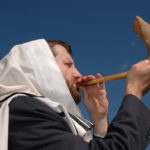
One of the most important trends in Judaism, many experts argue, is the way Jewish spirituality and religiosity is being influenced by the relatively small but growing Orthodox Jewish community. Surveys show that Orthodox Jews account for about 10 percent of the 5.2 million Jews in the United States and about 20 percent of synagogue-affiliated Jews. (There are ongoing debates about the exact figures). But scholars generally agree that Orthodox Jewry has become more visible in recent years, and as a result its adherents have come to define Jewish practice for many both inside and outside the Jewish world. Moreover, demographic factors – high birthrates, regular religious observance, a low exit rate – all contribute to what some believe will be a more Orthodox future for American Judaism.
Journalists will find many entry points into stories about Orthodox Jews. How are teens and young adults practicing their faith? What is drawing individuals and families back into observance, particularly after they have fallen away from it? In areas where few Orthodox Jews live, how do they maintain community and connect with others? What varieties of Orthodox practice exist in one area? How do Jews observe Orthodox traditions in a modern world, from kosher food laws to eruvs?
Background
-
Association for the Social Scientific Study of Jewry
The Association for the Social Scientific Study of Jewry describes itself as “a cross-disciplinary organization of individuals whose research concerns the Jewish people throughout the world.” The association is a valuable resource for experts and the latest research. Steven M. Cohen is the president.
-
“Varieties of Orthodox Judaism”
Eliezer Segal, a professor of religious studies at the University of Calgary, has a Web page explaining the “Varieties of Orthodox Judaism.” The page sets out the many branches of the movement.
How to find an Orthodox community
The National Jewish Population Survey showed that although the Orthodox influence is felt nationally, Orthodox Jews are concentrated in urban Northeast areas to a greater degree than other Jews. In addition, the 15 percent of all Jews who live in small communities scattered around the United States tend to be less observant and less likely to be Orthodox. Journalists can locate Orthodox communities near them in two ways:
-
Orthodox Union
The Orthodox Union is the educational and outreach arm of Orthodox Judaism. It is generally considered a Modern Orthodox organization. Among its main concerns is helping Jews keep kosher and strengthening their traditional rituals, practices and holiday observances. It posts a page that allows users to search for Orthodox synagogues by state. Rabbi Steven Weil is senior managing director.
Why it matters
The Jewish community is viewed as a bellwether for trends affecting other religious groups. Issues involving religious identity, assimilation, intermarriage, worship practices, gender roles and the like have roiled Judaism in America since the first Jewish community was established here more than 350 years ago. Judaism also has a high profile in American culture despite its relatively small size. In the public square, the growth of Orthodox Judaism and its influence is important because there is evidence that Orthodox Jews tend to vote Republican, which is in marked contrast to the historically strong Jewish preference for the Democratic Party.
Trends
Until recent decades, the story of Orthodox Judaism in America was largely one of decline. Most Jews who arrived during the great wave of Jewish immigration in the 19th and early 20th centuries were leaving a Europe where traditional Jewish practice often governed religious life. The new arrivals sought to assimilate and often rejected what were considered outmoded, Old World customs of “shtetl” life. Surveys show that by a wide margin, older American Jews who were raised Orthodox left for another, more liberal movement, such as Conservative or Reform Judaism. In addition, World War II and the Holocaust brought the virtual destruction of European Jewry, including the Orthodox communities that predominated in Eastern Europe.
Yet there were seeds for an Orthodox revival. The establishment of the State of Israel in 1948 was largely the work of secular Zionists. But with so many dangers pressing in on the reborn nation, Israeli leaders had little time for debating matters of Jewish religious practice. So they effectively granted authority over religious matters – undergirded by government funding – to the small Orthodox segment of the Israeli population. Today, the Orthodox population in Israel has grown enormously in size and influence, and its monopoly – as secular and non-Orthodox Jews would call it – on religious life gives the movement an even higher profile.
Yet there were seeds for an Orthodox revival. The establishment of the State of Israel in 1948 was largely the work of secular Zionists. But Israeli leaders effectively granted authority over religious matters-undergirded by government funding-to what was then a tiny Orthodox segment of the largely Israeli population. Today, while Israelis remain largely secular (up to 80 percent, by some estimates), the Orthodox population in Israel has grown to include almost all of the religiously observant Jews. Unlike the United States, the Reform and Conservative movements are tiny. The Orthodox oversight of religious life in Israel gives the movement an even higher profile.
In the United States, meanwhile, Orthodox Judaism benefited from the nationwide interest in traditional religion that began in the 1970s as a reaction to cultural and societal upheavals. Even non-Orthodox Jewish movements, like liberal wings of other religions, have seen many of their members embrace traditional practices that would have once been unheard of. Many Reform synagogues, for example, once banned the use of ritual skullcaps (kippot) and prayer shawls (tallit). Now they are commonplace. The mystical teachings of Kabbalah and traditions such as the yearlong grieving ritual of kaddish, the ritual purification baths called mikvot, not to mention kosher products of all kinds, are growing in popularity, both inside and outside Judaism.
The compactness of the Orthodox community may also augur a demographic turnaround, according to experts and surveys. Orthodox households, on average, have many more children than other Jewish families, and while the older generation of Jews left Orthodoxy, the Orthodox movement today is much younger on average than other movements. The Orthodox resurgence is so successful that Brandeis University historian Jonathan Sarna has called it the “great success story of late 20th-century American Judaism.”
Many saw the choice of Sen. Joseph I. Lieberman, who identified as a Modern Orthodox Jew, as Democratic presidential nominee Al Gore’s running mate in 2000 as another boost for Orthodox Judaism; Lieberman was the first Jew on a presidential ticket. Others note the seemingly unlikely popularity of Hasidic stars of the rap, hip-hop and reggae scene, such as Matisyahu, a Jew from Brooklyn who converted to Orthodox Judaism.
At the same time, other forces are raising the profile of the Orthodox, experts say. One is that many American Jews, like many other Americans, are becoming less observant. That increases Orthodox Judaism’s weight among the remaining Jewish community because Orthodox Jews are more observant than other religious Jews. Also, there are indications that the “center” of American Judaism, long represented by the Conservative stream, is losing members. The effect of that shift is to leave the Jewish religious spectrum divided between a large Reform movement – Judaism’s most liberal stream – on one end and the Orthodox on the other.
Moreover, experts say there is a tendency among Jews and non-Jews alike to view Orthodox practice as the “default mode” of what it means to be Jewish. In that sense, Orthodox Judaism sets the bar for Jewish religious life.
Experts agree there are significant caveats to this scenario. Some question how accurately surveys have counted the number of American Jews, and whether Orthodox Jews have subsequently been overrepresented. Also, scholars note that there are many fissures within the Orthodox movement. Modern Orthodoxy was begun to help Orthodox Jews to find a way to live in the world rather than apart from it. Modern Orthodox constitute the largest number of Orthodox Jews, about two-thirds of the U.S. population of Orthodox Jews. The rest are often known as Haredi or “ultra-Orthodox.” (The latter term is considered pejorative and derogatory by some; RNA’s Religion Stylebook recommends using more precise, descriptive language instead.) These Jews are strictly observant and their various factions contend with each other for influence and the correct interpretation of Jewish law. Hasidic Jews are also included in the category of Haredi, but their movement has a particular history largely rooted in 17th-century Eastern Europe. The Hasids also have strong variants in beliefs among themselves and-with the notable exception of the Lubavitch-tend to stay to themselves in insular communities. The more-conservative Orthodox Jews disagree sharply with Modern Orthodox on a range of issues. The strictest Orthodox Jews are often distinguished by their black garments, wide-brimmed hats, and peyas, or sidecurls of hair in front of the ear.
Surveys
-
“Geographic Differences among American Jews”
Read the National Jewish Population Survey’s reports on geographic differences among Jews around America. The NJPS showed that although the Orthodox influence is felt nationally, Orthodox Jews are concentrated in urban Northeast areas to a greater degree than other Jews.
-
Berman Jewish DataBank
The Berman Jewish DataBank has links to the National Jewish Population Study and several other studies, some of which provide different figures for the overall Jewish population.
Politics
-
“Future of Orthodox Jewish Vote Has Implications for GOP”
Read an Aug. 3, 2006, Washington Post story on the growing receptiveness of Orthodox Judaism to Republican politics.
-
“Orthodox Jewish Voters Courted By GOP Presidential Field”
Read a Dec. 15, 2011, article from The Huffington Post about the Orthodox Jewish vote in the 2012 elections.
-
“Obama And The Orthodox”
Read a Nov. 27, 2012, article from The Jewish Week about how Orthodox Jews voted in the 2012 presidential election.
Articles
-
“The State of Orthodox Judaism Today”
Read an essay by Michael Kress, editor in chief of MyJewishLearning.com, about the factions and tensions within the Orthodox movement.
-
“Orthodox Judaism in America”
Read an essay on the history of Orthodox Judaism in America adapted from the American Jewish Desk Reference: The Ultimate One Volume Reference to the Jewish Experience in America and posted at the MyJewishLearning.com Web site.
-
“One Of A Kind”
Read a Feb. 11, 2009, CBS News story on Hasidic reggae singer Matisyahu.
National sources
-
Lynn Davidman
Lynn Davidman is a professor of modern Jewish studies at the University of Kansas in Lawrence. She is an expert on those who leave Hasidic and Orthodox Judaism, both in the U.S. and in Israel.
-
Marc Ellis
Marc Ellis is retired Professor of Jewish Studies, Professor of History and Director of the Center for Jewish Studies at at Baylor University in Waco, Texas. He has written about a Jewish theology of liberation and about the future of liberation theology. He wrote Practicing Exile: The Religious Odyssey of an American Jew.
-
Sylvia Barack Fishman
Sylvia Barack Fishman is a professor of contemporary Jewish life at Brandeis University in Waltham, Mass., and co-director of the Hadassah-Brandeis Institute, which focuses on women in contemporary Judaism. She is the author of numerous books, including Jewish Life and American Culture (SUNY Series in American Jewish Society in the 1990s) and The Way Into the Varieties of Jewishness. She is also an expert on Jewish identity, marriage and conversion.
-
Daniel Frank
Daniel Frank is director of the Judaic studies program at Purdue University in West Lafayette, Ind.
-
Samuel Freedman
Samuel Freedman is a journalism professor at Columbia University whose books include Jew vs. Jew: The Struggle for the Soul of American Jewry. He can comment about rifts between different Jewish groups and denominations.
-
David A. Harris
David A. Harris is executive director of the American Jewish Committee, a nonpartisan organization that conducts an annual survey of American Jews.
-
Samuel C. Heilman
Samuel C. Heilman is a sociologist at the City University of New York in New York City. He is the author of Sliding to the Right: The Contest for the Future of American Jewish Orthodoxy, which argues that the ultra-Orthodox are gaining the upper hand over the Modern Orthodox. He is also co-editor of the annual periodical Contemporary Jewry, produced by the Association for the Social Scientific Study of Jewry.
-
Deborah Dash Moore
Deborah Dash Moore is director of the Frankel Center for Judaic Studies at the University of Michigan in Ann Arbor. She teaches a course in American Jewish history and is an expert on women in Reconstructionist Judaism. Her specialty is 20th-century Jewish urban history.
-
Allan L. Nadler
Allan L. Nadler is director of Jewish studies at Drew University in New Jersey. He was trained as an Orthodox rabbi but is now unaffiliated and writes and comments extensively on Orthodox Jewish life.
-
Jonathan D. Sarna
Jonathan D. Sarna is professor of American Jewish history at Brandeis University in Waltham, Mass. He is co-author of Religion and State in the American Jewish Experience and author of American Judaism: A History, which won the Jewish Book Council’s Jewish Book of the Year Award in 2004.
-
Jack Wertheimer
Jack Wertheimer is the Joseph and Martha Mendelson Professor of American Jewish History at the Jewish Theological Seminary in New York City. The seminary is the central educational institution of the Conservative movement in Judaism. Among the dozen books Wertheimer has authored or edited are A People Divided: Judaism in Contemporary America, Jews in the Center: Conservative Synagogues and Their Members and Jewish Religious Leadership: Image and Reality.
-
Judaism 101
Judaism 101 is a general clearinghouse of information about Judaism run by Tracey Rich, a Jewish layperson. It contains descriptions of the Jewish calendar, the Hebrew alphabet, holidays, life-cycle events, rituals, observances and much more.
Leading Orthodox institutions
-
Yeshiva University
Yeshiva University, based in Manhattan, is the flagship school of higher education in Orthodox Judaism in the United States. Yeshiva is identified with the Modern Orthodox movement.
-
Orthodox Union
The Orthodox Union is the educational and outreach arm of Orthodox Judaism. It is generally considered a Modern Orthodox organization. Among its main concerns is helping Jews keep kosher and strengthening their traditional rituals, practices and holiday observances. It posts a page that allows users to search for Orthodox synagogues by state. Rabbi Steven Weil is senior managing director.
-
Edah
Edah is an organization of Modern Orthodox Jews who seek greater openness to the world than does traditional Orthodox Judaism. Edah was founded in 1997 and ceased formal operations in 2006, but its website continues to post useful contacts and information, including a lengthy list of speakers/experts and a library. Rabbi Saul J. Berman is director.
International sources
-
Norma Baumel Joseph
Norma Baumel Joseph is an associate professor of religion at Concordia University in Montreal. She writes about the experience of women in Orthodox Judaism.
-
Tamar Ross
Tamar Ross is a professor of Jewish philosophy at Bar-Ilan University in Ramat Gan, Israel. She writes about Orthodoxy and feminism.
-
Eliezer Segal
Eliezer Segal is a professor of religious studies at the University of Calgary. He has a Web page explaining the “Varieties of Orthodox Judaism.” The page sets out the many branches of the movement.
Regional sources
In the Northeast
-
Shmuley Boteach
Rabbi Shmuley Boteach is an Orthodox rabbi from Englewood, N.J., who has become a nationally known figure through his writings and television appearances. Boteach (pronounced boh-TAY-ock) offers family and personal advice based in traditional Jewish wisdom. He hosts the Learning Channel program Shalom in the Home and became popular through his book Kosher Sex: A Recipe for Passion and Intimacy. Contact Boteach through his website.
-
Alan M. Dershowitz
Alan M. Dershowitz is Felix Frankfurter Professor of Law at Harvard Law School. He is considered “…the Jewish state’s lead attorney in the court of public opinion.” He wrote The Vanishing American Jew: In Search of Jewish Identity for the Next Century (Simon and Schuster, 1998). In the book, Dershowitz writes that “All Jews should ‘return’ to religious adherence, and religion should once again become the central unifying essence of Jewish life.”
-
Noah Feldman
Noah Feldman is a professor at Harvard Law School whose specialties include the relationship between law and religion. He gave the keynote address, “Persecution and the Art of Secrecy: An Interpretation of the Mormon Encounter with American Politics,” at a 2007 conference on Mormonism and American politics. He also wrote a July 22, 2007, essay in The New York Times Magazine (subscription required) titled “Orthodox Paradox,” about his drift away from the Orthodox Judaism of his youth. He has a doctorate in Islamic thought and is an expert on Middle East politics and Islamic constitutional law.
-
Karla Goldman
Karla Goldman is a historian in residence at the Jewish Women’s Archive in Brookline, Mass. She is an expert on how women have shaped American Judaism.
-
Barry Kosmin
Barry Kosmin directs the Institute for the Study of Secularism in Society and Culture at Trinity College in Hartford, Conn. He has conducted polls on religion and society in the United States, Europe, Africa and Asia.
-
Jacob Neusner
Jacob Neusner, professor of theology at Bard College in Annandale-on-Hudson, N.Y., co-edited Altruism in World Religions. He is the author of scores of books on Rabbinic Judaism and has encyclopedic knowledge of the history of Judaism and its texts. Neusner says altruism is best studied as a religious, not a secular, impulse. He is the editor of Evil and Suffering.
-
Robert M. Seltzer
Robert M. Seltzer is a professor of history at Hunter College, City University of New York. He has written books on the Jewish experience in America, including Toward the 21st Century: Is There a Modern Judaism? (Hunter College of the City University of New York, 1997).
In the South
-
David Blumenthal
David Blumenthal is a professor of Judaic studies at the Tam Institute of Jewish Studies at Emory University in Atlanta. He is the author of two seminal books on Jewish mysticism, God at the Center: Meditations on Jewish Spirituality and Understanding Jewish Mysticism. Additionally, he is the author of The Banality of Good and Evil: Moral Lessons from the Shoah and Jewish Tradition. He notes that both perpetrators and rescuers often say they were just doing what was expected of them.
-
Jay Geller
Jay Geller is an associate professor of modern Jewish culture and religious studies at the divinity school at Vanderbilt University in Nashville, Tenn. He has written on atheism and modern Judaism. He is also an expert on Judiams and modernity and the Holocaust on film and in literature.
-
Richard Golden
Richard Golden is director of the Jewish Studies Program at the University of North Texas in Denton.
-
Stephen Jacobs
Stephen Jacobs is professor of religious studies and chairman of Judaic studies at the University of Alabama in Tuscaloosa. He can comment on altruism as a scholar of modern Jewish thought and from a post-Holocaust perspective.
-
Melvin Konner
Melvin Konner is a professor of anthropology, human biology and Jewish studies at Emory University, and author of Unsettled: An Anthropology of the Jews, about the history of Jewish culture.
-
Adam Zachary Newton
Adam Zachary Newton is interim director of Jewish studies at the University of Texas at Austin. He is an expert on modern Jewish thought. He has published a number of books in the areas of Narrative Theory, American Studies, Contemporary Jewish Philosophy, and Comparative Literature. His focus is on modern Jewish thought and literature.
-
Vanessa Ochs
Vanessa Ochs is the author of The Book of Jewish Sacred Practices: CLAL’s Guide to Everyday and Holiday Rituals and Blessings. She is a professor in the department of religious studies at the University of Virginia in Charlottesville. She can talk about the role of the Internet in the contemporary Jewish dating scene, life cycle rituals for single people and the creation of rituals that acknowledge the place of single people in the community.
-
Ira Sheskin
Ira Sheskin is a specialist in Jewish demographics at the University of Miami, where he is a fellow at the Sue and Leonard Miller Center for Contemporary Judaic Studies. Sheskin was a consultant on the NJPS study.
-
Lee Shai Weissbach
Lee Shai Weissbach is a history professor at the University of Louisville in Kentucky. He is an expert on small-town Jewish life in America, especially in the South, where surveys show traditional observance tends to be lower than in other areas.
In the Midwest
-
Michael Fishbane
Michael Fishbane is a professor of Jewish studies at the University of Chicago. His research specialties are Jewish mysticism and modern Jewish thought.
-
Anthony Michels
Anthony Michels is an associate professor of history at the University of Wisconsin-Madison, where he teaches a course called “The American Jewish Experience: From Shtetl to Suburb.”
-
Byron L. Sherwin
Byron L. Sherwin is a professor of Jewish studies at the Spertus Institute of Jewish Studies in Chicago. He is a renowned Jewish theologian, ethicist, scholar of Jewish philosophy and mysticism.
In the West
-
Eli Berman
Eli Berman, a professor of economics at the University of California at San Diego, specializes in the economics of religion. He is also research director for International Security Studies at the UC Institute on Global Conflict and Cooperation. He wrote an essay in the Quarterly Journal of Economics in 2000 titled “Sect, Subsidy and Sacrifice: An Economist’s View of Ultra-Orthodox Jews.”
-
Paul Burstein
Paul Burstein is chairman of the Jewish studies program at the University of Washington in Seattle. He is an expert on the American Jewish community.
-
John Efron
John Efron is a professor of history and Jewish studies at the University of California-Berkeley. His focus is on the cultural and intellectual history of modern Judaism. He wrote Medicine and the German Jews: A History (Yale University Press, Spring 2001) and The Jews: A History, with Matthias Lehmann and Steven Weitzman (Prentice Hall, 2009), among others.
-
Bruce Phillips
Bruce Phillips is a professor of Jewish communal service at the Hebrew Union College-Jewish Institute of Religion in Los Angeles, a leading seminary of the Reform movement. He was on the team that completed the National Jewish Population Survey 2000 and says the Jewish institutional landscape will be reshaped by children of intermarriage who do not belong to synagogues or identify as Jews.