


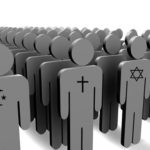
In a diverse and highly religious country, the details of every big survey of religious identity are both welcomed and questioned. Extensive surveys, such as U.S. Religious Landscape Survey by the Pew Forum on Religion & Public Life, add concrete numbers to significant trends that are reshaping American life as well as new demographic details about the adherents of many religious groups. They also raises questions for American denominations and for American religious life by challenging assumptions and identifying new trends that some people may find troubling.
Background
Why it matters
Religion continues to exert important influence on the nation’s public life, from government and foreign policy to schools and community life. It is a changing landscape that now looks significantly different than it did just 20 years ago, and it is poised to continue changing as the families of ethnically and religiously diverse immigrants deepen their roots in this country. In a democracy, understanding what people believe, how many people each group actually represents and how religious affiliation is shifting helps explain why some issues persist in public debate and offers clues to how these issues may unfold in the future. To help reporters develop stories based on the survey, ReligionLink is offering an extensive list of experts in all the topic areas covered by the survey, as well as a list of story ideas.
Angles for reporters
- Changing affiliation – Talk of a “post-denominational” era in religion sounds theoretical; saying almost half of Americans have switched religious affiliation is a concrete phenomenon. The dynamics of changing affiliation – why people switch once, twice or more and where they settle and why – is an undercovered story.
- “None of the above” – Nonaffiliation is the second big headline from the survey, as well as another trend that’s been growing for at least a decade. The nonaffiliated are the nation’s fastest-growing “faith” group; many of them are religious and some are not, and they are as diverse as any other religious grouping in their beliefs and practices. That trend is likely to continue since younger people are the most likely to be “none of the above” (one in four of 18- to 29-year-olds). Who are they and what distinguishes the way they raise their children, support charities and participate in civic life?
- Interfaith families – An exact count of the number of interfaith families has never been available, although it’s clear that the number must be rising quickly. The Pew survey finds that 27 percent of people have spouses of a different religion, and that percentage rises to 37 percent if you include spouses in different Protestant traditions. Having family members of different faiths affects the way people observe holidays, marriages and funerals; attend worship; give money and time to charity; and rear children. How are interfaith families reshaping all of these to suit their needs?
- Changing groups – The makeup of several religious traditions is changing swiftly and dramatically. Buddhism in America is now dominated by whites, people born in America and converts. Catholicism is quickly becoming a Hispanic religion. How are the leadership and practices of such groups changing in response? What challenges are they facing, and what opportunities are they grasping?
- Unchanging groups – Religious groups whose makeup isn’t shifting face huge challenges, since the demographics of America continue changing. Mainline Protestants and Jews are singled out in the Pew survey as groups that are homogeneous, aging, and diminishing. How is that changing their mission? What are they doing to try to reinvigorate their faith?
- Ah, youth – The younger adults of today are the mainstream – and financial supporters – of religions in the future. The Pew survey finds that they are most likely to be nonaffiliated and also shows which traditions have higher numbers of younger members. What do their affiliations – or lack thereof – portend for the future? What do they say about how their spiritual beliefs fit into current religious traditions?
- Big families – The religious groups that produce large families today are likely to grow even larger in the years to come. According to the Pew survey, Muslims and Mormons are the groups with the largest families. What does that mean for their future – and how will other groups’ smaller family size affect the future of their faith as well?
- Minorities – Fewer than 5 percent of Americans are members of a minority faith – a proportion that remains quite small despite the country’s religious diversity. Religious minorities, however, are very important in shaping religion in the public square as they seek acceptance for their religious practices and as they fan out into all corners of the country. This affects the way schools deal with religion, church-state debates, social services and more. How do members of smaller faith groups influence life in your community?
- Size vs. public profile – Demographic surveys offer the opportunity to look at the size of religious traditions in comparison to their public profile or influence. They also offer an opportunity to look at groups that don’t generally get much attention – such as Orthodox Christians – but whose numbers equal traditions with higher profiles. How are they growing and changing?
- Protestant values – Protestant Christians have exerted important influences in America since its founding, and Protestant values – think “Protestant work ethic” — are embedded in American government and social traditions. The number of Protestants has slipped to just 51 percent of the population, and their makeup is shifting as mainline Protestants continue to lose members and evangelical churches gain members. If many of America’s long-standing values are “Protestant” values, are America’s values now changing? If so, what influence do various religious traditions have?
- Former Catholics – One in 10 Americans say they used to be Catholic, which means former Catholics are a larger group than almost any religion, except for Catholics, Protestants and the unaffiliated. How has that exodus affected the church? How has it affected the religions to which they’ve switched, and are there trends in their departures and their new selections? How do Catholic values shape American culture?
- Details, details – The Pew survey offers demographic details on members of minority faiths. Hindus, for example, tend to have higher levels of education and income – which is interesting because higher income and education levels have usually been associated with lower levels of religiosity in America. Who makes up the Hindu community in your area, and how does their faith intersect with their public life?
- Immigration – Immigrants and their descendents are reshaping American religious traditions, from the Catholic Church to Protestant denominations. Many experts say the religious affiliations of second- and third-generation immigrants will have even greater influence on the country’s religious landscape. How are their religious preferences different from their parents’?
- Ethnicity – The survey details the ethnic makeup of different religious traditions. Historically black churches have high rates of retention, and blacks have very high rates of religious affiliation. How have black churches remained central to blacks’ sense of community?
- God is not dead, but his book club is shrinking – One thing almost all Americans – 92 percent – agree with is that there is a God. Even so, our ideas of God differ greatly, with some reporting belief in a personal God while others view the divine more as an impersonal force. Much lower numbers of people say they read the scriptures: Nearly half (45 percent) of adults report that they seldom or never read scripture outside a house of worship. How do we reconcile these two figures? What do they tell us about the way people of faith think about God and the revealed word?
- Atheists believe, too – One out of five atheists and more than half of agnostics say they believe in God. What do they mean by that? Also surprisingly, 8 percent of atheists report they pray or read scriptures with their children, and 10 percent say they pray daily or a few times a week. Twelve percent believe in heaven, and 10 percent say there’s a hell. How and why do they continue to identify themselves as atheists and agnostics? What does this mean to their communities, especially the atheist community, which has been claiming larger numbers in recent years?
- Many paths to salvation – Americans take a pluralistic view of salvation. Of those with a religious affiliation, 70 percent say many religions can lead to eternal life, and more than half – 57 percent – of evangelicals agree with that statement. But by definition, evangelicals profess that accepting Christ as one’s savior is the only way to salvation. What do they mean? What does this mean for the evangelical community as a whole?
- Political leanings – According to the study, religious affiliation is closely tied to political orientation. Generally, the more religiously observant someone is, the more likely he or she is to be politically conservative, and some religious groups tend toward the Democratic Party (Jews, African-American Protestants, the religiously unaffiliated) while others tend toward the Republicans (Mormons and evangelicals). But when specific questions about politics were asked, the lines between religious observance and political attitudes began to break down. Members of many religions and levels of devotion were concerned with the environment, the plight of the poor and other social issues. How do these findings suggest that Barack Obama and John McCain build bridges to voters of different religious groups?
- Politics and the pulpit – The public as a whole is almost evenly split on whether churches should get involved in political matters, but certain faith groups (such as evangelicals, historically black churches, Jehovah’s Witnesses and Jews) tilt strongly in one direction or the other. What shapes their views on this, and to what extent are they involved in efforts to weaken (or fortify) Internal Revenue Service rules on it?
- Government and morality – Fifty-two percent of Americans are worried that the government is too involved in morality, but 40 percent want the government to do more. What reasons does each side give for its view? Among those with the greatest percentages advocating a bigger role are Muslims (59 percent), Mormons (54 percent) and evangelicals (50 percent). To what degree might they work together to accomplish this goal?
- Literal vs. metaphorical – Six in ten – 63 percent – of Americans say they believe their scriptures are the word of God. But fewer believe it should be interpreted literally, though higher numbers of evangelicals (59 percent) and members of historically black churches (62 percent) believe it should. Half of all Muslims say the Quran is the literal word of God; one-quarter say the Quran should not be interpreted literally.
- Heaven and hell – Significantly more people say they believe in heaven (74 percent) than in hell (59 percent). Why? In what faith groups does belief in one mean belief in the other, and in what faith groups are members more likely to believe only in heaven?
- Miracles – Most Americans – 79 percent – say they believe in miracles. This is more than the number who say they believe their scriptures are the word of God and more than the number who say they believe in life after death. How do we explain this?
- Answered vs. unanswered prayer – Less than one-third of the respondents say they receive answers to their prayers at least once a month. What do the other two-thirds say they get from prayer? Why do they engage in it if they do not feel that their prayers are regularly answered? How do their perceptions influence their frequency of praying or the subjects of their petitions?
- Meditation – Meditation is widespread across faiths, with Buddhists reporting a high number (61 percent) of weekly practitioners. But even more Jehovah’s Witnesses (72 percent) say they meditate at least once a week. Numbers are also high among Mormons (56 percent) and members of historically African-American churches (55 percent). How do members of these groups define and practice meditation? How are their practices the same and different?
- Who’s praying with the children? – About two-thirds of adults with children living in the house say they pray or read scripture with their children. Numbers are highest among Mormons and lowest among Jews and Buddhists. How do people teach their children to pray, and why? What kinds of prayer (petitionary, intercessory, praise, etc.) do they teach them?
- Formal membership – Ninety-two percent of Mormons report being official members of a local house of worship, but only 42 percent of Muslims and 55 percent of Jews say the same. Hindu and Buddhist figures are even lower. What accounts for that, and what challenges do those faith traditions face as a result?
- Low service attendance – Only 39 percent of Americans say they attend religious services weekly. What are different religious groups doing to increase that? What other spiritual and religious activities do people engage in outside a traditional house of worship?
- Look who’s speaking in tongues – Speaking in tongues is generally associated with Pentecostal traditions. Yet 12 percent of Orthodox Christians – among the most liturgically based traditions – report they speak or pray in tongues at least once a week. Another 6 percent say they do at least once a year. What role does this Pentecostal practice play in Orthodox worship? How did it evolve in Orthodox Christianity?
- The afterlife – Only six in 10 (62 percent) of Buddhists believe in the state of nirvana. A similar number – 61 percent – of Hindus believe in reincarnation. Both concepts are considered central to their respective faiths. What holds Buddhists and Hindus who do not believe in them to their faiths?
- Satisfaction gap – A majority of members of every religion reported that they were “very satisfied” with their personal lives – with one exception. Less than half (47 percent) of all members of traditionally African-American churches reported that they were very happy with their personal lives. Why?
- Hot-button issues – On some of the most controversial issues of the day, interesting nuances showed up in the survey’s findings; consider exploring these further. For example, despite the church’s stance, more Catholics say abortions should remain legal in most/all cases (48 percent) than favor making it illegal most or all of the time (45 percent). On evolution, 58 percent of Catholics say that it’s the best explanation for the origins of human life, compared with just 48 percent of the total population.
- Religion and modern life – A majority of Americans (54 percent) with a religious affiliation say there is no conflict between being devout and living in a modern society. But a hefty portion – 40 percent – says there is. How do people experience and solve this tension in their lives?
Major religious affiliation surveys
General surveys
-
Faith Communities Today (FACT)
Based at the Hartford Institute for Religion Research at Hartford Seminary. Has data from 2000, 2005, 2008, and 2010. The survey involved researchers and religious leaders in a survey of 14,300 American congregations of all faiths and denominations. FACT can provide information about megachurches (Protestant churches claiming 2,000 or more attending weekly worship), which have been growing at the same time as the planting of small churches has increased. The site also provides links to recent articles about church growth and trends.
-
Association of Religion Data Archives
The Association of Religion Data Archives provides numerous data collections on religion.
-
“American Religious Identification Survey (2001)”
The 2001 American Religious Identification Survey found that 27,000 Americans identified themselves as fundamentalist Christians in 1990, and 61,000 gave themselves that identifier in 2001.
-
“American Religious Identification Survey 2008”
The 2008 American Religious Identification Survey found that about 12 percent of Americans say there is no God or it’s unknowable whether there is. The percentage of respondents who self-identified as atheists or agnostics, however, was much lower. The survey, conducted by researchers at Trinity College’s Program on Public Values, followed previous large-scale religious identification surveys in 1990 and 2001 and provided important comparative information about trends in the U.S.
-
American Piety in the 21st Century
American Piety in the 21st Century, an extensive survey of beliefs and practices released in 2006, was conducted by the Baylor Institute for Studies of Religion. This study counted one-third of Americans as evangelicals, compared with the Pew study’s one-fourth. It numbered the unaffiliated at 10.8 percent, much lower than the new Pew study and the ARIS 2001 study. Jews made up 2.5 percent of the total population, according to this study, much higher than the new Pew study and the ARIS 2001 study. But like the Pew study, it found that Americans between the ages of 18 and 29 are more likely to be unaffiliated than any other age group.
-
Association of Statisticians of American Religious Bodies
The Association of Statisticians of American Religious Bodies is an organization of statisticians and researchers who collect and publish information about American denominations and faith groups. Every 10 years they publish the Religious Congregations Membership Study, the last of which appeared in 2010.
-
Pew Forum on Religion & Public Life
The Pew Forum on Religion Religion & Public Life is a project of the Pew Research Center. The Pew Forum seeks to promote a deeper understanding of issues at the intersection of religion and public affairs by conducting surveys, demographic analyses and other social science research on important aspects of religion and public life in the U.S. and around the world.
-
“Pew Forum: Gonzales v. O Centro Espirita”
The Pew Forum on Religion & Public Life offers resources for covering the UDV case.
-
“Baylor Religion Survey of 2005”
The Baylor Religion Survey of 2005 quantifies how people’s view of God affects their political views. It’s posted by the Association of Religion Data Archives.
-
U.S. Religious Landscape Survey
The U.S. Religious Landscape Survey is an extensive survey by the Pew Forum on Religion & Public Life which details the religious makeup, beliefs and practices as well as social and political attitudes of the American public.
-
The Pluralism Project
The Pluralism Project at Harvard University lists resources across the country by religious tradition, including interfaith resources. It is aimed at engaging students in studying the new religious diversity in the United States.
-
SocioWeb: The Sociological Resource Center
SocioWeb: The Sociological Resource Center an independent guide to sociological resources available online.
-
Americas Society/ Council of the Americas
The Americas Society/Council of the Americas provides information on diverse cultures in the Americas. It has offices in New York City, Washington D.C., and Miami.
-
Inter-university Consortium for Political and Social Research: General Social Survey Series
Inter-university Consortium for Political and Social Research: General Social Survey Series is an annual study on political and social sciences in the U.S.
-
Gallup: Religion
Gallup’s page on religion provides a number of studies and research reports on religion in the U.S. Contact through the website.
-
U.S. Congregational Life Survey
U.S. Congregational Life Survey is a representative research report that provides information on worshipers and their congregations around the U.S.
-
Statistical Abstract of the United States
The Statistical Abstract of the United States is “the authoritative and comprehensive summary of statistics on the social, political, and economic organization of the United States” provided by the United States Census Bureau.
-
World Religions & Spirituality Project
The World Religions & Spirituality Project at University of Virginia provides resources on religious beliefs and movements around the globe, including a list of links to other organizations who provide more detailed resources.
Catholic
-
Center for Applied Research in the Apostolate at Georgetown
For statistics, see the Center for Applied Research in the Apostolate at Georgetown, the nonprofit research organization that conducts social scientific studies for the Catholic Church.
Jewish
Muslim
-
“The Mosque in America: A National Portrait”
The Council on American-Islamic Relations’ report “The Mosque in America: A National Portrait” (April 2001) broke ground with its focus on American Muslim congregational life.
Latino
-
“Changing Faiths: Latinos and the Transformation of American Religion”
Read an April 2007 study by the Pew Forum on Religion & Public Life and the Pew Hispanic Center about the effects the booming Hispanic population is having on U.S. religious practices.
-
“Hispanic Churches in American Public Life: Summary of Findings”
For Latino Catholic views, experts caution that it is important to separate out the opinions of Catholics of European ancestry from those of Latinos, a growing bloc that may account for one in five of the nation’s Catholic community. Latinos tend to be conservative on social issues, but more liberal than their Anglo counterparts on other ones. Read a 2003 report from the Hispanic Churches in American Public Life Project at the Institute for Latino Studies at the University of Notre Dame, which examines the impact of religion on political and civic engagement in the Hispanic community and includes information on political party identification and religious beliefs.
National sources
-
Scott L. Thumma
Scott L. Thumma is a sociology of religion professor at Hartford Seminary in Connecticut, where he also directs the Hartford Institute for Religion Research. He studies megachurches, nondenominational Christianity and congregational trends.
-
Wade Clark Roof
Wade Clark Roof is F. Rowny Professor of Religion and Society and chairman of the religious studies department at the University of California at Santa Barbara. He is a columnist for Beliefnet and author of, among other books, Spiritual Marketplace: Baby Boomers and the Remaking of American Religion (Princeton University Press, 2001). He is also editor in chief of Contemporary American Religion (Macmillan Reference USA, 1999).
-
Karen Leonard
Karen Leonard is an anthropologist at the University of California, Irvine. Her publications include Muslims in the United States: The State of Research and Immigrant Faiths: Transforming Religious Life in America.
-
John C. Green
John C. Green is a senior fellow at the Pew Research Center’s Forum on Religion & Public Life, specializing in religion and American politics. He also serves as interim university president, director of the Ray C. Bliss Institute of Applied Politics and distinguished professor of political science at the University of Akron.
-
Gastón Espinosa
Gastón Espinosa, assistant professor of religious studies at Claremont McKenna College in California, specializes in Latino religion and politics.
-
Kevin Dougherty
Kevin Dougherty is an associate professor of sociology at Baylor University in Waco, Texas. His research focuses on the sociology of religious congregations, including racial diversity in churches.
-
Mark A. Chaves
Mark A. Chaves is professor of sociology at Duke University in Durham, N.C. He is an expert on religious organizations in the United States and leads the National Congregations Study.
-
Nancy Ammerman
Nancy Ammerman is professor of sociology at Boston University and a leading expert on congregational dynamics, especially in mainline Protestantism. She is the author of Sacred Stories, Spiritual Tribes: Finding Religion in Everyday Life and Pillars of Faith: American Congregations and Their Partners. She is also an expert on religious movements and has written about the rise of fundamentalism.
-
Roger Finke
Roger Finke is a professor of sociology, religious studies and international affairs at Penn State University. He’s also director of the Association of Religion Data Archives.
-
Todd M. Johnson
Todd M. Johnson is co-director of the Center for the Study of Global Christianity at Gordon-Conwell Theological Seminary in South Hamilton, Massachusetts. The rise of Pentecostalism has been a major focus of the program. He is also an expert on international religious demography; he is associate editor of the World Christian Database and is co-editor of the World Religion Database.
-
D. Michael Lindsay
D. Michael Lindsay is a sociologist and the president of Gordon College, a Christian school in Wenham, Mass. His focus is on issues surrounding leadership, organizations and culture. He is a former Gallup consultant with an expertise on research about evangelicals. Lindsay is author of the 2007 book Faith in the Halls of Power: How Evangelicals Joined the American Elite and the 2014 book View From the Top: An Inside Look at How People in Power See and Shape the World.
-
Stephen Prothero
Stephen Prothero is former professor of Religion in America in the Department of Religion at Boston University. He is the author of numerous books including Religion Matters: An Introduction to the World’s Religions (W.W. Norton 2020), Why Liberals Win the Culture Wars (HarperOne, 2016), God Is Not One: The Eight Rival Religions that Run the World—and Why Their Differences Matter (HarperOne, 2010), and the New York Times bestseller Religious Literacy: What Every American Needs to Know—and Doesn’t (HarperOne, 2007). He has also written about American Hindus. Prothero has commented on religion on hundreds of National Public Radio programs, and on television on CNN, MSNBC, FOX, and PBS. He lives on Cape Cod, and he tweets @sprothero.
-
Alan Wolfe
Alan Wolfe is the founding director of the Boisi Center for Religion and American Public Life at Boston College and a frequent commentator on religion and politics. His books include The Transformation of American Religion: How We Actually Live Our Faith, which focuses on the impact of evangelicals on American religious culture. He has written widely on secularism.
-
Anna Greenberg
Anna Greenberg is a senior vice president and leading pollster for the Democratic polling firm Greenberg Quinlan Rosner Research, based in Washington, D.C.
-
Tom Smith
Tom Smith is a senior fellow and director of the General Social Survey at the National Opinion Research Center at the University of Chicago. He is at work on a study of religious change, including how people think about God. He served as a consultant to the Religious Landscape study and is an expert on Catholics and Protestants.
-
John Zogby
John Zogby is president of Zogby International, a polling organization based in Utica, N.Y., that frequently includes questions about religion and adherence in its polls.
-
William Swatos Jr.
William Swatos Jr. is executive director of the Religious Research Association, a group of academic and religious professionals that applies scientific research methods to the study of religion. It is a project of the Hartford Seminary. He is located in Illinois.
-
Church of Christ, Scientist
The Church of Christ, Scientist in Boston does outreach in seven countries in Sub-Saharan Africa. Contact Adam Scherr.
Major research centers
-
Center for the Study of Religion
The Center for the Study of Religion at Princeton University is a major academic initiative that aims to encourage greater intellectual exchange and interdisciplinary scholarly studies about religion through diverse perspectives of the humanities and social sciences.
-
Boisi Center for Religion and American Public Life
The Boisi Center for Religion and American Public Life at Boston College looks to create opportunities where a community of scholars, policy makers, media and religious leaders in the Boston area and nationally can connect in conversations and scholarly reflection around issues at the intersection of religion and American public life. Alan Wolfe directs the Center.
-
Leonard E. Greenberg Center for the Study of Religion in Public Life
The Leonard E. Greenberg Center for the Study of Religion in Public Life, based at Trinity College in Hartford, Conn., seeks to advance knowledge and understanding of the varied roles that religious movements, institutions and ideas play in the contemporary world. The Center publishes Religion in the News, a twice-yearly magazine that covers media reporting of religion. Mark R. Silk is the director of the center and the editor-in-chief of the magazine.
-
Hartford Institute for Religion Research
The Hartford Institute for Religion Research at the Hartford Seminary is an excellent resource and includes a database of more than 800 megachurches in the United States. Contact Scott Thumma, professor of the sociology of religion at Hartford Seminary.
-
Institute for the Study of Secularism in Society and Culture
The Institute for the Study of Secularism in Society and Culture strives to foster understanding of the role of secular values and the process of secularization in today’s society. The nonpartisan, multidisciplinary institute is based at Trinity College in Hartford, Conn., and is part of the college’s Program on Public Values. Barry Kosmin is director.
-
Association of Religion Data Archives
The Association of Religion Data Archives provides numerous data collections on religion.
-
The Pluralism Project
The Pluralism Project at Harvard University lists resources across the country by religious tradition, including interfaith resources. It is aimed at engaging students in studying the new religious diversity in the United States.
-
Rodney Stark
Rodney Stark is the author of The Rise of Mormonism, a collection of essays. He is Distinguished Professor of the Social Sciences at Baylor University in Waco, Texas. Stark has frequently delved into the historical aspects of Christian origins, in books such as The Rise of Christianity: A Sociologist Reconsiders History and Cities of God: The Real Story of How Christianity Became an Urban Movement and Conquered Rome.
-
J. Gordon Melton
J. Gordon Melton is a distinguished professor of American religious history at Baylor University in Waco, Texas. Formerly, he directed the Institute for the Study of American Religion at the University of California, Santa Barbara. He has written about New Religious Movements and about Christian Science and is an expert on American-born religions. He co-wrote Perspectives on the New Age and has written on New Thought Movements.
-
James W. Lewis
James W. Lewis was executive director of the Louisville Institute, a program for the study of American religion at Louisville Presbyterian Theological Seminary until 2011 when he retired. With funding from the Lilly Endowment, the Louisville Institute has sponsored research on multiethnic congregations. Lewis can connect reporters with scholars and pastors who’ve studied multiethnic congregations.
Experts by topic
African Americans
-
Michael I.N. Dash
Michael I.N. Dash is professor of ministry and context at the Interdenominational Theological Center. He co-directed the ITC/Faith Factor Project 2000 study, which focused on African-American congregations and is part of Hartford Seminary’s Faith Communities Today project.
-
Christine D. Chapman
Christine D. Chapman wrote (with Stephen C. Rasor) Black Power From the Pew: Laity Connecting Congregations and Communities (Pilgrim, 2007). She is an adjunct professor at Georgia State University and at the Interdenominational Theological Center.
-
Anthony B. Pinn
Anthony B. Pinn is a professor of humanities and religious studies at Rice University in Houston. He has been critical of the prosperity gospel preached in some Black megachurches for its lack of emphasis on community service and charity. He is the author of Why, Lord?: Suffering and Evil in Black Theology and editor of Redemptive Suffering: a History of Theodicy in African-American Religious Thought. He also studies African-American religious humanism and is the author of African American Humanist Principles: Living and Thinking Like the Children of Nimrod and By These Hands: A Documentary History of African American Humanism.
Atheists
-
Derek H. Davis
Derek H. Davis is dean of the College of Humanities and the Graduate School at the University of Mary Hardin-Baylor in Belton, Texas. He is the author of publications on church and state issues and on religious freedom.
-
Joseph Gerteis
Joseph Gerteis is an associate professor of sociology at the University of Minnesota and co-author of the 2006 study on the social acceptance of atheists in America.
-
Phil Zuckerman
Phil Zuckerman is a professor of sociology and secular studies at Pitzer College in Claremont, Calif. He is the author of The Nonreligious: Understanding Secular People and Societies.
Asian Americans
-
Karen Leonard
Karen Leonard is an anthropologist at the University of California, Irvine. Her publications include Muslims in the United States: The State of Research and Immigrant Faiths: Transforming Religious Life in America.
-
Timothy Tseng
Timothy Tseng is the former president of the Institute for the Study of Asian American Christianity in Castro Valley, Calif., and has been researching the history of Chinese Protestantism in North America. He led a Pulpit & Pew study on Asian-American religious leadership that can be downloaded.
Buddhists
-
Joseph Goldstein
Joseph Goldstein is co-founder of the Insight Meditation Society in Barre, Mass., where he is part of the IMS Guiding Teacher Council. He is the author of One Dharma: The Emerging Western Buddhism.
-
James William Coleman
James William Coleman is a sociology professor at California Polytechnic State University in San Luis Obispo, Calif. He is the author of The New Buddhism: The Western Transformation of an Ancient Tradition.
-
Donald S. Lopez Jr.
Donald S. Lopez Jr. is Arthur E. Link Distinguished University Professor of Buddhist and Tibetan Studies at the University of Michigan in Ann Arbor, where he is the author of Prisoners of Shangri-La: Tibetan Buddhism and the West and editor of Critical Terms for the Study of Buddhism. Read an interview with Lopez from a university publication in which he describes the rising Western interest in Buddhism.
-
Paul David Numrich
Paul David Numrich is a professor of world religions and interreligious relations at Trinity Lutheran Seminary in Columbus, Ohio . He was also the co-director of the Religion, Immigration and Civil Society in Chicago Project. He is co-author of Buddhists, Hindus and Sikhs in America. He is the author of “Marriage, Family and Health in Selected World Religions: Different Perspectives in an Increasingly Pluralist America,” published in 2002 in Marriage, Health and the Professions.
-
Richard H. Seager
Richard H. Seager is an associate professor of religious studies at Hamilton College in Clinton, N.Y. He is studying the globalization and Americanization of Buddhism and is the author of Buddhism in America and Encountering the Dharma: Daisaku Ikeda, Soka Gakkai and the Globalization of Buddhism Humanism.
Catholics
-
Mary E. Bendyna
Sister Mary E. Bendyna is executive director and senior research associate for the Center for Applied Research in the Apostolate at Georgetown University in Washington, D.C. She is an expert on the Catholic Church and religion and politics.
-
Orlando O. Espín
Orlando O. Espín teaches systematic theology at the University of San Diego, where he directs the Center for the Study of Latino/a Catholicism. He is president-elect of the Academy of Catholic Hispanic Theologians of the United States. Espín’s specialties include popular religion, and he recently opened a dialogue between Catholic theologians and followers of Lukumi (Santeria).
-
Thomas Reese
The Rev. Thomas J. Reese is a Jesuit priest and senior analyst for Religion News Service. He writes and comments widely on Catholic culture and politics. He is the author of Inside the Vatican: The Politics and Organization of the Catholic Church.
-
Gilberto Cardenas
Gilberto Cardenas is director of the Institute for Latino Studies, which includes the Center for the Study of Latino Religions at the University of Notre Dame in Notre Dame, Ind.
-
William V. D’Antonio
William V. D’Antonio is an associate researcher at The Catholic University of America and a fellow of the Institute for Policy Research and Catholic Studies. He is a leading analyst of the changing roles of Catholic laity in society and politics.
-
J.D. Davidson
J.D. Davidson is an emeritus professor of sociology at Purdue University in West Lafayette, Ind. He specializes in the study of American Catholicism. He co-authored a 2004 study of American Catholic attitudes and his books include Catholicism in Motion: The Church in American Society.
-
Michael Horan
Michael Horan is a theologian at Loyola Marymount University in Los Angeles who can relate Catholic beliefs to Catholic practice, particularly in the political realm. Horan believes hard-line tactics by bishops to deny communion to abortion rights politicians can backfire.
Evangelicals
-
Randall Balmer
Randall Balmer holds the John Phillips Chair in Religion at Dartmouth College in Hanover, N.H. He is an expert on American religious history and especially American evangelicalism and the role of religion in American presidential politics. He is the author of Evangelicalism in America, Redeemer: The Life of Jimmy Carter and God in the White House: How Faith Shaped the Presidency From John F. Kennedy to George W. Bush.
-
Edith L. Blumhofer
Edith L. Blumhofer is director of the Institute for the Study of American Evangelicals at Wheaton College in Wheaton, Ill. She has written extensively on Pentecostalism.
-
Mark Noll
Mark Noll is emeritus professor of history at the University of Notre Dame and one of the most cited authorities today on evangelicalism in America — as well as on the relationship between evangelicals and Roman Catholics. He co-founded the Institute for the Study of American Evangelicals at Wheaton College, where he taught for many years. Noll’s many books include America’s God: From Jonathan Edwards to Abraham Lincoln.
-
Richard J. Mouw
Richard J. Mouw is a well-known writer and commentator on evangelical Christianity and the president of the Fuller Theological Seminary in Pasadena, Calif., a leading evangelical institution. Contact Mouw through Fred Messick, Fuller’s associate vice president for public affairs.
-
Michael Cromartie
Michael Cromartie is vice president of the Ethics and Public Policy Center in Washington, D.C., where he heads its Evangelicals in Civic Life program. He is also an expert on religious liberty and Christianity and politics. His books include, as editor, Religion and Politics in America: A Conversation.
-
Walter B. Shurden
Walter B. Shurden is a retired professor of Christianity and the founding executive director the Center for Baptist Studies at Mercer University in Macon, Ga. In June 2006, he delivered an address before the Religious Liberty Council Luncheon at the Cooperative Baptist Fellowship General Assembly in which he outlined ways in which he thinks some American Christians have mistakenly gone about tearing down the wall of separation between church and state.
-
Corwin E. Smidt
Corwin E. Smidt is a research fellow at the Paul B. Henry Institute for the Study of Christianity and Politics and a professor of political science at Calvin College in Grand Rapids, Mich. He is author, editor or co-author of books on religion and public life, including In God We Trust? Religion and American Political Life; Pulpit and Politics: Clergy in American Politics at the Advent of the Millennium; and The Bully Pulpit: The Politics of Protestant Clergy.
-
Chris Soper
Chris Soper is a professor of political science at Pepperdine University in Malibu, Calif., and the author of Evangelical Christianity in the United States and Great Britain: Religious Beliefs, Political Choices.
-
Grant Wacker
Grant Wacker is professor emeritus of Christian history at Duke University Divinity School in Durham, N.C. He specializes in the history of evangelicalism, Pentecostalism and world missions and is the author of Heaven Below: Early Pentecostals and American Culture.
-
George Barna
George Barna is directing leader of The Barna Group, an evangelical research company in Ventura, Calif. He is author of nearly 50 books and over 100 articles. He is a popular speaker at ministry conferences around the world and has taught at Pepperdine and Biola Universities and several seminaries.
Hindus
-
Khyati Y. Joshi
Khyati Joshi is an associate professor of education at Fairleigh Dickinson University in Teaneck, N.J., and a scholar on cultural and religious pluralism in the United States. Her books include New Roots in America’s Sacred Ground: Religion, Race and Ethnicity in Indian America. She is also co-founder of the Institute for Teaching Diversity and Social Justice (IDSJ), which offers multi-day institutes, customized workshops, and one-on-one and small-group coaching for organizations and professionals seeking to build their equity and justice competencies.
-
Vasudha Narayanan
Vasudha Narayanan is Distinguished Professor of Religion at the University of Florida in Gainesville, and she helped found the university’s Center for the Study of Hindu Traditions, of which she is director. She is a noted scholar of Hinduism and the environment.
-
Diana L. Eck
Diana L. Eck is a professor emerita of comparative religion and Indian studies at Harvard University. Eck retired from active teaching duties in 2024 and is now working as a research professor. She was also director of Harvard’s Pluralism Project, which explores the religious diversity of the U.S.
-
B. V. K. Sastry
B.V. VenkataKrishna Sastry is a professor at Hindu University of America in Orlando, Fla., where he teaches courses in Hindu practices and principles and Sanskrit.
Jehovah's Witnesses
-
Carl A. Raschke
Carl A. Raschke is professor of religious studies at the University of Denver. He is particularly interested in postmodernism, popular culture and religion. He wrote The Interruption of Eternity (Nelson-Hall, 1980), a reference on the origins of the New Age movement. He is co-founder and senior editor of The Journal for Cultural and Religious Theory.
-
David L. Weddle
David L. Weddle, a professor emeritus of religion at Colorado College in Colorado Springs, has written about Jehovah’s Witness and Christian Science faiths. Ask about the Sabbath, rest and restoration in those traditions.
Jews
-
Bruce Phillips
Bruce Phillips is a professor of Jewish communal service at the Hebrew Union College-Jewish Institute of Religion in Los Angeles, a leading seminary of the Reform movement. He was on the team that completed the National Jewish Population Survey 2000 and says the Jewish institutional landscape will be reshaped by children of intermarriage who do not belong to synagogues or identify as Jews.
-
Jonathan D. Sarna
Jonathan D. Sarna is professor of American Jewish history at Brandeis University in Waltham, Mass. He is co-author of Religion and State in the American Jewish Experience and author of American Judaism: A History, which won the Jewish Book Council’s Jewish Book of the Year Award in 2004.
-
Leonard Saxe
Leonard Saxe directs the Steinhardt Social Research Institute and the Cohen Center for Modern Jewish Studies at Brandeis University in Waltham, Massachusetts. He has conducted studies on many aspects of Jewish life, including intermarriage, the impact of Birthright Israel and antisemitism on college campuses.
-
Lorraine Blass
Lorraine Blass of the United Jewish Federation in New York served as project manager of the National Jewish Population Survey.
-
Rachel Cowan
Reform Rabbi Rachel Cowan is executive director of the Institute for Jewish Spirituality, which uses Torah study, prayer, mindfulness meditation, yoga, and spiritual direction and retreats to nurture deeper spirituality among rabbis, cantors and lay people. Rabbi Cowan is author to a number of books and publications, including Growing Up Yanqui (Viking Juvenile, 1975) and Mixed Blessings (Penguin Books, 1988)
-
Arnold M. Eisen
Arnold M. Eisen is a religion professor at Stanford University in California. He co-wrote the book The Jew Within: Self, Family and Community in America (Indiana University Press, 2000). The book looks at the results of surveys Eisen and his co-author conducted with American Jews. The book states that American Jews are less attached to Israel and that their primary expression of religious identification is observing Jewish holidays. The authors conclude that Jewish religious leaders need to respond to the changing needs and concerns of the Jewish community.
-
Zalman Shmotkin
Rabbi Zalman Shmotkin is director of Chabad.org and a spokesman for Chabad-Lubavitch, a branch of Hasidic Judaism that tries to reach out to American Jews who it believes have not been exposed to “authentic” Judaism.
-
Eric Yoffie
Rabbi Eric Yoffie is the president emeritus of the Union for Reform Judaism.
Mainline Protestants
-
Diana Butler Bass
Diana Butler Bass is an author, speaker and scholar who specializes in American religion and culture. She is the author of many books, including Christianity After Religion and Grounded: Finding God in the World – A Spiritual Revolution. Arrange an interview through Melinda Mullin at HarperCollins.
-
Mark A. Chaves
Mark A. Chaves is professor of sociology at Duke University in Durham, N.C. He is an expert on religious organizations in the United States and leads the National Congregations Study.
-
Nathan Kirkpatrick
The Rev. Nathan Kirkpatrick directs Pulpit & Pew, an interdenominational research project that studies pastoral leadership issues.
-
Martin Marty
Martin Marty, retired professor of religion at the Divinity School at the University of Chicago, is the author of Education, Religion and the Common Good: Advancing a Distinctly American Conversation About Religion’s Role in Our Shared Life.
-
Donald E. Miller
Donald E. Miller is a professor of religion and sociology at the University of Southern California and executive director of the school’s Center for Religion and Civic Culture. His books include Reinventing American Protestantism: Christianity in the New Millennium, for which he looked at “new paradigm” churches, in particular three megachurches that began in Southern California.
-
Randall Balmer
Randall Balmer holds the John Phillips Chair in Religion at Dartmouth College in Hanover, N.H. He is an expert on American religious history and especially American evangelicalism and the role of religion in American presidential politics. He is the author of Evangelicalism in America, Redeemer: The Life of Jimmy Carter and God in the White House: How Faith Shaped the Presidency From John F. Kennedy to George W. Bush.
-
Nancy Ammerman
Nancy Ammerman is professor of sociology at Boston University and a leading expert on congregational dynamics, especially in mainline Protestantism. She is the author of Sacred Stories, Spiritual Tribes: Finding Religion in Everyday Life and Pillars of Faith: American Congregations and Their Partners. She is also an expert on religious movements and has written about the rise of fundamentalism.
-
Frederick Denny
Frederick Denny is a professor emeritus of religious studies at the University of Colorado Boulder. His research interests include contemporary Islam, religion and ecology and religion and human rights.
-
Ingrid Mattson
Ingrid Mattson holds the London and Windsor Community Chair in Islamic Studies at Huron University College at Western University in London, Ontario, where she studies Islamic ethics, Muslim women and Christian-Muslim relations. She previously taught at Hartford Seminary in Connecticut, where she developed the first accredited graduate program for Muslim chaplains in the U.S.
Mormons
-
Terryl L. Givens
Terryl L. Givens is a professor of literature and religion at the University of Richmond in Richmond, Va. He is the author of several books on Latter-day Saints, including The Latter-day Saint Experience in America.
-
Michael Otterson
Michael Otterson is head of public relations for the Church of Jesus Christ of Latter-day Saints in Salt Lake City. He can discuss the church and its stand on politics and government matters.
Muslims
-
Gastón Espinosa
Gastón Espinosa, assistant professor of religious studies at Claremont McKenna College in California, specializes in Latino religion and politics.
-
Dalia Mogahed
Dalia Mogahed is a scholar at the Institute for Social Policy and Understanding, which specializes in the study of American Muslims. She previously served as ISPU’s director of research and, before that, as executive director of the Gallup Center for Muslim Studies.
Nonaffiliated
-
Robert Altemeyer
Robert Altemeyer is a retired associate professor of psychology at the University of Manitoba. He is the co-author of Atheists: A Groundbreaking Study of America’s Nonbelievers (2006) and Amazing Conversions: Why Some Turn to Faith and Others Abandon Religion (1997).
-
Kevin Dougherty
Kevin Dougherty is an associate professor of sociology at Baylor University in Waco, Texas. His research focuses on the sociology of religious congregations, including racial diversity in churches.
-
Barry Kosmin
Barry Kosmin directs the Institute for the Study of Secularism in Society and Culture at Trinity College in Hartford, Conn. He has conducted polls on religion and society in the United States, Europe, Africa and Asia.
-
Robert Fuller
Robert Fuller is a professor of religious studies at Bradley University in Peoria, Ill. He is the author of Spiritual but Not Religious: Understanding Unchurched America.
-
Penny Long Marler
Penny Long Marler is a professor of religion at Samford University in Birmingham, Ala., with interests in the relationship between church and society and religious change. She has written about measuring growth in church attendance.
-
Darren E. Sherkat
Darren E. Sherkat is a professor of sociology at Southern Illinois University at Carbondale. He studies the intersection of religion, family and politics, and he’s working on a book about marijuana legalization.
Orthodox Christians
-
Aristotle Papanikolaou
Aristotle Papanikolaou is Archbishop Demetrios Professor of Orthodox Theology and Culture and
Senior Fellow and co-founder of the Orthodox Christian Studies Center at Fordham University in the Bronx, N.Y. -
Elizabeth H. Prodromou
Elizabeth Prodromou is a senior scholar in the International Studies Program at Boston College. She is also a nonresident senior fellow in the Atlantic Council’s Eurasia Center. She served on the U.S. Commission on International Religious Freedom from 2004-2012 and is a co-president of Religions for Peace.
-
Johannes L. Jacobse
The Rev. Johannes L. Jacobse is president of and John Couretas is executive director of the American Orthodox Institute, which promotes the voice of American Orthodox Christians in public life. They are based in Naples, Fla.
Pentecostals
-
J. Lee Grady
J. Lee Grady is contributing editor for Charisma Magazine, one of the leading periodicals of the Pentecostal community, and part of the Charisma Media group that produces magazines, books, other literature and ministry aids for Pentecostals. A veteran journalist, Grady is a knowledgeable and well-respected commentator on the Pentecostal scene.
-
Donald E. Miller
Donald E. Miller is a professor of religion and sociology at the University of Southern California and executive director of the school’s Center for Religion and Civic Culture. His books include Reinventing American Protestantism: Christianity in the New Millennium, for which he looked at “new paradigm” churches, in particular three megachurches that began in Southern California.
Young people
-
Tony Jones
Tony Jones is an authority on the emerging church movement, postmodernism, youth ministry and church evolution. He is national coordinator of Emergent-US, a network of emerging churches and is theologian-in-residence at Solomon’s Porch in Minneapolis. He’s also a volunteer police chaplain in Edina, Minn. He wrote Postmodern Youth Ministry (Zondervan, 2001) and The Church Is Flat: The Relational Ecclesiology of the Emerging Church Movement (The JoPa Group, 2011).
-
Dan Kimball
Dan Kimball is pastor of Vintage Faith Church in Santa Cruz, Calif., and author of The Emerging Church: Vintage Christianity for a New Generation (Zondervan, 2003) in which he coined the phrase “vintage Christianity” for the experience of a generation in search of mysterious, authentic, deeply spiritual and thoughtful faith outside traditional churches. He is author of additional books about Christianity and modern interpretations and applications.
-
Brian D. McLaren
Brian D. McLaren, founding pastor of Cedar Ridge Community Church in Burtonsville, Md., is a central figure in the movement. He is a lightning rod among emerging thinkers because of his interest in the intersection of faith and progressive politics. His many books on the subject include the popular A New Kind of Christian: A Tale of Two Friends on a Spiritual Journey (Jossey-Bass/Leadership Network, 2001). His latest book is A Generous Orthodoxy: Why I Am a Missional, Evangelical, Post/Protestant, Liberal/Conservative, Mystical/Poetic, Biblical, Charismatic/Contemplative, Fundamentalist/Calvinist, Anabaptist/Anglican, Methodist, Catholic, Green, Incarnational, Depressed-yet-Hopeful, Emergent, Unfinished CHRISTIAN (Emergent/YS/Zondervan, 2004). He is on the board of Sojourners.
-
Eboo Patel
Eboo Patel is the founder and president of Interfaith America, a Chicago-based international nonprofit that focuses on encouraging interfaith dialogue. Request an interview through Teri Simon at Interfaith America.
Beliefs and practices
Angels and demons
-
Michael Rogness
Michael Rogness is a professor of preaching at Luther Seminary in St. Paul, Minn., who has written about popular fascination with angels.
-
Duane Garrett
Duane Garrett is a professor of Old Testament interpretation at Southern Baptist Theological Seminary in Louisville, Ky. He wrote Angels and the New Spirituality.
-
Lawrence Cunningham
Lawrence Cunningham is a theology professor at the University of Notre Dame. He wrote the entry on angels in the Harper Collins Dictionary of Religion. He can also discuss the Catholic data in the study.
-
Vinita Hampton Wright
Vinita Hampton Wright is a Chicago-based novelist and religion editor who wrote A Catalogue of Angels: The Heavenly, the Fallen and the Holy Ones Among Us (2006), about angels in the three Abrahamic traditions.
Heaven, hell and the afterlife
-
Kevin A. Reinhart
Kevin A. Reinhart is an associate professor of Islamic religious studies at Dartmouth College in Hanover, N.H. His expertise is on Islamic legal thought, primarily in the pre-modern period.
-
Colleen McDannell
Colleen McDannell is a professor of religious studies and history at the University of Utah. She is the author of Sister Saints: Mormon Women Since the End of Polygamy and Material Christianity: Religion and Popular Culture in America.
-
Charles Hallisey
Charles Hallisey is a senior lecturer on Buddhist literature at the Harvard Divinity School. He is co-chairman of the American Academy of Religion’s Buddhism section and can speak about Theravada Buddhism and Buddhist ethics.
-
Paul Crowley
The Rev. Paul Crowley, professor of religious studies at Santa Clara University, has written about evil for the Encyclopedia of Catholicism. Crowley is primarily concerned with how the problem of evil intersects with the problem of suffering. He says today’s scholarship is much more concerned with social and historical forms of evil, such as genocide and AIDS.
-
Alan Franklin Segal
Alan Franklin Segal was a professor of Jewish studies at Columbia University in New York City and author of Life After Death: A History of the Afterlife in Western Religion. He passed away in 2011.
-
Ross Stolzenberg
Ross Stolzenberg is a sociology professor at the University of Chicago. He has written about Jewish concepts of the afterlife.
Miracles
-
Christine Wicker
Christine Wicker is the author of two books on the supernatural and paranormal, Lily Dale: The True Story of the Town that Talks to the Dead and Not in Kansas Anymore: The Curious Tale of How Magic is Transforming America (both Harper Collins, 2003 and 2005 respectively). She says there is more “magical thinking,” in part, because people are more skeptical of science and because theories of the “so-called new physics” support various religious, spiritual and magical ideas. She can also discuss the history of “Christo-magic,” the magical thinking of different types of Christians throughout American history.
-
Mary Roach
Mary Roach is the author of Spook: Science Tackles the Afterlife (W.W. Norton, 2005), in which she investigates claims of life after death and attempts to understand why people believe in reincarnation despite a lack of “proof.”
-
Dr. Margaret Poloma
Dr. Margaret Poloma is Professor Emeritus in Sociology at the University of Akron in Ohio. She wrote about miracles as supernatural/ paranormal phenomenon in Main Street Mystics: The Toronto Blessing and Reviving Pentecostalism (Alta Mira Press, 2003). She describes herself as a Pentecostal Christian who has experienced paranormal phenomena within the framework of her religion.
-
Lisa J. Schwebel
Lisa J. Schwebel is an assistant professor in the department of classical and Oriental studies at Hunter College in New York City and author of Apparitions, Healings and Weeping Madonnas: Christianity and the Paranormal.
The nature of God
-
Mark Noll
Mark Noll is emeritus professor of history at the University of Notre Dame and one of the most cited authorities today on evangelicalism in America — as well as on the relationship between evangelicals and Roman Catholics. He co-founded the Institute for the Study of American Evangelicals at Wheaton College, where he taught for many years. Noll’s many books include America’s God: From Jonathan Edwards to Abraham Lincoln.
-
Robert Millet
Robert Millet is a professor of ancient scriptures at Brigham Young University in Provo, Utah. He helped organize a 2004 gathering of evangelicals and Mormons in Salt Lake City that included Richard Mouw and Ravi Zacharias and has frequently engaged in Mormon-evangelical dialogue. Millet co-edited C.S. Lewis, The Man and His Message: A Latter-Day Saint Perspective. He says Lewis is one of the most admired, respected and quoted Christian writers in Latter-day Saint literature, and Lewis’ prose, fiction and ability to teach difficult Christian doctrines and principles are without parallel.
-
Mark Massa
Mark Massa is a professor of theology and co-director of the Curran Center for American Catholic Studies at Fordham University in New York City. He is also a Jesuit priest and can address Catholic concepts of God.
Prayer and meditation
-
Patrick Howell
The Rev. Patrick Howell is vice president for mission and ministry at the School of Theology and Ministry at Seattle University. He co-edited the book Empowering Authority: The Charisms of Episcopacy and Primacy in the Church Today. He has frequently written about Pope Benedict XVI for the Seattle Times.
-
Laurence Hull Stookey
Laurence Hull Stookey is a professor of preaching and worship at Wesley Theological Seminary in Washington, D.C. He has written about the language of prayer and praying in public.
-
Mary Elizabeth Perry
Mary Elizabeth Perry is a certified spiritual director in the Presbyterian Church (U.S.A.) who teaches Lectio Divina and meditation as a form of prayer. She can discuss the mainline Protestant concept of meditation. She lives in Mobile, Ala.
-
Julie Hicks Patrick
Julie Hicks Patrick is an associate professor of psychology at West Virginia University in Morgantown. She is working on a journal article that examines what adults pray and why.
Scripture
-
Anantanand Rambachan
Anantanand Rambachan is a professor of religion, philosophy and Asian studies at St. Olaf College. He researches and writes about the Hindu community, including unique challenges and opportunities for Hindus in the United States.
-
Richard Peace
Richard Peace is a theology professor at Fuller Theological Seminary in Pasadena, Calif., and can discuss belief in miracles. He is the author of Contemplative Bible Reading: Experiencing God Through Scripture, which describes Lectio Divina from an evangelical perspective, and Spiritual Journaling: Recording Your Journey Toward God.
-
Kent P. Jackson
Kent P. Jackson is a professor of ancient scripture at Brigham Young University in Provo, Utah. He wrote an article titled “Are Mormons Christians? Presbyterians, Mormons and the Question of Religious Definitions” for the 2000 edition of Nova Religio: The Journal of Alternative and Emergent Religions.
Religion and society
Abortion
Fifty-one percent of those surveyed say abortion should remain legal in all or most cases; 48 percent of Catholic respondents share that view.
-
Abdulaziz A. Sachedina
Abdulaziz A. Sachedina is a coordinator of the Islamic bioethics group of the International Association of Bioethics and is a professor of Islamic studies at the University of Virginia in Charlottesville. He contributed the entry on bioethics for The Oxford Dictionary of Islam.
-
Daniel C. Maguire
Daniel C. Maguire is a theology professor at Marquette University in Milwaukee and editor of Sacred Rights: The Case for Contraception and Abortion in World Religions. He is also president of the Religious Consultation on Population, Reproductive Health and Ethics, a multifaith organization of religious scholars interested in reproductive health and other issues.
-
John F. Kavanaugh
The Rev. John F. Kavanaugh is a philosophy professor at St. Louis University. He wrote the book Who Counts as Persons? Human Identity and the Ethics of Killing.
-
Stanley M. Hauerwas
Stanley M. Hauerwas is Gilbert T. Rowe Professor Emeritus of Divinity and Law at Duke Divinity School in Durham, N.C. He wrote “Why Abortion Is a Religious Issue” for the book The Church and Abortion: In Search of New Ground for Response.
-
Robert M. Baird
Robert M. Baird is a professor and chairman of the philosophy department at Baylor University in Waco, Texas. He co-edited the books Same-Sex Marriage: The Moral and Legal Debate, Caring for the Dying: Critical Issues at the Edge of Life, and The Ethics of Abortion: Pro-Life Vs. Pro-Choice.
Culture wars
Fifty-two percent worry that government is too involved in morality, but 40 percent say government should be doing more.
-
Leigh Eric Schmidt
Leigh Eric Schmidt teaches religion and chairs the religion department at Princeton University. He wrote Restless Souls: The Making of American Spirituality From Emerson to Oprah (HarperSanFrancisco, 2005) and can speak about expressions of American spirituality, including their role in 19th-century communal living arrangements.
-
Peter J. Kreeft
Peter J. Kreeft is a professor of philosophy at Boston College who specializes in Lewis and has written frequently about him. Kreeft’s books include C.S. Lewis for the Third Millennium (Ignatius Press, 1994).
-
James Davison Hunter
James Davison Hunter is Labrosse-Levinson Distinguished Professor of Religion, Culture and Social Theory at the University of Virginia and executive director of the Institute for Advanced Studies in Culture. He is a frequent writer and commentator on the culture wars dividing America, especially as regards homosexuality. Contact Hunter through his assistant.
-
Morris Fiorina
Morris Fiorina is co-author, with Jeremy Pope, of Culture War?: The Myth of a Polarized America. He is a senior fellow at the Hoover Institution at Stanford University in Stanford, Calif., where he is an expert in public opinion.
Hollywood
Forty-two percent of those surveyed say their values are threatened by the entertainment industry; 56 percent say theirs are not.
-
Andrew Flescher
Andrew Flescher, religion professor at California State University, Chico, has taught a course on religion and film that looks at religion and self in contemporary American society; religion, redemption and recovery; and religion and ethnicity. He also directs the Center for Applied and Professional Ethics, where he focuses on religion, ethics and society. He is the author of The Altruistic Species: Scientific, Philosophical and Religious Perspectives of Human Benevolence.
-
Lesley Armstrong Northup
Lesley Armstrong Northup is an associate professor of religious studies at Florida International University in Miami. She wrote “Homosexuality in the Evolution of American Christianity,” a chapter in the volume Religion & Sexuality: Passionate Debates, edited by C.K. Robertson.
-
S. Brent Plate
S. Brent Plate is a professor of religious studies at Hamilton College in Clinton, New York. He has written about religion, art and visual culture. Religions, he notes, discuss the creation of the world, and films work on re-creating the world. He’s interested in how film has “come down” off the screen and infiltrated rituals. His books include A History of Religion in 5-1/2 Objects: Bringing the Spiritual to Its Senses; Religion and Film; The Religion and Film Reader; Blasphemy: Art That Offends; Re-Viewing the Passion: Mel Gibson’s Film and Its Critics; and Representing Religion in World Cinema.
Homosexuality
-
Margaret A. Farley
Margaret A. Farley is the Gilbert L. Stark professor emerita of Christian ethics at Yale Divinity School in New Haven, Conn. She is Catholic and has written widely about Christian sexual ethics.
-
Dean R. Hoge
Dean R. Hoge was a professor of sociology at Catholic University of America in Washington, D.C. His books include, as co-author, Pastors in Transition: Why Clergy Leave Local Church Ministry (Eerdmans, 2005). Read a 2003 speech he co-authored, posted by Pulpit & Pew.
Morality
According to the study, nearly eight out of 10 Americans say there is an absolute standard of right and wrong, but only a minority cite religious teachings as their biggest influence when weighing these matters. The majority say they rely on personal experience and common sense to decide between right and wrong.
-
Kathy Kinlaw
Kathy Kinlaw is acting director of the John and Susan Wieland Center for Ethics and Bioethics at Emory University in Atlanta and associate in the department of pediatrics at the Emory Medical School. She is also executive director of the Health Care Ethics Consortium of Georgia. Neonatal and perinatal ethics is one of her research interests.
-
David Callahan
David Callahan is author of The Cheating Culture: Why More American are Doing Wrong to Get Ahead (Harcourt, 2004) and co-founder of the public policy center Demos.
-
Douglas Porpora
Douglas Porpora is the author of Landscapes of the Soul: The Loss of Moral Meaning in American Life and chairman of the department of culture and communications at Drexel University in Philadelphia. He also wrote “Methodological Atheism, Methodological Agnosticism, and Religious Experience” for the Journal for the Theory of Social Behavior in 2006.
-
Darrell J. Fasching
Darrell J. Fasching is a professor of religious studies at the University of South Florida in Tampa. He is co-author of Comparative Religious Ethics: A Narrative Approach and can discuss the different attitudes toward lying and honesty among the world religions.
Politics and government
-
Richard Land
Richard Land is president of the nondenominational Southern Evangelical Seminary in Charlotte, N.C., and previously served for 25 years as president of the Southern Baptist Convention’s Ethics & Religious Liberty Commission.
-
Russell Moore
Russell Moore is editor-in-chief of Christianity Today. Named in 2017 as one of Politico Magazine’s top 50 influence-makers in Washington, Moore was previously president of the Southern Baptist Convention’s Ethics & Religious Liberty Commission.
-
Allen Hertzke
Allen Hertzke is Presidential Professor of Political Science at the University of Oklahoma in Norman, where he specializes in religious studies. His books include Freeing God’s Children: The Unlikely Alliance for Global Human Rights; Representing God in Washington: The Role of Religious Lobbies in the American Polity; and, as co-author, Religion and Politics in America: Faith, Culture and Strategic Choices. He is an expert on church-based populist movements.
-
Barry G. Hankins
Barry G. Hankins is a professor of history and church-state studies at Baylor University in Waco, Texas. He is an expert on Christian conservatives and their interaction with American culture. He wrote the book Uneasy in Babylon: Southern Baptist Conservatives and American Culture.
Foreign affairs
-
Michael Cromartie
Michael Cromartie is vice president of the Ethics and Public Policy Center in Washington, D.C., where he heads its Evangelicals in Civic Life program. He is also an expert on religious liberty and Christianity and politics. His books include, as editor, Religion and Politics in America: A Conversation.
-
Edith L. Blumhofer
Edith L. Blumhofer is director of the Institute for the Study of American Evangelicals at Wheaton College in Wheaton, Ill. She has written extensively on Pentecostalism.
-
Leo Ribuffo
Leo Ribuffo is a history professor at the Elliott School of International Affairs at George Washington University in Washington, D.C. He has written about the complex relationship between religion and American foreign policy.
-
John Judis
John Judis is a senior editor at The New Republic and a visiting fellow at the Carnegie Endowment for International Peace. He wrote an article about the influence of religion on U.S. foreign policy.
Science and nature
The environment
Sixty-one percent of those surveyed say stricter environmental laws are worth the cost. Seventy-seven percent of Jews and 78 percent of agnostics share that opinion.
-
Martin David Yaffe
Martin David Yaffe is a professor of philosophy and religion studies at the University of North Texas in Denton. He is the editor of Judaism and Environmental Ethics: A Reader.
-
Seyyed Hossein Nasr
Seyyed Hossein Nasr is a world-renowned scholar on Islam who teaches Islamic studies at George Washington University in Washington, D.C. His writings include Man and Nature: The Spiritual Crisis in Modern Man and The Heart of Islam: Enduring Values for Humanity. Much of his work focuses on Islamic spiritual values, but he has also written about the religious and spiritual dimensions of the environmental crisis.
-
Roger Gottlieb
Roger Gottlieb is a philosophy professor at Worcester Polytechnic Institute in Worcester, Mass. Disability is among his wide area of interests; he has served on the steering committee of the American Academy of Religion’s Religion and Disabilities Study Group, and his book Joining Hands: Politics and Religion Together for Social Change includes a section about one of his daughters, who has several disabilities. Gottlieb has also written several books on religion and the environment, including A Greener Faith: Religious Environmentalism and Our Planet’s Future, and he edited Oxford Handbook of Religion and Ecology.
-
Sally Bingham
The Rev. Canon Sally Bingham is an Episcopal priest who founded the San Francisco-based Regeneration Project, which sponsors the environmental organization Interfaith Power & Light. She has been active in the environmental community for decades and is the lead author of Love God Heal Earth, a collection of essays by religious leaders on environmental stewardship. She is now the president emeritus of the Interfaith Power & Light board of directors. Contact Susan Stephenson with interview requests.
-
National Religious Partnership for the Environment
The National Religious Partnership for the Environment is an alliance of major faith groups and denominations across the spectrum of Jewish and Christian communities and organizations in the United States. Its four founding partners are the U.S. Conference of Catholic Bishops, the Evangelical Environmental Network, Creation Justice Ministries and the Coalition on the Environment and Jewish Life.
Evolution
According to the study, 48 percent of Americans agree that evolution is the best explanation for the origins of human life, while 45 percent disagree – a reflection of the broader division in society over this issue that blends religion, science and education.
-
John Haught
John Haught, an emeritus professor of theology at Georgetown University in Washington, D.C., believes that spiritual experiences are connected to the brain processes and dependent on them but not reducible to them. He says it is possible to distinguish between the chemical basis of experiences and the experiences themselves. Life and mind cannot be reduced to chemistry any more than the content of a written page can be reduced to the chemistry of ink and paper, he says. He has written extensively on the relationship between scientific and religious belief as well as on atheism.
-
John Bloom
John Bloom is a physics professor at Biola University, a Christian school in La Mirada, Calif. He founded the school’s master’s degree program in science and religion, and he teaches a course in intelligent design that asks the question, “Why isn’t the evidence clearer?”
-
Michael J. Behe
Michael J. Behe is a professor of biological sciences at Lehigh University in West Bethlehem, Pa., and author of Darwin’s Black Box: The Biochemical Challenge to Evolution. He is an advocate of intelligent design, believing that life forms share a common ancestor. He is a senior fellow at the Discovery Center for Science and Culture and testified in support of intelligent design in Kitzmiller v. Dover Area Public Schools. Lehigh University has issued this statement regarding Dr. Behe’s academic freedom.
Regional sources
In the Northeast
-
Jack Wertheimer
Jack Wertheimer is the Joseph and Martha Mendelson Professor of American Jewish History at the Jewish Theological Seminary in New York City. The seminary is the central educational institution of the Conservative movement in Judaism. Among the dozen books Wertheimer has authored or edited are A People Divided: Judaism in Contemporary America, Jews in the Center: Conservative Synagogues and Their Members and Jewish Religious Leadership: Image and Reality.
-
Carolyn M. Rouse
Carolyn Moxley Rouse is a professor of anthropology at Princeton University in Princeton, N.J., and the author of Engaged Surrender: African American Women and Islam. She has written about women and Islam and how their religion is expressed in food and other forms of consumption.
-
John Anthony McGuckin
John Anthony McGuckin is a professor at Union Theological Seminary in New York City. He is the author of The Orthodox Church: An Introduction to Its History, Doctrine and Spiritual Culture (2008) and many other books and articles.
-
Prema Kurien
Prema Kurien is a professor of sociology at Syracuse University. Her books include A Place at the Multicultural Table: The Development of an American Hinduism and Ethnic Church Meets Mega Church: Indian American Christianity in Motion.
-
Stephen Ellingson
Stephen Ellingson is assistant professor of sociology at Hamilton College in Clinton, N.Y., and co-editor of Religion and Sexuality in Cross-cultural Perspective (Routledge, 2002).
-
Courtney Bender
Courtney Bender is a professor of religious studies at Columbia University and sociologist. She studies new religious movements, religious pluralism and is currently writing about the religion of the future.
-
Benjamin Valentin
Benjamin Valentin teaches theology and culture at Andover Newton Theological School in Newton Centre, Mass., where he directs Latino/a studies. He co-chairs the AAR Latina/o Religion, Culture and Society Group. His expertise includes the intersection between Latinos and African-Americans, liberation theology and Hispanic theology. Valentin authored Mapping Public Theology: Beyond Culture, Identity and Difference (Trinity Press International, 2002); edited New Horizons in Hispanic/Latino(a) Theology (Pilgrim Press, 2003);and co-edited The Ties That Bind: African-American and Hispanic-American/ Latino(a) Theologies in Dialogue (Continuum, 2001).
-
Stephen Prothero
Stephen Prothero is former professor of Religion in America in the Department of Religion at Boston University. He is the author of numerous books including Religion Matters: An Introduction to the World’s Religions (W.W. Norton 2020), Why Liberals Win the Culture Wars (HarperOne, 2016), God Is Not One: The Eight Rival Religions that Run the World—and Why Their Differences Matter (HarperOne, 2010), and the New York Times bestseller Religious Literacy: What Every American Needs to Know—and Doesn’t (HarperOne, 2007). He has also written about American Hindus. Prothero has commented on religion on hundreds of National Public Radio programs, and on television on CNN, MSNBC, FOX, and PBS. He lives on Cape Cod, and he tweets @sprothero.
-
Michele Dillon
Michele Dillon is dean of the College of Liberal Arts and professor of sociology at the University of New Hampshire in Durham. She wrote “The American Abortion Debate: Culture War or Normal Discourse?” for the book The American Culture Wars: Current Contests and Future Prospects. She is the author of Catholic Identity: Balancing Reason, Faith and Power.
-
Barbara G. Wheeler
Barbara G. Wheeler is the former longtime president of Auburn Theological Seminary in New York, a leading Presbyterian seminary. In November 2003, Wheeler engaged in a widely followed debate on gay ordination with Richard J. Mouw, president of Fuller Theological Seminary in Pasadena, Calif., a leading evangelical institution. The exchange, titled “Strangers: A Dialogue About the Church,” took place at the New York Avenue Presbyterian Church in Washington, D.C. In her address, Wheeler spoke in favor of ordaining active homosexuals, but also about the dynamics of the debate and its negative impact on the churches.
-
Lewis D. Solomon
Lewis D. Solomon is a professor of business law at George Washington University in Washington, D.C. He is an expert on Jewish spirituality and wrote the book Jewish Spirituality: Revitalizing Judaism for the Twenty-First Century (Rowman and Littlefield, 2000).
-
Robert A. Destro
Robert A. Destro is a law professor and founding director of the Interdisciplinary Program in Law and Religion at the Catholic University of America, in Washington, D.C. He is an expert in freedom of religion, constitutional law (separation of powers), international human rights, freedom of speech, freedom of association, bioethics, marriage law and civil rights. Destro served as a member of the U.S. Commission on Civil Rights from 1983 to 1989.
-
Louis H. Bolce
Louis H. Bolce teaches a course on religion and politics at Baruch College in New York City. Bolce’s research interests include what he calls the anti-Christian fundamentalist factor in contemporary politics, and he and Gerald De Maio (also at Baruch College) are working on a book about the rise of secularist influence in the Democratic Party.
-
Geneive Abdo
Geneive Abdo is author of several books on the Middle East and the Islamic world. She was previously a senior fellow at the Atlantic Council, a nonresident fellow in the Brookings Institution at Brookings Institution and a fellow in the Middle East program at the Stimson Center think tank. She researches contemporary Iran and political Islam and has written about extremism in the Middle East.
-
Ian Markham
The Very Rev. Ian Markham is the dean and president of Virginia Theological Seminary. He is an expert on mainline Christianity, and he wrote a book, with the Rev. Martyn Percy of Oxford, called Why Liberal Churches Are Growing. Markham is also the author of Against Atheism: Why Dawkins, Hitchens and Harris Are Fundamentally Wrong.
-
Wendy Cadge
Wendy Cadge is an associate professor of sociology at Brandeis University in Waltham, Mass. She has written widely about homosexuality and Christianity, especially as it pertains to mainline Protestantism.
-
Daniel Terris
Daniel Terris is director of the International Center for Ethics, Justice and Public Life at Brandeis University in Waltham, Mass. He contributed a chapter on Jews and African-Americans in the New England states to Religion and Public Life in New England: Steady Habits Changing Slowly.
-
Maria Erling
The Rev. Maria Erling is a Lutheran pastor and an associate professor of the history of Christianity and global missions at the Lutheran Theological Seminary at Gettysburg in Gettysburg, Pa. She contributed a chapter on mainline Protestants in New England to Religion and Public Life in New England: Steady Habits Changing Slowly.
-
David M. O’Leary
David M. O’Leary is a Jesuit priest and a senior lecturer in comparative religions and medical ethics at Tufts University in Medford, Mass. He contributed articles on heaven and hell to The Encyclopedia of Religious and Spiritual Development.
-
Melani McAlister
Melani McAlister is an associate professor of American studies and international affairs at George Washington University in Washington, D.C. She participated in a February 2008 roundtable discussion about American evangelicals and the 2008 primaries at Princeton University’s Center for the Study of Religion. She is also at work on a book about American evangelicals and global vision.
In the South
-
Charles Reagan Wilson
Charles Reagan Wilson is the author of Judgment & Grace in Dixie: Southern Faiths from Faulkner to Elvis. He is a professor of history and Southern studies at the University of Mississippi.
-
Penny Long Marler
Penny Long Marler is a professor of religion at Samford University in Birmingham, Ala., with interests in the relationship between church and society and religious change. She has written about measuring growth in church attendance.
-
Charles Lippy
Charles Lippy is a retired professor of religious studies at the University of Tennessee at Chattanooga. He has written extensively on American religious history, including Pluralism Comes of Age: American Religious Culture in the Twentieth Century; Modern American Popular Religion; and, as co-author, The Evangelicals: A Historical, Thematic and Biographical Guide.
-
Jay Geller
Jay Geller is an associate professor of modern Jewish culture and religious studies at the divinity school at Vanderbilt University in Nashville, Tenn. He has written on atheism and modern Judaism. He is also an expert on Judiams and modernity and the Holocaust on film and in literature.
-
John P. Bartkowski
John P. Bartkowski is a professor of sociology at Mississippi State University. He has conducted research on religion and families and can speak about how teens’ religiosity affects their involvement in risky behaviors, such as using drugs, and their social relationships, particularly dating patterns. Bartkowski is working on a book about Mormon teen religiosity and another on evangelical parenting. He co-wrote the book Charitable Choices: Religion, Race, and Poverty in the Post-Welfare Era (New York University Press, 2003).
-
Thomas A. Tweed
Thomas A. Tweed is a professor in the religious studies department at the University of Texas at Austin. His books include (as author) The American Encounter With Buddhism, 1844-1912: Victorian Culture & the Limits of Dissent and (as co-editor) Asian Religions in America: A Documentary History.
-
Ira Sheskin
Ira Sheskin is a specialist in Jewish demographics at the University of Miami, where he is a fellow at the Sue and Leonard Miller Center for Contemporary Judaic Studies. Sheskin was a consultant on the NJPS study.
-
Jamillah Karim
Karim was an assistant professor in the department of philosophy and religious studies at Spelman College in Atlanta. She was reared in an African-American Muslim community. Her expertise is on race, gender and Islam; younger Muslims in the U.S.; and connections and tensions among African-American Muslims and immigrant Muslims in the U.S.
-
James Davison Hunter
James Davison Hunter is Labrosse-Levinson Distinguished Professor of Religion, Culture and Social Theory at the University of Virginia and executive director of the Institute for Advanced Studies in Culture. He is a frequent writer and commentator on the culture wars dividing America, especially as regards homosexuality. Contact Hunter through his assistant.
-
Donald M. Fairbairn
Donald M. Fairbairn Jr. is professor of historical theology at Evangelical Theology Faculty in Leuven, Belgium. Previously he was a professor of historical theology and missions at Erskine Theological Seminary in Due West, S.C. He is the author of Eastern Orthodoxy Through Western Eyes.
-
Robert B. Stewart
Robert B. Stewart is professor of philosophy and theology at New Orleans Baptist Theological Seminary. He has provided an evangelical critique of Mormonism at several conferences.
-
Wilfred M. McClay
Wilfred M. McClay holds the SunTrust Bank Chair of Excellence in Humanities at the University of Tennessee at Chattanooga, where he is also a professor of history. He is a widely published author on issues related to religion in America. He co-edited Religion Returns to the Public Square: Faith and Policy in America. He is also a senior fellow of the Ethics and Public Policy Center and co-director of the Evangelicals in Civic Life program.
-
Steven M. Tipton
Steven M. Tipton is the Charles Howard Candler Professor of Sociology of Religion at Emory University in Atlanta, Ga. He researches American religion and politics, and the sociology of morality.
-
June Tangney
June Tangney is a psychology professor at George Mason University near Washington, D.C., who has studied how individual traits and situations contribute to forgiveness.
-
Melissa Rogers
Melissa Rogers is a nonresident senior fellow in governance studies for Brookings, where she specializes in the First Amendment’s religion clauses and religion and faith-related political issues. She previously served as special assistant to President Barack Obama and executive director of the White House Office of Faith-based and Neighborhood Partnerships.
-
Bill J. Leonard
Bill J. Leonard is a professor of church history and dean of Wake Forest University Divinity School in Winston-Salem, N.C. and the author of over 15 books including The Nature of the Church (B&H Publishing Group, 1991) and Word of God Across the Ages: Using Church History in Preaching (Broadman Press, 1981).
-
David Blumenthal
David Blumenthal is a professor of Judaic studies at the Tam Institute of Jewish Studies at Emory University in Atlanta. He is the author of two seminal books on Jewish mysticism, God at the Center: Meditations on Jewish Spirituality and Understanding Jewish Mysticism. Additionally, he is the author of The Banality of Good and Evil: Moral Lessons from the Shoah and Jewish Tradition. He notes that both perpetrators and rescuers often say they were just doing what was expected of them.
-
D. Michael Lindsay
D. Michael Lindsay is a sociologist and the president of Gordon College, a Christian school in Wenham, Mass. His focus is on issues surrounding leadership, organizations and culture. He is a former Gallup consultant with an expertise on research about evangelicals. Lindsay is author of the 2007 book Faith in the Halls of Power: How Evangelicals Joined the American Elite and the 2014 book View From the Top: An Inside Look at How People in Power See and Shape the World.
-
Michael O. Emerson
Michael O. Emerson is a professor of sociology at the University of Illinois at Chicago. He has written several books on race and religion, including People of the Dream: Multiracial Congregations in the United States and Divided by Faith: Evangelical Religion and the Problem of Race in America.
-
Thomas R. Dunlap
Thomas R. Dunlap is a history professor at Texas A&M University in College Station with an expertise in environmental history. He is the author of Faith in Nature: Environmentalism as Religious Quest.
-
Barry G. Hankins
Barry G. Hankins is a professor of history and church-state studies at Baylor University in Waco, Texas. He is an expert on Christian conservatives and their interaction with American culture. He wrote the book Uneasy in Babylon: Southern Baptist Conservatives and American Culture.
-
Gregory Kaplan
Gregory Kaplan is the Anna Smith Fine assistant professor of Judaic studies at Rice University in Houston and faculty advisor for the University of Tennessee Hillel Jewish Student Center. He is an expert on modern Judaism.
-
Mark Toulouse
Toulouse is a professor in History of Christianity at Emmanuel College, University of Toronto, in Toronto, ON, Canada. He is an ordained minister of the Christian Church (Disciples of Christ). This allows him to regularly conduct workshops for ministers and lay people on North American Christianity, Disciples of Christ history and theology, religion and public life, and theological education.
-
Darby Kathleen Ray
Darby Kathleen Ray is an associate professor of religious studies and director of the Millsaps Faith and Work Initiative at Millsaps College in Jackson, Miss. She is the editor of Theology That Matters: Ecology, Economy and God (2006).
-
William Lindsey
William Lindsey is an assistant professor of religious studies at the University of Kansas in Lawrence. While a professor at Philander Smith College in Little Rock, Ark., he co-edited Religion and Public Life in the Southern Crossroads: Showdown States.
-
Christopher Bader
Christopher Bader is a professor of sociology at Chapman University. He serves as associate director of the Association of Religion Data Archives and was principal investigator of the first two waves of the Baylor Religion Survey.
-
Paul Barton
The Rev. Paul Barton teaches Hispanic church studies at Episcopal Theological Seminary of the Southwest in Austin, Texas. His expertise includes U.S. Hispanic Christianity, especially U.S. Hispanic Protestantism. His books include Hispanic Methodists, Presbyterians and Baptists in Texas (2006).
-
David Hackett
David Hackett is an associate professor of religion at the University of Florida in Gainesville. He is an expert on American religious history and the sociology of religion.
In the Midwest
-
Christian Smith
Christian Smith is Professor of Sociology and Director of the Center for the Study of Religion and Society at the University of Notre Dame. He was co-principal investigator for the Youth and Religion Project. He is the author, with Melinda Lundquist Denton, of a book summarizing major findings from that study called Soul Searching: The Religious and Spiritual Lives of American Teenagers (Oxford University Press, 2005). He has written widely on religious giving and is co-author of Passing the Plate: Why American Christians Don’t Give Away More Money (2008).
-
Darren E. Sherkat
Darren E. Sherkat is a professor of sociology at Southern Illinois University at Carbondale. He studies the intersection of religion, family and politics, and he’s working on a book about marijuana legalization.
-
Gary Riebe-Estrella
The Rev. Gary Riebe-Estrella is a Catholic priest and dean emeritus at Catholic Theological Union, Chicago, Ill. He can discuss education and placement of clergy, congregational issues, U.S. Latino Catholics, and Mexican popular religion. He co-edited Horizons of the Sacred: Mexican Traditions in U.S. Catholicism (2002).
-
Anantanand Rambachan
Anantanand Rambachan is a professor of religion, philosophy and Asian studies at St. Olaf College. He researches and writes about the Hindu community, including unique challenges and opportunities for Hindus in the United States.
-
Carmen M. Nanko-Fernández
Carmen M. Nanko-Fernández is professor of Hispanic theology and ministry and director of the Hispanic Theology and Ministry Program at Catholic Theological Union, Chicago. She is a past president of the Academy of Catholic Hispanic Theologians of the United States and has co-chaired the American Academy of Religion’s Latina/o Religion, Culture and Society Group. Her expertise includes pastoral theology, immigration/migration, public theology, language and popular culture.
-
Edward E. Curtis IV
Curtis is a professor of world languages and cultures at Indiana University-Purdue University, Indianapolis, where he teaches courses on Islam and Muslim American studies, among others. He has written numerous books, including Muslim American Politics and the Future of U.S. Democracy, and he edited The Columbia Sourcebook of Muslims in the United States.
-
Douglas Firth Anderson
Douglas Firth Anderson is a professor of history with a specialty in American religious history at Northwestern College in Orange City, Iowa.
-
Paul Allen Williams
Paul Allen Williams is an assistant professor in the department of philosophy and religion at the University of Nebraska, Omaha, and was editor of the Journal of Religion and Film from 2004 to 2008. He also teaches courses on African religions, the history of Christianity, world religions, Islam and New Testament.
-
Kenneth Pargament
Kenneth Pargament is a professor emeritus of psychology at Bowling Green State University in Bowling Green, Ohio. His research addressed religious beliefs in various traditions and health. He also researched how the elderly who struggle with their religious beliefs and hold negative perceptions about their relationships with God and life meaning have an increased risk of death, even after controlling for physical and mental health and demographic characteristics. Among other research, he has studied religious coping and the mental health of Hindus in the U.S., spirituality and coping with trauma, spirituality in children with cystic fibrosis, and religion as a source of stress, coping and identity among Jewish adolescents. He can also speak about the relationship between atheism and mental health.
-
James B. Martin-Schramm
James B. Martin-Schramm is an associate professor of religion and head of the department of religion and philosophy at Luther College in Decorah, Iowa. He attended the 1994 U.N. International Conference on Population and Development as a delegate for a nongovernmental organization. He also served on the Population and Consumption Task Force of the President’s Council on Sustainable Development. He is the author of Population Perils and the Churches’ Response (World Council of Churches, 1997). His interests in Christian ethics include population policy and environmental issues.
-
Walter Sundberg
Walter Sundberg teaches church history at Luther Seminary in St. Paul, Minn., and has written about religion, politics and trends in American religion.
-
Laurie M. Johnson
Laurie M. Johnson is a political science professor at Kansas State University in Manhattan, Kan., where she teaches a course on religion and politics.
-
Kevin J. Christiano
Kevin J. Christiano is an associate professor of sociology who specializes in religion at the University of Notre Dame in South Bend, Ind. He is the author of Sociology of Religion: Contemporary Developments and has written and taught extensively on the sociology of religion.
In the West
-
Phil Zuckerman
Phil Zuckerman is a professor of sociology and secular studies at Pitzer College in Claremont, Calif. He is the author of The Nonreligious: Understanding Secular People and Societies.
-
Ron Wolfson
Ron Wolfson is a Fingerhut Professor of education at the University of Judaism in Los Angeles. He was president of Synagogue 3000, which helps synagogues become a central part of American Jewish life. He wrote The Spirituality of Welcoming: How to Transform Your Congregation Into a Sacred Community (Jewish Lights Publishing, 2006).
-
Norris W. Palmer
Norris W. Palmer is an associate professor of religious studies at St. Mary’s College of California in Moraga, Calif. He wrote a chapter on Sai Baba for Gurus in America and contributed an article in 2006 to Nova Religio on how Hindus use their temples to negotiate their identity in America.
-
Allan Figueroa Deck
Allan Figueroa Deck is a lecturer of pastoral studies in Spanish at Loyola Marymount University in Los Angeles. He has commented on the importance of Hispanics to the Catholic Church in the United States.
-
Frederick Denny
Frederick Denny is a professor emeritus of religious studies at the University of Colorado Boulder. His research interests include contemporary Islam, religion and ecology and religion and human rights.
-
Jane Vennard
Jane Vennard is a United Church of Christ pastor and retreat leader. She is the author of Praying With Body and Soul: A Way to Intimacy With God. She lives in Denver.
-
John E. Seery
John E. Seery is a professor of politics at Pomona College in California. He is an expert on abortion politics and wrote the article “Moral Perfectionism and Abortion Politics” for the journal Polity (2001).
-
Bruce Phillips
Bruce Phillips is a professor of Jewish communal service at the Hebrew Union College-Jewish Institute of Religion in Los Angeles, a leading seminary of the Reform movement. He was on the team that completed the National Jewish Population Survey 2000 and says the Jewish institutional landscape will be reshaped by children of intermarriage who do not belong to synagogues or identify as Jews.
-
Thomas J. Csordas
Thomas J. Csordas is a professor of anthropology at the University of California, San Diego. Csordas studies comparative religion and cultural phenomenology.
-
Paul Burstein
Paul Burstein is chairman of the Jewish studies program at the University of Washington in Seattle. He is an expert on the American Jewish community.
-
Patricia D. Brown
The Rev. Patricia D. Brown is director of Spiritworks, a nonprofit, online resource for the exploration of Judeo-Christian spirituality. She is the author of Paths to Prayer: Finding Your Own Way to the Presence of God. She is based in Pittsburgh.
-
Ferenc Szasz
Ferenc Szasz is an associate professor of history at the University of New Mexico and author of Religion in the Modern American West.
-
Patricia O’Connell Killen
Patricia O’Connell Killen teaches American religious history at Pacific Lutheran University in Tacoma, Wash. She is the co-editor of Religion and Public Life in the Pacific Northwest: The None Zone. She is an expert on people in that region who claim no religious affiliation.
-
Bill McKinney
Bill McKinney was president of the Pacific School of Religion at the Graduate Theological Union in Berkeley, Calif. for fourteen years before he retired in 2010. He is an ordained minister in the United Church of Christ and a religion sociologist who is an expert on American Protestantism.
-
Mark Shibley
Mark Shibley is a sociologist at Southern Oregon University in Ashland, Ore. He has studied spirituality in the Pacific Northwest, historically the region with the greatest number of religiously unaffiliated people in the United States, and contributed a chapter on the subject to Religion and Public Life in the Pacific Northwest: The None Zone.
-
Dale Soden
Dale Soden is a history professor at Whitworth University in Spokane, Wash. He contributed a chapter on mainline Protestants, Catholics and Jews in the Pacific Northwest to Religion and Public Life in the Pacific Northwest: The None Zone.
Related source guides
-
A guide to covering abortion issues
-
A guide to African-Americans and religion
-
A guide to Asian-Americans and religion
-
A guide to beginning-of-life issues
-
A guide to church-state experts and organizations
-
A guide to evangelicals and politics
-
A guide to experts on religion and pop culture
-
A guide to experts on religion and poverty
-
A guide to fundamentalism
-
A guide to Hispanics and religion in the U.S.
-
A guide to Scientology: Beyond sects and celebrities
-
Animals and religion: A guide to issues, organizations and experts
-
Bioethics: A guide to experts and resources
-
Same-sex marriage: A guide to covering the debate
-
ARIS 2008: Mapping America’s shifting religious landscape