


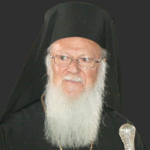
Ecumenical Patriarch Bartholomew of Constantinople, the spiritual leader of more than 250 million Eastern Orthodox Christians worldwide, went on a 17-day apostolic visit to the United States in 2009 — a pilgrimage that put the focus on a diverse and important community of Christians that often receives little in-depth coverage.
The visit of the ecumenical patriarch came eight months after the Russian Orthodox Church elected its 16th patriarch – its first such election since the fall of the Soviet Union – during an elaborate ceremony that drew hundreds of hierarchs and Russia’s top political leaders. The election signaled the re-emergence of Russian Orthodoxy as an important force in Russian life — a role that Orthodox churches in other countries often play as well. That geopolitical factor also gives the story of Eastern Orthodoxy in the United States a relevance that may not be represented by its numbers alone.
This source guide outlines the basics of Eastern Orthodox churches and provides resources for covering the patriarch’s visit.
Bartholomew's 2009 pilgrimage
Bartholomew arrived in New Orleans on Oct. 20, 2009, to preside over the eighth Religion, Science and the Environment Symposium. Theologians, scientists, policymakers, environmentalists, business people and journalists gathered for the five-day event, titled “Restoring Balance: The Great Mississippi River.” The website for the visit has complete coverage.
The ecumenical patriarch has led the symposiums since 1995 and helped inspire an environmental ethics movement. Bartholomew is sometimes called the “Green Patriarch” for his support of international environmental causes. In 2008, TIME magazine named him among its 100 Most Influential People in the World for “defining environmentalism as a spiritual responsibility.”
The symposiums assert that the analytical tools of science and spiritual message of religion can work together to safeguard the planet. Previous symposiums have drawn heads of state, environmental ministers, ministers of economic affairs and prominent intellectual figures. During his sixth trip to the United States, Bartholomew also met with U.N. Secretary-General Ban Ki-moon in New York and President Barack Obama and Vice President Joe Biden in Washington, among others.
-
The Ecumenical Patriarchate of Constantinople
A website about Bartholomew and his visit to the United States is here.
Background
One challenge in writing about the Eastern Orthodox is the debate over numbers. A figure often cited is 3 million adherents in the U.S., with about 2 million in the Greek Orthodox Archdiocese of America, 1 million in the Orthodox Church in America, and some tens of thousands in the other 20 major Eastern Orthodox churches.
But a 2000 study by Alexey D. Krindatch of the Patriarch Athenagoras Orthodox Institute in Berkeley, Calif., found that the total number of Orthodox believers in this country is about 1.2 million. In a summary posted by the Hartford Institute for Religion Research, Krindatch says the “most likely reason for this discrepancy is the common practice of equating Church membership with the total number of representatives of a corresponding ethnic group.”
Krindatch notes that the Orthodox churches in the United States have been facing several challenges since the 1970s. They include the tug between assimilation and maintaining ethnic distinctiveness; incorporation of the “increasing proportion of the American-born members and of converts who came to the Orthodoxy mainly through the inter-Christian marriages”; and grassroots movements that want to see greater unity among the Orthodox communities.
History
Eastern Orthodox churches are rooted in the earliest days of Christianity and do not recognize papal authority over their governance. During the Great Schism of 1054, the churches split from those in the western half of the Roman Empire, when those western churches recognized the supremacy of the bishop of Rome above all other bishops.
Today Eastern Orthodox churches are organized mostly around national lines and recognize the patriarch of Constantinople as their leader. The churches have 250 million to 300 million members worldwide and include the Greek Orthodox Church and Russian Orthodox Church. In the United States the largest of these churches is the Greek Orthodox Archdiocese of America, followed by the Orthodox Church in America, which includes followers of Bulgarian, Romanian, Russian and Syrian descent.
Resources
-
Orthodox Church in America
The Orthodox Church in America website gives a detailed explanation of the faith. It also lists the 19 self-governing and self-ruling Orthodox churches worldwide, which include the OCA. (The Greek Orthodox Archdiocese of America is directly under the authority of the ecumenical patriarch of Constantinople in Turkey, and is not administratively related to the Church of Greece.) Primate of the Orthodox Church in America (historically Russian) is Metropolitan Tikhon, located in Syosset, N.Y. Find local parishes.
-
Standing Conference of the Canonical Orthodox Bishops in the Americas (SCOBA)
This organization brings together the canonical hierarchs of the Orthodox jurisdictions in America. The purpose of the conference is to make the ties of unity among the canonical Orthodox churches and their administrations stronger and more visible.
-
Orthodox Christian Education Commission
The Orthodox Christian Education Commission is an agency of the Standing Conference of the Canonical Orthodox Bishops in the Americas and was founded as a forum to exchange ideas and search for solutions to education problems.
-
The Orthodox Theological Society in America
The society was organized under the auspices of the Standing Conference of Canonical Orthodox Bishops in the Americas to promote Orthodox theology, cultivate fellowship and cooperation among Orthodox Christians and coordinate the work of Orthodox theologians in the Americas. Email through the website.
-
Orthodox Peace Fellowship
The Orthodox Peace Fellowship is an international association of Orthodox Christians, located in the Netherlands, who study and advocate on issues of peace and conflict in local, national and international contexts.
-
Orthodox Fellowship of the Transfiguration
The Orthodox Fellowship of the Transfiguration a pan-Orthodox association that addresses environmental issues.
-
International Orthodox Christian Charities
International Orthodox Christian Charities has provided humanitarian assistance through some of the most troubled decades in recent history. Specifically, it is the international humanitarian organization of the Standing Conference of Canonical Orthodox Bishops in the Americas. It is based in Baltimore and has programs in several African countries.
-
Orthodox Christian Mission Center
The Orthodox Christian Mission Center focuses on evangelism. OCMC’s mission is to make disciples of all nations by bringing people to Christ and His Church.
-
Orthodox Christian Fellowship
The Orthodox Christian Fellowship is the official campus ministry effort under the Standing Conference of the Canonical Orthodox Bishops in the Americas. It is a pan-Orthodox effort, overseen by an executive committee and aided by an 11-person student advisory board.
-
Orthodox Christian Prison Ministry
The Orthodox Christian Prison Ministry ministers to men and women behind bars.
-
Orthodox Christian Association of Medicine, Psychology and Religion
The Orthodox Christian Association of Medicine, Psychology and Religion exists to foster interdisciplinary dialogue and promote Christian fellowship among professionals in medicine, psychology, and religion. Members pursue an understanding of the whole person that integrates the basic assumptions of medicine, psychology, and religion with the Orthodox Christian faith in educating and serving church and community. Demetra Velisarios Jaquet is president.
-
Beliefnet.com: Christian Orthodox
A page on Eastern Orthodox churches and basic information on Orthodox faith.
-
Fordham University Orthodox Christian Studies
Fordham University in New York offers this program of study. The mission of their Orthodox Christian Studies Center is to provide a venue for the academic study of Eastern Orthodox Christianity.
-
Antiochian Catholic Church in America
Antiochian Catholic Church in America is an online resource for Orthodox Christians. The website provides the history and beliefs of the Church and multiple liturgies.
Articles
-
“More Protestants Find a Home in the Orthodox Antioch Church”
Read an Oct. 2, 2009 New York Times story on the lure of an Orthodox church for Protestant Christians.
-
“Bartholomew I, Christian Orthodox leader, to convene environmental meeting in New Orleans”
Read a Sept. 23, 2009, New Orleans Times-Picayune story on Bartholomew’s visit to the United States and the Religion, Science and the Environment Symposium.
-
“Bring on the Feast: For Greek Easter, a Month of Prep”
Read an April 8, 2009, Washington Post feature on the complex preparations for a Greek Easter feast.
-
“Russian Leaders Attend Installation of Orthodox Patriarch”
Read a Feb. 1, 2009, New York Times story on the installation of a new patriarch for the Russian Orthodox Church. He was the first patriarch elected since the fall of the Soviet Union.
The Greek Orthodox Church
-
The Greek Orthodox Church
The website of the Greek Orthodox Church. Is a resource for relevant texts, monasteries, churches, seminaries, and other relevant resources related to the church.
-
Greek Orthodox Archdiocese of America
The Greek Orthodox Archdioceses of America is the largest Orthodox denomination in America,with about 1.5 million members.
-
Greek Orthodox Archdiocese of America: Monastic Communities
Several monasteries are scattered across the country. See a list with their contact information.
-
Archdiocesan Hellenic Cultural Center
The Hellenic Cultural Center of the Greek Orthodox Archdiocese of America was established in 1986 with the goal of cultivating the Orthodox heritage and Hellenic customs, culture and traditions within the Greek-American community.
-
Greek Orthodox Chaplains
Greek Orthodox chaplains serve full-time as chaplains in the armed forces; others have assumed additional responsibilities as chaplains at Veterans Administration hospitals, with local police forces, at prisons and in hospitals.
-
Archdiocesan Cathedral of the Holy Trinity
The Cathedral of the Holy Trinity has been serving Greek Orthodox Christians for more than a century. The cathedral provides regular worship, counseling, Christian education, human services and cultural programs for people in the New York City area.
-
Hellenic College Holy Cross
Hellenic College Holy Cross Greek Orthodox School of Theology provides undergraduate and graduate education. Hellenic College Holy Cross is on a 52-acre campus in Brookline, Massachusetts.
-
St. Basil Academy
St. Basil Academy is the Greek Orthodox Archdiocese home away from home for children in need. The academy is in Garrison, N.Y.
-
St. Photios National Shrine
The St. Photios National Shrine is the only Greek Orthodox National Shrine in the country. It is primarily a religious institution and is located in America’s oldest city, St. Augustine, Florida.
The Orthodox Church in America
-
Orthodox Church in America
The Orthodox Church in America website gives a detailed explanation of the faith. It also lists the 19 self-governing and self-ruling Orthodox churches worldwide, which include the OCA. (The Greek Orthodox Archdiocese of America is directly under the authority of the ecumenical patriarch of Constantinople in Turkey, and is not administratively related to the Church of Greece.) Primate of the Orthodox Church in America (historically Russian) is Metropolitan Tikhon, located in Syosset, N.Y. Find local parishes.
-
OCA List of Monasteries
Several monasteries are scattered across the country. This is a list provided by the Orthodox Church in America with their contact information.
-
OCA Office of Communications
Produces and distributes official statements and news releases of the Orthodox Church in America, maintains relations with the media, responds to requests for information of a general and specific nature, and oversees the content and functioning of the Orthodox Church in America’s website.
-
OCA Board of Theological Education
The Board of Theological Education establishes, maintains and oversees the general standards and curriculum for the education and formation of clergy in the Orthodox Church in America’s three seminaries.
-
OCA Department of Youth, Young Adult and Campus Ministry
The OCA Department of Youth Young Adult and Campus Ministry produces and distributes official statements and news releases of the Orthodox Church in America, maintains relations with the media, responds to requests for information of a general and specific nature, and oversees the content and functioning of the Orthodox Church in America’s website.
The Russian Orthodox Church
-
The Russian Orthodox Church
The website of the Russian Orthodox Church.
-
The Russian Orthodox Church Outside of Russia
This is the website for the Russian Orthodox Church Outside Russia, which is an arm of the Russian Orthodox Church. Includes news, dioceses, history, and other information on the church.
-
The Russian Orthodox Church in America
This site gives a history and summary of the Russian Orthodox Church in the United States and lists parishes nationwide.
-
St. Innocent Orthodox Theological Seminary
The seminary was founded in 1976. Its name and location have changed through the years; since 2006 it has been in Roswell, N.M.
-
Orthodox Voices Blog
This site has news and information about the Russian Orthodox Church, specifically the Russian Orthodox Church in America. The content is about Christianity in general, faiths outside Orthodoxy, and Orthodoxy.
-
Religious Books for Russia
Religious Books for Russia was founded in 1979 to provide religious books for Orthodox Christians in the Soviet Union. Since it is now possible to publish and distribute religious literature in Russia, the organization, which is based in LaGrangeville, N.Y., assists with the publication in Russia of the best contemporary Orthodox theological and educational materials. Books are distributed free throughout Russia.
National sources
-
Emmanuel Clapsis
Emmanuel Clapsis is professor of dogmatic theology at Hellenic College and Holy Cross Greek Orthodox School of Theology in Brookline, Mass. Among his publications is The Orthodox Churches in a Pluralistic World: An Ecumenical Conversation.
-
John H. Erickson
John H. Erickson is professor of church history at St. Vladimir’s Orthodox Theological Seminary in Crestwood, N.Y.
-
Donald M. Fairbairn
Donald M. Fairbairn Jr. is professor of historical theology at Evangelical Theology Faculty in Leuven, Belgium. Previously he was a professor of historical theology and missions at Erskine Theological Seminary in Due West, S.C. He is the author of Eastern Orthodoxy Through Western Eyes.
-
Thomas E. FitzGerald
Thomas E. FitzGerald is professor of church history and historical theology at Hellenic College and Holy Cross Greek Orthodox School of Theology in Brookline, Mass.
-
John Anthony McGuckin
John Anthony McGuckin is a professor at Union Theological Seminary in New York City. He is the author of The Orthodox Church: An Introduction to Its History, Doctrine and Spiritual Culture (2008) and many other books and articles.
-
Aristotle Papanikolaou
Aristotle Papanikolaou is Archbishop Demetrios Professor of Orthodox Theology and Culture and
Senior Fellow and co-founder of the Orthodox Christian Studies Center at Fordham University in the Bronx, N.Y. -
Veselin Kesich
Veselin Kesich is professor emeritus of the New Testament at St. Vladimir’s Orthodox Theological Seminary in Crestwood, N.Y.
-
Jerry Pankhurst
Jerry G. Pankhurst is a sociology professor at Wittenberg University in Springfield, Ohio. He is co-editor of Eastern Orthodoxy in a Global Age: Tradition Faces the Twenty-First Century.
-
Elizabeth H. Prodromou
Elizabeth Prodromou is a senior scholar in the International Studies Program at Boston College. She is also a nonresident senior fellow in the Atlantic Council’s Eurasia Center. She served on the U.S. Commission on International Religious Freedom from 2004-2012 and is a co-president of Religions for Peace.
-
Andrew D. Walsh
Andrew D. Walsh is assistant professor of religion and philosophy at Culver-Stockton College in Canton, Mo. He wrote the book Religion, Economics, and Public Policy: Ironies, Tragedies, and Absurdities of the Contemporary Culture Wars (Praeger, 2000). Contact him via his website.
Regional sources
In the Northeast
-
Peter C. Bouteneff
Peter C. Bouteneff is a professor of systematic theology at St. Vladimir’s Orthodox Theological Seminary in Yonkers, N.Y. He is interested in popular culture and has worked for the World Council of Churches. He wrote the article “All Creation in United Thanksgiving: Gregory of Nyssa and the Wesleys on Salvation” in the book Orthodox and Wesleyan Spirituality.
-
George Dion Dragas
George Dion Dragas is professor of patrology/patristics at Hellenic College and Holy Cross Greek Orthodox School of Theology in Brookline, Mass.
-
Michael Plekon
Michael Plekon is professor of religion and culture at City University of New York in New York City. He wrote a chapter titled “The Russian Religious Revival and Its Theological Legacy” in The Cambridge Companion to Orthodox Christian Theology (2008).
-
Theodore Stylianopoulos
Theodore Stylianopoulos is professor of Orthodox theology and the New Testament at Hellenic College and Holy Cross Greek Orthodox School of Theology in Brookline, Mass.
In the South
-
Frank S. Alexander
Frank S. Alexander is a professor and founding director of the Center for the Study of Law and Religion at Emory University in Atlanta. He is co-editor of The Teachings of Modern Orthodox Christianity on Law, Politics & Human Nature (2007). He is an expert on homelessness and housing policy.
-
Ted A. Campbell
Ted A. Campbell is an associate professor of church history at Southern Methodist University in Dallas. He is the author of The Gospel in Christian Traditions (2008).
-
Eugene J. Clay
Eugene J. Clay is an associate professor in religious studies at Arizona State University in Tempe. His publications include “Russian Orthodoxy,” published in Religion and American Cultures: An Encyclopedia of Traditions, Diversity and Popular Expressions.
-
Phillip Charles Lucas
Phillip Charles Lucas is a professor of religious studies at Stetson University in DeLand, Fla. He is the co-editor of Cassadaga: The South’s Oldest Spiritualist Community (University Press of Florida, 2000) and general editor of Nova Religio: The Journal of Alternative and Emergent Religions. His other publications include “Enfants Terribles: The Challenge of Sectarian Converts to Ethnic Orthodox Churches in the United States,” published in Nova Religio: The Journal of Alternative and Emergent Religions (2003).
-
John Witte Jr.
John Witte Jr. directs the Center for the Study of Law and Religion at Emory University, where he also teaches law. He is an expert on legal issues related to marriage, family, Christianity and religious freedom. His books include Church, State and Family: Reconciling Traditional Teachings and Modern Liberties and Religion and the American Constitutional Experiment.
In the Midwest
-
Paul L. Gavrilyuk
Paul L. Gavrilyuk is an associate professor in theology at the University of St. Thomas in St. Paul, Minn. His publications include “Eastern Orthodoxy,” The Routledge Companion to Philosophy of Religion (2007).
-
Alexander G. Golitzin
Alexander G. Golitzin is a theology professor at Marquette University in Milwaukee. He is an author of the Historical Dictionary of the Orthodox Church.
-
Robert L. Nichols
Robert L. Nichols is a professor emeritus in history at St. Olaf College in Northfield, Minn. He is co-editor of Russian Orthodoxy Under the Old Regime.
In the West
-
Stephen K. Batalden
Stephen K. Batalden is a history professor at Arizona State University in Tempe. He is the editor of Seeking God: The Recovery of Religious Identity in Orthodox Russia, Ukraine and Georgia.
-
Richard G. Hovannisian
Richard G. Hovannisian is a professor emeritus in history at University of California, Los Angeles. He has written about and studied the history of Orthodox Christianity.
-
Alexei D. Krindatch
Alexei D. Krindatch is director for membership growth and research at the Patriarch Athenagoras Orthodox Institute at the Graduate Theological Union in Berkeley, Calif., and a leading researcher on Eastern Orthodox Christianity. The institute is “inter-Orthodox” and describes itself as an independent, not-for-profit teaching and research institution affiliated with the GTU and the University of California.