


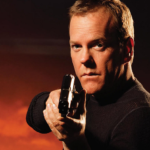
The debate over torture once again heated up in early 2010 over two fronts: politics and popular culture. The airline bombing attempt on Christmas Day 2009 brought renewed calls to use torture on terror suspects, and the Jan. 17, 2010 season premiere of “24” thrust that drama’s frequent depictions of torture into the mix.
Background
The attempted terror attack by suspect Umar Farouk Abdulmutallab, a 23-year-old Nigerian Muslim who has pleaded not guilty to the crime, embarrassed the Obama administration, dominated news coverage and angered Americans, many of whom wanted to use waterboarding or other torture techniques to extract more information from him.
A Rasmussen poll published Dec. 31, 2009, showed that 58 percent of U.S. voters said waterboarding and other “aggressive interrogation techniques” should be used on Abdulmutallab, who tried to ignite explosives secreted in his underwear. Some 30 percent opposed such techniques–which are considered torture under the Geneva Convention and U.S. military rules. A number of prominent commentators and conservative bloggers also called for the use of torture.
These calls came as controversy continued over President Barack Obama’s ongoing efforts to close the Guantanamo detention center in Cuba, where many terrorism suspects are housed in a kind of legal limbo. Obama also pledged to ban the use of techniques that could be considered torture, and he wanted to try terrorism suspects in U.S. courts.
Critics of torture also argued that using such brutal techniques undermined the nation’s efforts to combat terrorism by eroding America’s moral standing. And they said that torture did not produce useful intelligence the way other, nonviolent means of interrogation could. In fact, they said torture could produce misleading information because a desperate suspect is willing to say anything.
That is not the image presented in the hugely popular Fox television series, “24,” which began its eighth season on Jan. 17, 2010. In the series, agent Jack Bauer is often shown eliciting important information quickly and efficiently — and brutally — from suspects. Viewers like the show, but critics say it presents an unrealistic image of interrogations and some say the show has increased the public’s acceptance of torture in terrorism cases.
Together these two events — a jetliner attack and a television show — are rekindling a debate that has continued to smolder ever since 9/11 and the resulting “war on terror” that continues to bring terror suspects and other detainees into American custody.
How far should U.S. authorities go in trying to extract information from these suspects? Is torture ever useful? Is it ever justified ethically, or by the results? Or does it undermine American efforts to battle terrorism and win the moral high ground?
This edition of ReligionLink provides background and resources for covering this story.
Additional information
The debate over torture was first sparked by revelations of prisoner abuse by U.S. personnel at the Abu Ghraib facility in Iraq. The abuse of prisoners there became public with the April 28, 2004, broadcast of Sixty Minutes. Further revelations about questionable interrogation methods by the CIA and other government agencies intensified the debate during the latter years of the Bush administration.
The arguments were fueled after the election of Obama in part by the new administration’s release of graphic Bush-era documents related to what some called “enhanced interrogation,” and also by the lobbying of religious groups and others who demanded a national accounting of what they said was government-sanctioned torture. Others said the tactics were not torture, while still another camp argued that even if the abuse was inappropriate or amounted to torture, pursuing the issue would have only divided the nation further.
Public opinion polls presented an interesting dichotomy: Church leaders across the spectrum rejected the use of torture as “morally intolerable,” in the words of U.S. Catholic bishops. Theologians in various denominations — from Martin Marty, a Lutheran and pre-eminent religion commentator, to David Gushee, a Baptist professor of Christian ethics at Mercer University — have bemoaned the findings of the May 2009 Pew survey.
On Aug. 19, 2007, the American Psychological Association voted to prohibit psychologists from participating in several interrogation techniques that have been used against U.S. terrorism detainees because the methods are immoral and psychologically damaging. (See an Aug. 20, 2007, Washington Post story and the APA press release.)
In January 2006 the Rev. George Hunsinger, a theologian at Princeton Theological Seminary, convened a three-day conference at the seminary to launch the National Religious Campaign against Torture. NRCAT is the largest and best-organized faith-based protest against torture to arise out of the Abu Ghraib revelations.
Developments
- In a Dec. 29, 2009, column in USA Today, “What we don’t know may kill us,” Marc A. Thiessen, author of the new book Courting Disaster: How the CIA Kept America Safe and How Barack Obama Is Inviting the Next Attack, sums up one line of conservative criticism of the Obama administration’s approach to terrorism suspects like Abdulmutallab. He also said the U.S. should use “enhanced interrogation” techniques like waterboarding, which others consider torture.
- The arguments pro and con over torture do not necessarily line up in neat conservative/liberal, Republican/Democrat categories. Joe Carter, a writer and blogger at the site of First Things, considered a reliably conservative journal of religion and culture, took strong exception to Thiessen’s arguments. That led to a long-running debate between Carter at First Things and Thiessen at the conservative National Review Online.
- A May 2009 Pew Forum survey shows that nearly half of Americans (49 percent) agreed that torture can often or sometimes be justified to gain information from suspected terrorists. And the more often people attend church, the more likely they are to say that torture can be justified. Among those who attend at least once a week, 54 percent say it is often or sometimes justified. And the rate is highest among white evangelical Protestants, with 62 percent saying it is sometimes or often justified. In a follow-up analysis, Pew researchers noted that religion is just one of several factors influencing views on torture. The political divide — 64 percent of Republicans say torture can be often or sometimes justified, compared with 36 percent of Democrats — is wider than any religious split, for example.
- Also in May 2009, Richard Land of the Southern Baptist Convention, a leading Christian conservative and a supporter of former President George W. Bush, said that waterboarding — one of the most controversial tactics — is torture, and he condemned it and all forms of torture. But Land also said that Obama’s decision to release some Bush-era documents authorizing the techniques was wrong because it could lead to investigations that could “rip the country apart.”
Resources
-
“American Fascination with Torture Examined in Religion and Culture Forum”
The Fordham Center on Religion and Culture of Fordham University in New York held an October 2008 symposium, “Torture and American Culture,” which explored whether images in U.S. popular culture “may have predisposed leaders to authorize torture or the public to tolerate it.” Panelists discussed shows, such as “Lost,” “24,” “The Wire” and “Sleeper Cell.” Read a summary account of the proceedings.
-
“The Truth About Torture? — A Christian Ethics Symposium”
In January 2009, in response to the renewed debate about torture, the website of First Things posted all the responses from a November 2006 online forum, “The Truth About Torture? — A Christian Ethics Symposium.” Nine Christian thinkers responded to a provocative Weekly Standard essay, “The Truth About Torture,” by Charles Krauthammer. In it he argues that “Torture is not always impermissible.”
-
“Sightings”
Read a May 11, 2009, “Sightings” column by Martin Marty that follows up on his earlier essay on torture and churchgoers; it includes a response from David Neff of Christianity Today.
-
“War can be justified. What about torture?”
Read a May 6, 2009, Religion News Service story.
-
“Southern Baptists’ Top Ethicist Calls Waterboarding `Torture'”
Read a May 5, 2009, Religion News Service story about Richard Land’s statements.
-
“Catholic activists protest torture practice”
Read a May 1, 2009, National Catholic Reporter story about a rally of human rights activists in Washington, D.C., to support a criminal inquiry.
National sources
-
Darrell Cole
Darrell Cole is an assistant professor of religion at Drew University. Cole is the author of When God Says War Is Right: The Christian’s Perspective on When and How to Fight, and was a participant in the 2006 First Things online symposium on torture.
-
Todd A. Gitlin
Todd A. Gitlin is a professor of journalism and sociology at Columbia University in New York. He wrote the book The Twilight of Common Dreams: Why America Is Wracked by Culture Wars (Metropolitan Books/Henry Holt, 1996).
-
Karen Greenberg
Karen Greenberg is director of the Center on National Security at the Fordham University. -
James T. Johnson
James T. Johnson is a distinguished professor of religion at Rutgers University in New Jersey where he specializes in religious ethics, religion and society, and just war theory. He is considered one of the deans of contemporary just war theory and has written many articles and books on the topic.
-
Derek S. Jeffreys
Derek S. Jeffreys is an associate professor of humanistic studies and religion at the University of Wisconsin, Green Bay. He is the author of a 2009 book, Spirituality and the Ethics of Torture.
-
Sanford Levinson
Sanford Levinson is W. St. John Garwood and W. St. John Garwood, Jr. Centennial Chair in Law and Professor of Government at the University of Texas School of Law and editor of the book Torture (Oxford University Press, 2004).
-
M. Cherif Bassiouni
M. Cherif Bassiouni is president of the International Human Rights Law Institute and law professor at DePaul University in Chicago. Read about the institute’s International Criminal Court-Arab World Project.
-
Mark Danner
Mark Danner is author of Torture and Truth: America, Abu Ghraib and the War on Terror (New York Review of Books, 2004), as well as a writer and journalism professor. He divides his time between New York and San Francisco.
-
Richard Killmer
The Rev. Richard Killmer is executive director of the National Religious Campaign Against Torture, a coalition of more than 120 religious groups formed in January 2006. It includes representatives of Roman Catholic, evangelical Christian, mainline Protestant, Unitarian, Quaker, Orthodox Christian, Jewish, Muslim and Sikh communities.
-
Mahmood Monshipouri
Mahmood Monshipouri is co-editor of the Muslim World Journal of Human Rights, based in Berkely, Calif., and professor of international relations at San Francisco State University.
-
Glen H. Stassen
Glen H. Stassen is the Lewis Smeades Professor of Christian Ethics at the Fuller Theological Seminary in Pasadena, Calif. He is an expert on religion and social justice and specializes in war, peace and ethics. He wrote Just Peacemaking: Ten Practices for Abolishing War.
-
Albert C. Pierce
Albert C. Pierce is the first Director of the Institute for National Security Ethics and Leadership, established in the fall of 2007 at the National Defense University (NDU) in Washington, DC. and the former director of the Center for the Study of Professional Military Ethics at the U.S. Naval Academy in Annapolis, Md. He served in the U.S. Defense Department and was a defense correspondent for NBC News.
-
David L. Perry
David L. Perry is a professor of ethics and holds the Gen. Maxwell Taylor Chair of the Profession of Arms at the U.S. Army War College in Carlisle, Pa. He teaches courses on ethics and warfare and on world religions in strategic context, and he writes core-course lessons on ethical reasoning and ethics of the military profession. His publications include “Why Hearts and Minds Matter: Chivalry and Humanity, Even in Counterinsurgency, Are Not Obsolete,” in the September 2006 Armed Forces Journal, and “Ethics and War in Comparative Religious Perspective,” in U.S. Army War College Guide to National Security Issues, 2008. His book Partly Cloudy: Ethics in War, Espionage and Covert Action was published in 2009.
-
Philip Zimbardo
Philip Zimbardo, Stanford University professor emeritus of psychology, is the author of The Lucifer Effect: Understanding How Good People Turn Evil. He was director of the Stanford Prison Experiment.
Organizations
-
Human Rights Watch
Human Rights Watch is an independent, nongovernmental organization dedicated to protecting human rights worldwide. Contact HRW via one of its local offices.
-
The National Religious Campaign Against Torture
The National Religious Campaign Against Torture is a coalition of more than 100 national, regional, and local religious and secular organizations.
-
Catholics in Alliance For the Common Good
Founded in 2005, Catholics in Alliance for the Common Good is a lay Catholic organization that promotes Catholic social policy and issues.
-
Faithful America
Faithful America is an interfaith advocacy project of the National Council of Churches that is based in Washington, D.C. Contact through the website.
-
National Council of Churches
The National Council of Churches is an association of Protestant, Anglican, Orthodox, evangelical, historic African-American and Living Peace churches that represents more than 30 denominations and 45 million people. It is active in economic justice issues.
-
Anti-Defamation League
The Anti-Defamation League tracks discrimination based on religion. ADL has 30 regional offices. Check with local ADL officials for a breakdown on the number and type of antisemitic incidents in your area and for leads on interfaith initiatives.
-
Religious Action Center of Reform Judaism
The Religious Action Center of Reform Judaism is the advocacy arm of the Union for Reform Judaism. Rabbi David Saperstein is its director and counsel.
Regional sources
In the Northeast
-
John Jefferson Davis
John Jefferson Davis is a professor of systematic theology and Christian ethics at Gordon-Conwell Theological Seminary in South Hamilton, Mass. He has expertise in world religions, theology, homosexuality, abortion, medical ethics, just war, bioethics, environmental ethics, intelligent design, business ethics and biblical ethics. He teaches a course titled “Christian Ethics: Issues Facing the Church Today.”
-
Saul Kassin
Saul Kassin, professor of psychology and chair of legal studies at Williams College in Williamstown, Mass., studies the interrogation and confessions – particularly false confessions – of suspects in the criminal justice setting.
-
Martha L. Minow
Martha L. Minow is professor of law at Harvard Law School in Massachusetts. She has expertise in human rights and transitional societies, and religion. She is co-editor of Imagine Coexistence: Restoring Humanity After Violent Ethnic Conflict and author of Between Vengeance and Forgiveness: Facing History After Genocide and Mass Violence.
-
Reuven Kimelman
Reuven Kimelman is a professor of classic rabbinic literature at Brandeis University in Waltham, Mass., where he is an expert on contemporary Jewish life and ethics and the moral meaning of the Jewish Bible. He says a major challenge facing Jews today is finding a cogent Jewish voice on contemporary moral issues.
-
Omer Bartov
Omer Bartov, Brown University professor of European history, is the author of The “Jew” in Cinema: From the Golem to Don’t Touch My Holocaust (Indiana University Press, 2005). The book looks at how stereotypical portrayals of the “Jew” have informed European, American and Israeli cinema since the 1920s. In fall 2005, 200 students took his class, Modern Genocide and Other Crimes Against Humanity.
-
Lori Fisler Damrosch
Lori Fisler Damrosch is Henry L. Moses Professor International Law and Organization at Columbia University Law School in New York. She is a member of numerous international law and human rights organizations and has published extensively.
-
Michael W. Doyle
Michael W. Doyle is Harold Brown Professor of U.S. Foreign and Security Policy and professor of international and public affairs and of law at Columbia University Law School in New York.
-
Hadar Harris
Hadar Harris is executive director of the Center for Human Rights & Humanitarian Law at American University’s Washington College of Law in Washington, D.C. She is an international human rights attorney and has specialized in issues of civil and political rights, gender equality and fighting impunity for torturers.
-
Diane Orentlicher
Diane Orentlicher is a professor at the Center for Human Rights & Humanitarian Law at American University’s Washington College of Law in Washington, D.C. Her scholarly work has focused on issues of accountability for human rights crimes, transitions to democracy, corporate responsibility in a transnational context, and the relationship between ethnic identity and political participation.
-
Linda Hartke
Linda Hartke is the president of the Lutheran Immigration and Refugee Service, an organization that serves both the Evangelical Lutheran Church in America and Lutheran Church-Missouri Synod. It helps resettle refugees, protect unaccompanied refugee children, advocate for the just treatment of asylum seekers and seek alternatives to detention for those incarcerated during immigration proceedings.
-
Harry Dammer
Harry Dammer is an associate professor of sociology and criminal justice at the University of Scranton in Pennsylvania. He is expertise is in the role of religion in prisons.
-
Jefferson McMahan
Jefferson McMahan is a professor of philosophy at Rutgers University. He wrote the article “Cloning, Killing and Identity” for the Journal of Medical Ethics.
-
Julie Mertus
Julie A. Mertus is assistant professor at American University’s School of International Service. She has expertise in women, human rights and war.
-
Advocates for Survivors of Torture and Trauma
Advocates for Survivors of Torture and Trauma is a Baltimore treatment center for survivors of torture. Contact through the website.
In the South
-
Daniel Heimbach
Daniel Heimbach is Professor of Christian Ethics at Southeastern Baptist Theological Seminary in Wake Forest, N.C. He was a participant in the 2006 First Things online symposium on torture.
-
Carter Center
The Carter Center in Atlanta is involved in human rights worldwide. Read the center’s May 14, 2004, publication “Human Rights Defenders on the Frontlines of Freedom: Protecting Human Rights in the Context of the War on Terror.”
-
John Kelsay
John Kelsay is distinguished research professor at Florida State University in Tallahassee. He specializes in comparative religious ethics, religion and war, and peace and has written extensively about Islam and war. His publications include Arguing the Just War in Islam. He can speak to Islamic law and warfare.
-
James Childress
James Childress is the John Allen Hollingsworth Professor of Ethics in the department of religious studies at the University of Virginia. His research interests include religious ethics, social and political ethics, biomedical ethics and methods in ethics.
-
Forrest Harris
Forrest Harris is director of the Kelly Miller Smith Institute on African-American Church Studies at Vanderbilt University Divinity School in Nashville, Tenn., as well as an associate professor of the practice of ministry. He teaches courses on the theology of ministry in the black church tradition and can discuss liberation theology and social justice.
-
Kenneth Magnuson
Kenneth Magnuson is an associate professor of Christian ethics at the Southern Baptist Theological Seminary in Louisville, Ky. He is a member of the Evangelical Theological Society of America and the Center for Bioethics and Human Dignity. He was a participant in the 2006 First Things online symposium on torture.
-
Celia VanDeGraaf
Celia VanDeGraaf is executive director of the Center for Survivors of Torture in Dallas.
-
Robin Lovin
Robin Lovin is an ethicist at Southern Methodist University, the author of Christian Ethics: The Essential Guide (Abingdon Press, 2000) and a frequent commentator on war and peace issues.
In the Midwest
-
George E. Edwards
George E. Edwards is director of Program in International Human Rights Law at Indiana University School of Law, Indianapolis.
-
The Center for Victims of Torture
The Center for Victims of Torture is a private, nonprofit, nonpartisan organization founded in 1985 in Minneapolis. It provides treatment, training, education and research. Contact through Jenni Bowring-McDonough, Media Relations Manager.
-
David J. Scheffer
David J. Scheffer is director of the Center for International Human Rights at Northwestern University and a frequent commentator on human rights issues.
-
William Eckhardt
William Eckhardt of the University of Missouri Kansas City Law School prosecuted Lt. William Calley for the My Lai massacre in Vietnam and taught at the U.S. Army War College.
-
Ann Annis
Ann Annis is a researcher at the Center for Social Research at Calvin College in Grand Rapids, Mich.
-
Oren Gross
Oren Gross is a professor at University of Minnesota Law School. He is author of the paper, “The Prohibition on Torture and the Limits of the Law.”
-
Regina Schwartz
Regina Schwartz is director of the Institute for Religion and Global Violence at Northwestern University in Evanston, Ill.
-
Robert Vischer
Robert Vischer is dean and professor of law at the University of St. Thomas in Minneapolis. His research interests explore the intersection of law, religion and public policy, and his books include Conscience and the Common Good: Reclaiming the Space Between Person and State.
In the West
-
Martin L. Cook
Martin L. Cook is the Adm. James B. Stockdale Professor of Professional Military Ethics at the U.S. Naval War College in Newport, R.I.
-
Khaled Abou El Fadl
Khaled Abou El Fadl is an internationally recognized law professor and the Omar and Azmeralda Alfi Distinguished Fellow in Islamic Law at the University of California, Los Angeles. He teaches a course on Islamic law and has also taught about Middle Eastern investment law, immigration law and human rights and terrorism. His books include Speaking in God’s Name: Islamic Law, Authority and Women, and he wrote the entry on Shariah for The Oxford University Handbook of Islam and Politics.
-
Craig Haney
Craig Haney, an author of the 1971 Stanford Prison Experiment, is professor of social psychology at the University of California at Santa Cruz. Haney went on to earn a law degree from Stanford and a doctorate in psychology. He has been a leading legal consultant on prison reform litigation. He teaches psychology and law and the psychology of institutions. Contact 831-459-2153.
-
Simon Wiesenthal Center
The Simon Wiesenthal Center in Los Angeles is an international Jewish human rights organization dedicated to preserving the memory of the Holocaust by fostering tolerance and understanding. The center also focuses on contemporary issues, including racism, antisemitism, terrorism and genocide.
-
Eric Stover
Eric Stover is Director of the Human Rights Center at the University of California-Berkeley. The center’s research focuses on war crimes, justice and postwar reconstruction, health and human rights, and globalization.