


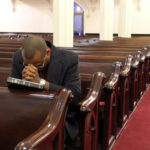
The vibrancy and viability of America’s black churches are matters of intense debate among African-American religious leaders. A Huffington Post “obituary” for the black church prompted numerous responses about the fate of one of America’s most important and enduring religious institutions.
Background
The genesis of the controversy was the Feb. 24, 2010, essay, “The Black Church Is Dead,” by Eddie S. Glaude Jr., the William S. Tod Professor of Religion and chair of the Center for African American Studies at Princeton University.
Glaude noted that while nearly 90 percent of African-Americans identify with a religious group and blacks are one of the most religious communities in American society, “the idea of this venerable institution [the black church] as central to black life and as a repository for the social and moral conscience of the nation has all but disappeared.”
Glaude’s essay was as much a call for the transformation and rebirth of the black church as it was a death knell, but his diagnosis provoked several passionate responses in an ongoing dialogue.
Why this matters
The black church has historically been a lifeline and a ladder for African-Americans struggling to survive or thrive in the United States, and it has been one of the most important factors contributing to the nation’s religious life.
Moreover, this debate comes as African-American churches are still celebrating the election of a black Christian, Barack Obama, as president. Those churches played a key role in Obama’s election.
News articles and research
-
“The Black Church is Dead—Long Live the Black Church”
A March 2010 forum at ReligionDispatches featured responses from six historians, religious scholars and other experts on the black church, as well as a response from Glaude.
-
“Call and Response on the State of the Black Church”
Read an April 16, 2010, column on the controversy in The New York Times by Samuel G. Freedman, titled “Call and Response on the State of the Black Church.”
-
What We Love About the Black Church: Can We Get a Witness?
Judson Press, the publishing arm of the American Baptist Churches USA, which has a substantial African-American membership, released a new book in May 2010 called What We Love About the Black Church: Can We Get a Witness? The volume is a collection of essays on best practices in the African-American churches. It is edited by two white pastors, William H. Crouch Jr. and Joel C. Gregory, who have long experience with black churches, and it features contributions from more than two dozen African-American church leaders.
-
“Nonprofit Looks to Cultivate Next Generation of African-American Religious Leadership”
The Fund for Theological Education (FTE), described as “a nonprofit advocate for improving faculty diversity in theological schools and cultivating the next generation of leaders for the church, academy and society,” held a June 11-13, 2010 conference in Chicago on the future of African-American Religious leadership. Read the group’s press release.
-
“Blacks, Mirroring Larger U.S. Trend, ‘Come Out’ As Nonbelievers”
Read a May 24, 2010 Religion News Service story, about African-American atheists, “Blacks, Mirroring Larger U.S. Trend, ‘Come Out’ As Nonbelievers.”
-
Understanding and Transforming the Black Church
The Crouch-Gregory book followed the publication of a similarly-themed book, Understanding and Transforming the Black Church, by Anthony Pinn, the Agnes Cullen Arnold Professor of Humanities and professor of religious studies at Rice University in Houston. Pinn is also executive director of the Society for the Study of Black Religion, and he co-chairs the American Academy of Religion’s Black Theology Group. Pinn’s book is described as a “set of reflections seeks to offer new perspectives on what it might mean to be Black and Christian in the United States.”