


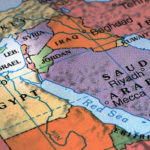
Popular protests have roiled the Middle East, spreading from Tunisia and Egypt to Bahrain and Libya and elsewhere. Speculation is rife about what could come next, but also about the role Islam could play in reconfigured Arab countries — and what role religion is playing in sparking the current revolts.
In the Egyptian situation, much of the discussion about the influence of religion focuses on the Muslim Brotherhood, an important religious and political group based on the belief that Islam is not simply a religion, but a way of life.
But in other Arab nations the role of religion as a liberating force also raises questions about the political future of the Middle East, and about the stability of one of the world’s most contentious trouble spots. What does secularism mean in cultures where religion is so intertwined with daily life?
Some observers say it is a mistake to try to fit contemporary events in these Arab and Muslim countries into a Western historical framework.
Others believe that the popular revolutions in these largely Islamic societies can provide insights into American views of Islam because of the way Americans react to the events.
One school of thought in the United States fears the rise of populist Islam, which is seen as a threat to U.S. interests and to Israel. Others believe that the emergence of genuinely democratic societies in the Middle East, even if heavily influenced by Islamic religious principles, is in the long-term interests of the United States and of human rights.
This edition of ReligionLink provides resources for journalists covering the ongoing developments in the Middle East.
Articles and resources
-
“The Future of the Global Muslim Population”
Read a Jan. 27, 2011, Pew Forum article about the expansion of Muslims across the globe and their projected future population.
-
“Egypt, Democracy and Islam”
A 2010 survey conducted by the Pew Research Center’s Global Attitudes Project found that a majority of Egyptian Muslims said that democracy was preferable to any other kind of government. An overwhelming majority also viewed Islam’s influence in politics as positive.
-
“Global Restrictions on Religion”
A 2009 Pew Forum report on restrictions on religion around the world found that Egypt is among the countries with the highest government restrictions on religion.
-
“Concern about Islamists masks wide differences among them”
Read “Concern about Islamists masks wide differences among them,” a Feb. 4, 2011, report by Reuters reporter Tom Heneghan.
-
“5 Reasons the Muslim Brotherhood Won’t Turn on Israel”
Read “5 Reasons the Muslim Brotherhood Won’t Turn On Israel,” a Feb. 3, 2011, column at ReligionDispatches.org by Haroon Moghul.
-
“Egypt’s Bumbling Brotherhood”
Read a Feb. 2, 2011, op-ed in The New York Times by Scott Atran, author of Talking to the Enemy: Faith, Brotherhood and the (Un)making of Terrorists. Atran argues that the Muslim Brotherhood is largely ineffectual.
-
“Can the Arab revolt learn from Turkish model?”
Read a Feb. 2, 2011, analysis from a Reuters correspondent in Turkey.
-
“Coptic Pope Backs Mubarak; Other Christians Speak Out”
Read a Feb. 2, 2011, story from EthicsDaily.com about the Christian response to the conflict in Egypt.
-
“Copts say Egypt regime change trumps Islamist fears”
“Copts say Egypt regime change trumps Islamist fears,” is a Feb. 1, 2011, story from Reuters.
-
“Unrest in Egypt and the Muslim Brotherhood”
Read a Jan. 31, 2011, analysis, “Unrest in Egypt and the Muslim Brotherhood,” by Jonathan Wright, a former Reuters correspondent in the Middle East who currently lives in Cairo.
-
“Egypt’s Muslim Brotherhood mutes its religious message for protests”
“Egypt’s Muslim Brotherhood mutes its religious message for protests” is a Jan. 31, 2011, story from Cairo in the Los Angeles Times.
-
“Do Egyptians want both democracy and a role for religion in their government?”
Read a Jan. 30, 2011, essay about the political situation in Egypt at “On Faith” by Reza Aslan, a widely cited scholar of religions.
-
“Mubarak or Muslim Brotherhood not Egypt’s only choice: Experts”
A Jan. 29, 2011, post at USA Today‘s “Faith & Reason” blog rounds up articles on the religious import of the Egyptian situation.
-
“What is the Muslim Brotherhood?”
Read a Jan. 28, 2011, background article on the Muslim Brotherhood by CNN.com.
-
“Don’t Fear Egypt’s Muslim Brotherhood”
Read a Jan. 28, 2011, essay, “Don’t Fear Egypt’s Muslim Brotherhood,” by Bruce Riedel, a Middle East expert at the Brookings Institution.
-
“Egypt uprising; the Muslim Brotherhood a ‘wildcard'”
Read coverage of the Egypt conflict at The Washington Post‘s “On Faith” blog.
-
“Named Egypt’s Winner, Islamist Makes History”
Read a June 24, 2012 article from the New York Times about Mohamed Morsi’s landmark victory in Egypt’s 2012 presidential election.
-
“Egypt Elections: Israel Jittery After Muslim Brotherhood Victory”
Read a June 24, 2012 article about the impact of the 2012 Egyptian presidential election on Israel.
-
“U.S. gets it wrong on Egypt again”
Read a January 25, 2013 article from CNN about Mohamed Morsy’s administration one year after the election.
-
“Egyptian Court Rejects Verdict Against Mubarak”
Read a January 13, 2013 article from the New York Times about former president Hosni Mubarak’s trial.
-
“Arab spring: an interactive timeline of Middle East protests”
The Guardian posts an interactive timeline of the protests that occurred in the Middle East during the Arab Spring.
Organizations
-
Middle East Policy Council
The Middle East Policy Council is a nonprofit organization based in Washington D.C. It works to educate Americans on the political, economic, and cultural issues in the Middle East relevant to the United States.
Related source guides
-
Pointers for reporters on disputed issues in the Middle East
-
Crisis in the Holy Land: Israel and the Gaza blockade
-
Covering Islam and politics
-
A guide to fundamentalism
-
Covering Islam 101
-
Muslims and civil rights: A continuing debate
-
Mapping Muslim assimilation: Islam’s growing social infrastructure